
Repeated blockages
Grease, sludge, scale and root debris can catch solids even after a cable opens a narrow path.
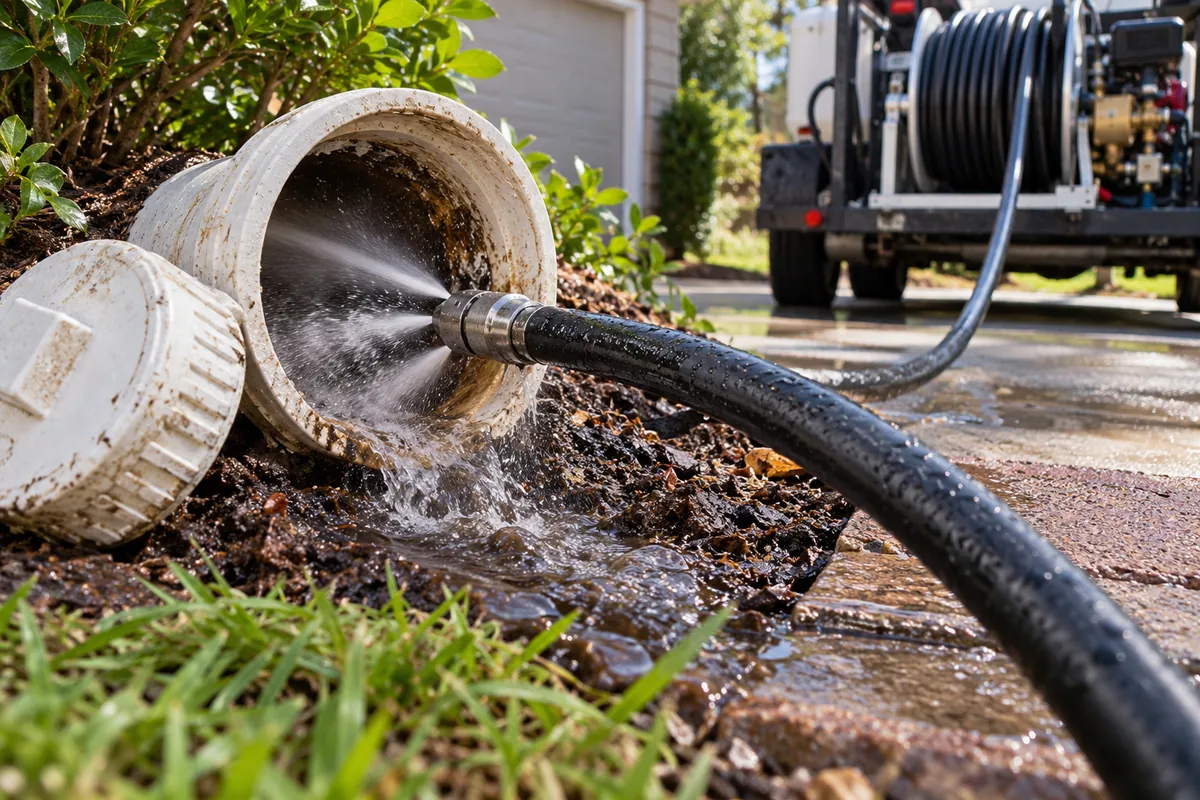
Persistent grease, sludge or recurring drain blockage may call for hydro jetting, but high-pressure water is not appropriate for every pipe. Line condition, access and the nature of the obstruction come first.
Emergency calls answered 24/7 for serious active plumbing problems; plumber availability and scheduling are confirmed by phone.
Wastewater rising into a tub, shower or floor drain, especially when several fixtures are affected, can signal a main-line backup. Stop using sinks, toilets and appliances that drain into the line. Avoid contact with sewage and keep children and pets away. Emergency calls are answered 24/7; on-site availability is confirmed by phone.
Stop using affected fixtures and keep people away from wastewater. Call about an active drain or sewer backup; inspection determines whether cleaning or pipe repair is appropriate.
Call for an Active Sewer Backup — (407) 964-899124/7 emergency call answering. Technician availability and dispatch are confirmed when you call.
Grease, sludge, scale and root debris can catch solids even after a cable opens a narrow path.
A common drain or sewer line can be obstructed; cleaning the nearest sink trap alone will not resolve it.
Grease and soap film may coat the walls. The right tool depends on access and pipe integrity.
Roots may enter damaged joints. Jetting can remove intrusion, but it does not repair the opening.
Inspect cleanout access and pipe condition. A severely damaged, disconnected or collapsed pipe may not tolerate jetting.
A trained plumber selects equipment and appropriate settings for diameter, material and buildup; maximum pressure is not a universal goal.
High-pressure water flushes deposits toward a suitable collection or downstream flow path while controlling splashing and backflow.
Check restored flow and reassess persistent defects. Bellies, breaks and displaced joints need repairs rather than repeated jetting.
Snaking cuts or pulls through a blockage; jetting cleans more of the internal wall when safe. A simple localized soft clog may only need cabling. Neither method repairs broken pipe.
Unknown, very fragile or cracked pipe requires evaluation first. Jetting may be unsafe where the wall has lost structural integrity, joints are displaced, or a line is collapsed.
Line length, cleanout accessibility, inspection requirements, obstruction type and whether additional pipe repair is needed drive the scope. Avoid fixed prices before diagnosis.
A septic-system drain blockage requires checking tank and drainfield considerations; hydro jetting does not remedy a failed septic drainfield.
A cleanout provides a controlled access point. Where none exists, entry may be more difficult and the scope can include access work. The plumber should identify line material, length, diameter and whether a camera can pass the suspected obstruction. Never assume a pipe is structurally sound simply because water passes through it.
Grease and scale typically narrow the interior surface. A root mass can hide a cracked joint, and a pipe belly can retain wastewater after cleaning. If standing water persists after clearance, discuss what camera footage shows and whether a damaged segment needs excavation or trenchless repair rather than another jetting attempt.
Confirm that affected fixtures drain normally and that there is no new leakage at accessible connections. Where recurring problems have occurred, a follow-up camera inspection may establish whether the interior wall is cleaned or whether a structural defect remains. The homeowner should know the cleared location and any unresolved risk.
Describe which drains are backing up and when the problem began.
Check the access point, blockage pattern and pipe condition before choosing high-pressure cleaning.
Explain whether snaking, hydro jetting or a damaged-pipe repair makes sense.
Confirm restored flow and discuss camera verification where appropriate.
Recurring backups after clearing can indicate a broken, settled, offset or root-damaged pipe. High-pressure water removes deposits but cannot restore a collapsed pipe or correct a sewer belly. A camera inspection may identify the location and cause before more cleaning is attempted.
Jetting does not realign separated joints, repair broken sewer walls, remove all solid obstructions or guarantee that roots will not regrow. Older, fragile or severely damaged lines need condition-based assessment rather than automatically increasing water pressure.
Hydro jetting is a cleaning method; it cannot repair a cracked, collapsed or poorly sloped pipe.
Appropriately selected water-jet cleaning may remove buildup along more of the pipe wall than a cable alone. Results depend on access, pipe diameter and condition.
Mechanical clearing or camera inspection may be needed to establish a safe approach. Roots often indicate a joint or pipe defect that cleaning alone will not correct.
Severe corrosion, broken sections or structural weakness can make high-pressure jetting unsuitable. A method change or pipe repair may be necessary.
It can if piping is weakened or equipment is used improperly. Pipe condition and technique should be assessed before jetting.
For wall buildup it may clean more thoroughly; for a simple localized obstruction a snake may be sufficient.
It may cut and flush some root intrusion, but any damaged joint or opening still needs repair.
A collapsed line usually needs repair or replacement, not high-pressure cleaning.
The tool is not inherently an emergency service. Active sewage backups may need urgent diagnosis and clearing.
No. A belly is a low section that traps wastewater and generally requires separate repair evaluation.
Call about the symptoms, suitable repair options and appointment availability.
Call (407) 964-8991