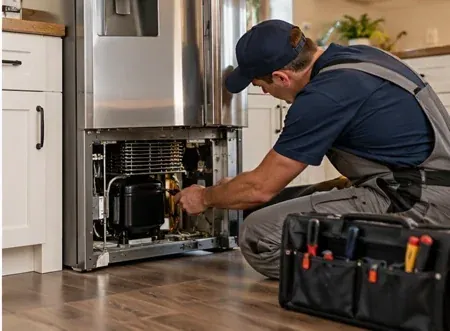
Here's how our visits work: we diagnose first, then quote. We find the failed part, check we can get it, and give you the number before anything comes apart. Then you decide — repair or replace. Half our job is helping you make that call honestly.
Repair or replace: the 50% rule. We give this to every caller: past half its expected life and the repair costs more than half of new — buy new. Typical lifespans we go by: refrigerator 13–17 years, dishwasher 9–12, washer 10–14, dryer 10–13, range 13–15. We won't sell you a $400 compressor job on a 14-year-old fridge; we'd rather tell you to put it toward new. The repairs that almost always make sense: washer drain pumps, belts, lid switches; dryer thermal fuses, belts, heating elements; fridge fan motors, defrost heaters, door gaskets. One warning from experience: ask about parts before you approve anything. Some brands lock down their boards and you'll wait six weeks. A repair that takes six weeks isn't a repair. (Microwaves and countertop gadgets are the exception — we tell people straight that a pro repair on those rarely pencils out.)
Math in hand, there's one more thing working against your appliances here:
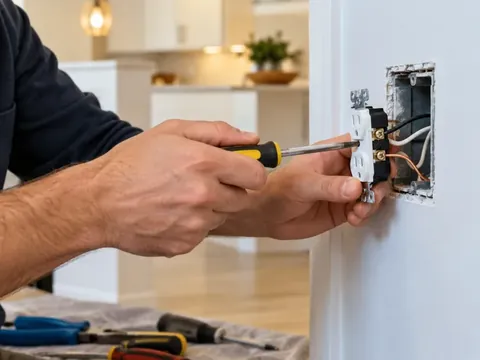
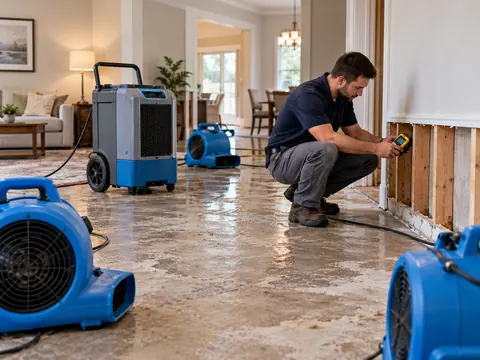
When it’s not (only) the appliance. Dishwasher leaked into the subfloor, washer hose burst overnight, fridge water line dripped for a month — we fix the machine, but wet drywall and flooring belong to a different trade, and in Florida humidity mold starts in a day or two. Expect two calls: us for the appliance, then drying. Our water damage restoration page covers what that second call looks like. And if the thing tripped a breaker or died right after electrical work, start with our electrical services page — we've seen plenty of "dead appliances" that were really dead outlets.
Explore appliance repair services