APOPKA, FL · HOME REPAIR & RESTORATIONExplore Apopka service area
Home Services ApopkaCall (407) 557-4771 ↗
Home services · Apopka, FL

Roofing in Apopka, FL

A missing shingle, a ceiling stain after a storm, or a roof that’s simply getting old — we see all three every week in Apopka, and each one wants different work. We tell every caller the same thing: don’t guess from the ground and don’t climb up to look. Read what’s below, work out whether your roof wants a repair or a replacement, and call us when you know what you’re looking at. Typing “roofing services near me” into a search is how many Apopka homeowners find this page — and the guide below is written to help you describe the problem clearly when you call.

We connect you with licensed and insured roofing contractors in Apopka, FL.

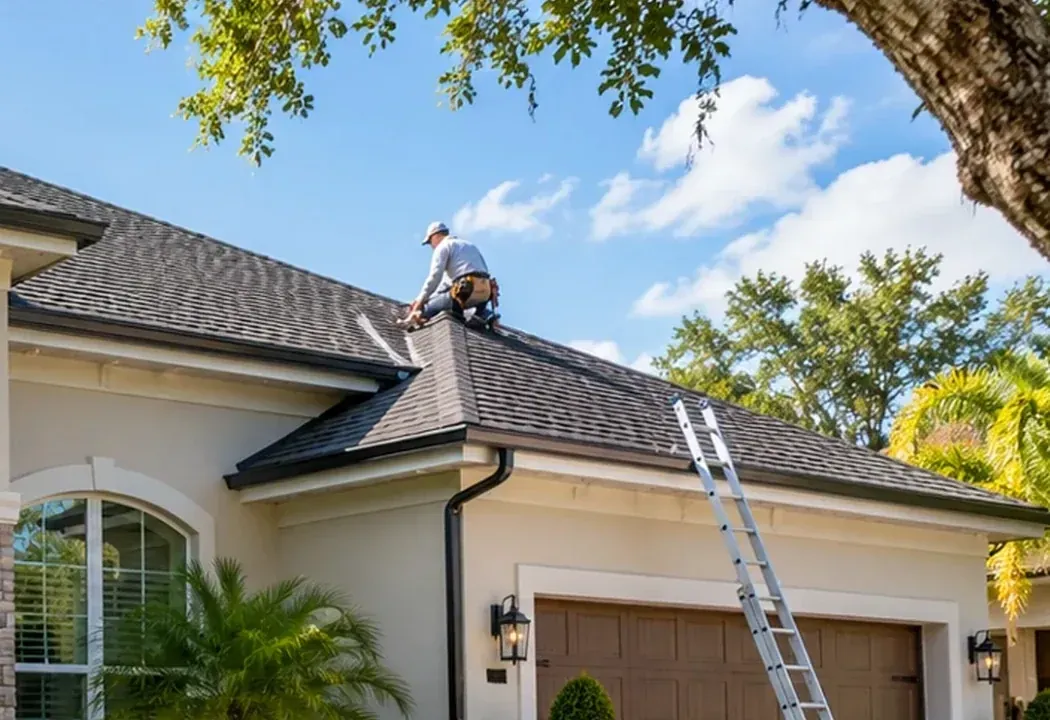
Asphalt shingle roof on an Apopka, FL home showing roof slope and ridge — representative roofing image
Roofing · APOPKA, FL
⌖ Apopka, FloridaCall about this serviceReview the scope before approving work
Recognize the problem

What is happening on or above the ceiling?

A leak, wind damage, and an aging roof are three different problems with three different fixes. We see people confuse them constantly. Work out which one you have first — and stay off the roof itself.

01 / Symptom

Active leak or water coming in

A stain spreading on the ceiling, dripping during rain, or damp insulation in the attic. We tell every caller this first: the entry point is almost never above the stain — water travels along decking and flashing before it drops through. A leak repair typically runs from $300 in Apopka, depending on what we find. If it’s still raining, tarp from a safe position and photograph everything before you touch it.

02 / Symptom

Wind-lifted or missing shingles

After a downpour or tropical system, walk the yard — not the roof — and look for shingles on the ground, lifted tabs, or exposed underlayment. We see this every week in Apopka: wind damage with zero interior symptoms for days or weeks. By the time a stain appears, moisture has been living inside the roof system. Don’t climb up there with a tube of caulk — call us.

03 / Symptom

Roof aging out

Granules piling in the gutters, shingles curling or losing their sealant grip, daylight visible from the attic, or a roof past its second decade. Florida’s UV and heat age asphalt faster than any warranty admits — and insurers watch roof age like hawks. This is a planning conversation, not an emergency. Call us while you still have the luxury of choosing.

Select the work

Repair or replacement — the triage

Our triage is simple and we don’t sell you the bigger job: repair fixes a defined, localized problem on a roof with life left in it; replacement is the answer when damage is widespread, the system is worn out, or repairs won’t hold. A typical repair in Apopka typically runs from $395 — the confirmed price comes only on the call or at inspection time. A single lifted shingle on a young roof with no interior signs can usually wait for a scheduled visit; anything actively letting water in cannot. Our roof repair and roof replacement pages each go deep on their path.

When repair stops making sense

Three signals tell us it’s replacement, and we lay them out on the call: scope — more than about a third of the covering or decking compromised, so patches leave weak seams; age — brittle sealant strips and shingles that crack while we work, so fixes won’t hold; and matching — discontinued shingle lines, where a mismatched patch complicates your next insurance claim.

Materials in Florida: the real tradeoffs

Asphalt shingles cover most Central Florida homes — affordable, but Florida punishes them: UV sheds granules, heat bakes the asphalt, and aging sealant strips lose their grip. State data shown to lawmakers found 10-year-old shingle roofs face roughly a coin-flip chance of damage in high-wind events; architectural (layered) shingles hold up notably better than flat 3-tab. We price it straight: an asphalt shingle replacement in Apopka typically runs from $8,000 — confirmed only at inspection, never a phone quote. Metal reflects heat and resists wind with interlocking panels, lasting decades longer at roughly two to three times the upfront cost. Tile is heavy and durable, but individual tiles crack and underlayment still ages. There’s no universally “best” roof — only the best match for your budget, structure, and timeline, and we’ll say so on the call.

Florida building code on replacements

Roof replacements are permitted work, and we use the replacement to harden the house: deck nailing schedules, secondary water-resistant underlayment, and — depending on location, value, and existing connections — roof-to-wall strap or clip retrofits. Strap retrofits are a separate scope; we name which code upgrades your permit includes and put it in the written scope.

It’s a system, not just shingles

We check the whole system, not just the shingles: clogged gutters rot fascia and flood foundations (gutter services), poor attic ventilation cooks shingles from below, and anything a leak wets inside is restoration work (water damage restoration). We say it plainly on the call when the roof isn’t the only problem.

Start with the path you’re leaning toward

If the triage above points one way or the other, your next step is a real assessment from us — or a deeper read on the path you’re leaning toward. First, what waiting does:

What waiting costs

What waiting costs — the mechanisms, not the fear

Wind damage, uninspected for days or weeks

Hidden damage keeps working

We see wind-lifted shingles hide damage for weeks before a ceiling stain appears moisture sits inside the roof system the whole time an early inspection after storms is what keeps our repairs from becoming your replacement

A leak that showed up once, then seemed to stop

Water travels before it shows

Water travels along decking and flashing before it reaches your ceiling — we trace it backward on every call the gap between damage and symptoms is where moisture works unseen small repairs quietly become big ones; we’ve watched it happen

An aging shingle roof, year after year

Heat keeps aging the roof

UV strips granules, heat bakes the asphalt, sealant strips lose their grip — we see it every summer wind performance degrades with every hot summer a 10-year-old shingle roof faces about a 50/50 chance of damage in high-wind events

Three safety checks before anyone climbs

  • Stay off the roof itself.

    Walk the yard — not the roof — and look for shingles on the ground, lifted tabs, or exposed underlayment. We say it on every call: steep, heat-softened, or storm-damaged surfaces injure homeowners every year. That’s our job, not yours.

  • Document from the ground — don’t touch what’s broken.

    Photograph missing or lifted shingles, damaged flashing, and interior stains — with dates. Note the roof’s material, approximate age, and when the problem started. We assess from your photos first; the ladder doesn’t have to come out until we do.

  • Tarp only if it’s safe — and inspect after, not during.

    If water is coming in while it’s still raining, tarp the area from a safe position and photograph everything first. We inspect after every significant storm, even when nothing leaks — wind damage hides for weeks, and we’d rather find it early.

Apopka specifics

Roofing in Apopka means storms, heat, and insurance math

Hurricane season is roof season

Central Florida takes its heaviest roof damage between June and October — tropical moisture, daily afternoon storms, and named systems tracking the I-4 corridor. Hurricane Milton (October 2024) reminded Apopka directly: Wekiva Village homes watched retention ponds overflow while roofs took the first beating, and tarping demand spiked across Orange County. We inspect after every significant storm, even when nothing leaks — wind-lifted shingles often hide damage for weeks before a ceiling stain appears.

Heat and UV age roofs faster than warranties admit

Ten-plus months of intense sun strip the protective granules off asphalt shingles (check your gutters for the grit), dry out sealant strips, and curl edges. State insurance officials flagged exactly this to lawmakers: a decade-old shingle roof can face near-certain damage in 100 mph winds, while 12 of the last 14 hurricanes to hit Florida reached Category 2 or stronger. We tell homeowners: if your shingle roof is approaching that age, plan the replacement conversation on your schedule — not the storm’s.

Florida’s 15-year insurance rule, in plain English

Under Florida law, an insurer generally cannot refuse to issue or renew your policy solely because your roof is under 15 years old. At 15+, you have the right to an inspection — if it shows at least five years of remaining useful life, age alone can’t be the reason you’re declined. General information, not advice: carriers still weigh condition, claims, and their own rules, and age is measured from the last full permitted replacement — keep those permit records. Buying or selling an Apopka home with an older roof? We say order that inspection early, not ten days before closing. Check the details with a licensed Florida insurance agent. Related money-saver: a wind mitigation inspection documents roof-deck attachment, roof-to-wall connections, roof shape, secondary water resistance, and opening protection. Licensed inspectors perform them, insurers use them to set discounts — ask us how a new roof improves each line of that form.

Watch out for storm-chaser contractors

After every major storm, out-of-area roofers flood Central Florida — and Apopka has seen the worst of it: a 2026 news investigation found an Orlando-area company cashing insurance checks without replacing roofs, leaving one Apopka family with a $7,600+ lien for materials they’d already paid for. We tell every caller: verify the license, confirm insurance, get the scope in writing, tie payments to milestones, never sign over a check before work is done.

Prepare for your call

Make the roofing assessment count

The details you give us in the first two minutes decide whether you get a real diagnosis or a guess. We ask every caller for these — all from the ground.

  1. Document from the ground

    Photograph missing or lifted shingles, damaged flashing, and interior stains — with dates. Note the roof’s material, approximate age (permit records help), and when the problem started. Don’t climb the roof yourself; steep, heat-softened, or storm-damaged surfaces injure homeowners every year. We’ll get up there — that’s what we do.

  2. Ask what the inspection covers

    Our assessment checks the covering, flashing and penetrations, decking (including an attic-side look), ventilation, and wind effects — not just the shingles visible from the street. We document with photos or drone imagery, and the report is written to support an insurance claim if needed — ask any roofer for that before you book.

  3. Review the full proposal

    We walk you through tear-off vs. overlay, underlayment type, flashing replacement (never reuse), ventilation, decking repair allowance, permits, cleanup, and exclusions — all in writing. Ask us for our license and insurance; we expect the question. Never pay in full before work is complete; staged payments tied to milestones are how we work.

Before you call

Repair, replacement, or wait — and what to have ready

Active roof leak? Start with safety.

What to do now
  • Stay off a wet, damaged, or storm-affected roof — we mean it.
  • Keep clear of water near light fixtures, exposed wiring or a sagging ceiling.
  • Do not approach fallen electrical lines or unstable branches; call emergency responders if there is immediate danger.
What to Mention When You Call
  • Where water is entering and whether it is still active.
  • Which rooms, ceilings or exterior areas show damage.
  • When the issue began — and any ground-level photos you took safely. We work from these.

Call 24/7 to discuss an emergency roof leak. We answer around the clock; inspection, tarping, or repair availability and any arrival time must be confirmed on the call — calling does not guarantee same-day attendance.

Call now

  • Active leak or water coming in — we say anything actively letting water in cannot wait
  • Missing shingles after a storm with exposed underlayment
  • Daylight visible from the attic

Can wait for a scheduled visit

  • A single lifted shingle on a young roof with no interior signs
  • An aging roof past its second decade with no active leak — a planning conversation, not an emergency

Other details that can help

  • Your roof’s material and approximate age, if known
  • Any previous repairs or insurance documentation available
  • Whether roof or attic access is unsafe

Call made. Here’s what our work looks and sounds like when it happens:

During the work

What to expect while the work is underway

  1. Inspection visit

    An inspection visit is quiet

    We photograph or drone the covering, take an attic-side look at decking and ventilation, and hand you a written report with photos. Nobody needs to be on the roof while you watch — and don’t go up there yourself.

  2. Replacement day

    A replacement is not quiet

    Tear-off starts early, there’s a dumpster in the driveway, and hammering carries for a full day or more — pets and remote-work calls do better elsewhere that day. We protect your landscaping, magnet-sweep for nails daily, and the permit inspection happens after, not during.

  3. During

    Stay reachable for decking surprises

    For either path, stay reachable. We find decking surprises mid-tear-off, not before — we photograph the rotted sheathing and get your go-ahead before replacing it, which is exactly why the itemized scope above matters.

Homeowners often ask how these jobs connect, because one problem in an Apopka home rarely travels alone. Getting a damaged section covered quickly is the core of emergency tarping and leak control during Florida's rainy season.

Helpful answers

What roofing typically costs in Apopka

We tell every caller to get it itemized first — here is what jobs like yours typically run.

ServiceTypical starting price
Roof inspectionfrom $150
Typical repairfrom $395
Leak repairfrom $300
Asphalt replacementfrom $8,000

Every problem's work and cost is different — the confirmed price comes only on the call or at inspection time. Starting prices below are typical, not fixed prices.

Roofing FAQs

Will my insurance drop me because my roof is 15 years old?

Not for age alone, in most cases. Florida law generally bars insurers from refusing to issue or renew a policy solely because a roof is under 15. At 15 or older, you have the right to an inspection — if it shows at least five years of useful life remaining, age alone can’t be the reason for refusal. We tell every caller: condition, claims history, and carrier rules still matter, so don’t treat the inspection as a guarantee.

How do I know if I need a repair or a full replacement?

We run the same triage on every call: repairs suit defined, localized problems on a roof with life left — a leak we trace to flashing, a patch of wind-lifted shingles. Replacement enters the conversation when damage covers a large area, the roof is near the end of its service life, repairs won’t hold, or matching shingles are discontinued. We inspect covering, flashing, decking, and the attic side before quoting either path — never the other way around.

My roof leaked once during a storm but looks fine now. Should I worry?

Yes — we see this every week in Apopka. Water travels inside the roof system before it shows on a ceiling, and wind-lifted shingles can look fine from the ground while leaking above. The gap between damage and symptoms is where small repairs quietly become big ones. Call us for an inspection; it’s the cheapest roof work you’ll ever buy.

Why did my neighbor's roof survive the storm and mine didn't?

Usually age and attachment, not luck — we find this on nearly every comparison call. Older shingles lose the sealant grip that resists wind uplift, and nailing, deck attachment, and flashing quality vary house to house. Wind performance degrades with every hot summer, so identical roofs installed years apart behave very differently.

How long does a shingle roof actually last in Central Florida?

Shorter than the warranty suggests — we tell every caller to plan around condition, not the brochure. UV strips granules, heat bakes the asphalt, and humidity works under aging flashing. State data shown to lawmakers found 10-year-old shingle roofs face about a 50/50 chance of damage in high-wind events. Architectural shingles outlast flat 3-tab; metal and tile last longer. We assess what yours actually has left.

Does a roof replacement in Apopka require a permit?

Yes — replacements are permitted work in Orange County, and we pull the permit on every job. It triggers a code review covering deck nailing, underlayment, and potentially roof-to-wall upgrades. Ask any roofer who pulls the permit; keep the final records, since insurers and future buyers will ask for them.

What is a wind mitigation inspection, and is it worth it?

It’s a standardized inspection documenting how your roof and openings resist wind — deck attachment, roof-to-wall connections, roof shape, secondary water barriers, shutters or impact glass. Licensed inspectors perform them; insurers use the report to calculate discounts, and we tell every caller the savings usually outweigh the cost.

What should I watch out for when hiring a roofer after a storm?

We hand every caller this checklist: verify the Florida license and insurance yourself, get the full scope in writing, tie payments to completed milestones, and never pay in full — or sign over an insurance check — before work is done. Be wary of door-knockers demanding on-the-spot decisions; Apopka homeowners have been burned by contractors who cashed checks and vanished. We work from written scopes and staged payments — ask any roofer to do the same.

Do you offer roofing services near me in Apopka?

Yes — we serve homes across Apopka, and the number on this page connects you with the team that handles roofing services for your address. Confirm availability and timing when you call.

Further reading

Sources and technical references

View supporting references and safety sources
  1. Florida Building Code

    What we build to on permitted replacements: roof-deck nailing schedules, secondary water-resistant underlayment, and roof-to-wall connection requirements.

  2. Florida Statute §627.7011

    The 15-year rule we explain on calls: carriers generally cannot refuse to issue or renew a policy solely because a roof is under 15 years old; at 15+ you have the right to an inspection.

  3. OIR-B1-1802 wind mitigation form

    The state form insurers use to calculate your wind-resistance discounts — we reference it on every new-roof conversation.

  4. State insurance data shown to lawmakers

    The finding we quote on calls: 10-year-old shingle roofs face roughly a 50/50 chance of damage in high-wind events; 12 of the last 14 Florida hurricanes reached Category 2 or stronger.

  5. 2026 news investigation

    The Orlando-area storm-chaser case we warn callers about: an Apopka family left with a $7,600+ materials lien.

A roof inspection in Apopka turns up more than shingles, because the roofline is where the house meets everything trying to get in. Scratching sounds, droppings in the attic, and chewed vent screens point to rodents entering through the roof, and sealing those gaps is pest exclusion and roofing at the same time. Paper nests tucked under eaves and inside soffit corners are just as routine — a crew that finds an active colony mid-inspection will stop and point you toward wasp nest removal at the roofline before any work overhead continues. When either problem is active and aggressive — wasps swarming a doorway below a damaged eave, or rats suddenly displaced into living space by storm damage — it can warrant emergency pest help the same day rather than waiting for the roofing schedule. Below, what the roof sheds shapes the yard: concentrated runoff and granule wash-off kill grass at the drip line, and keeping turf alive there depends on consistent mowing and lawn care plus drainage that moves water away — while a chronically soggy corner usually traces back to an irrigation line adding water the roof never sent. Roofing, pest, and lawn crews all cover the same ground here — the areas we serve page shows where.

Before our work starts: two guides worth ten minutes — the rainy-season checklist (roof, drainage, and everything water touches) and how to compare estimates, for the get-three-itemized-quotes step.

Florida rainy-season home checklist ↗ How to compare home service estimates ↗

Discuss the roofing issue or planned replacement

Call us with the roof type and what you’re seeing; we’ll confirm inspection and project coverage on the call.

Apopka, FLRoofing ☎ (407) 557-4771