APOPKA, FL · HOME REPAIR & RESTORATIONExplore Apopka service area
Home Services ApopkaCall (407) 904-1291 ↗
Home services · Apopka, FL

Water Damage Restoration in Apopka, FL

A burst pipe at 2 a.m., a retention pond creeping toward the back door after a storm, or a stain spreading across the ceiling — in Apopka, water gets in from above, below, and sideways. What you do in the first hours decides whether you’re facing a drying job or a gut-and-rebuild. Here’s how our crews handle professional water damage restoration in Central Florida: what extraction and structural drying involve, and the exact questions to ask us before you approve any work. When you need water damage restoration near me in Apopka, it helps to know what the job actually involves first — the sections below lay it out in plain language.

We connect you with licensed and insured water damage restoration contractors in Apopka, FL.

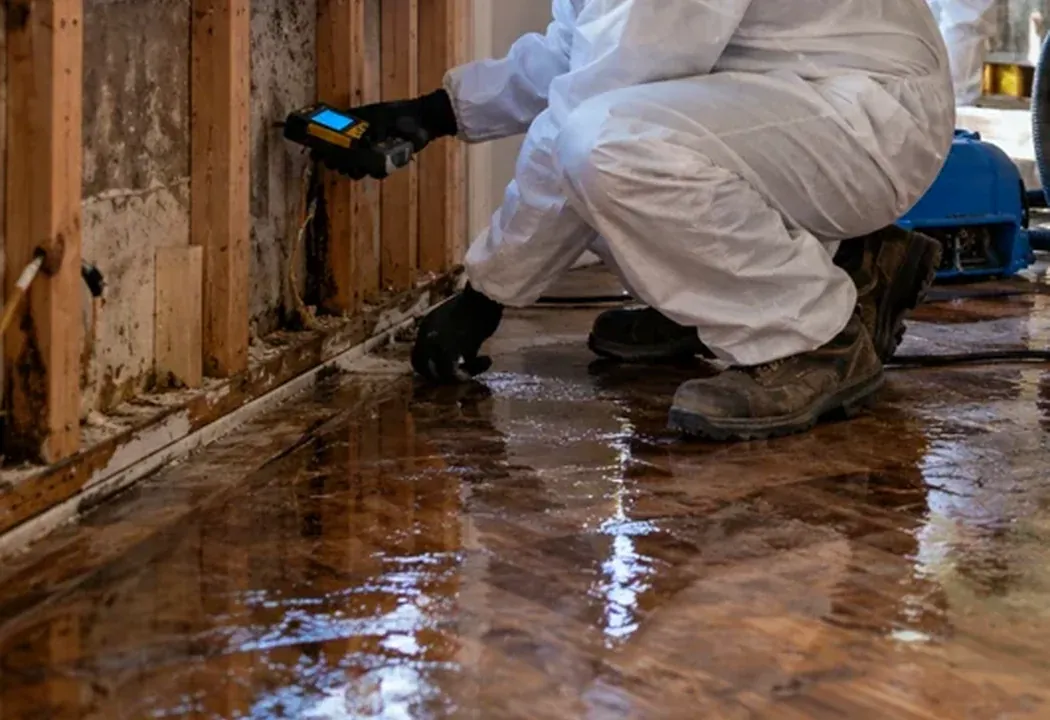
Water extraction and structural drying equipment removing floodwater inside a Central Florida home
Water Damage Restoration · Apopka, FL
⌖ Apopka, FloridaCall about this serviceReview the scope before approving work
Recognize the problem

Where has water reached?

The source, how long it’s been wet, and which materials are affected decide everything we do. Two warnings first: never enter standing water near electrical equipment, and treat any discolored or foul-smelling water as contaminated.

01 / Symptom

Standing water indoors

Note the source and every affected room, then stay out of wet areas near outlets, appliances, or the breaker panel. If pond or lake water is rising at your door — as Wekiva Village saw during Hurricane Milton — treat it as floodwater: contaminated until proven otherwise. Tell us the source when you call.

02 / Symptom

Ceiling stains, bulges, or sagging drywall

In Apopka the most common cause is a clogged AC condensate drain line, not the roof — we clear the water and dry it out. A bulging ceiling can hold gallons of water — do not poke it. Stay clear of the area and keep people out from underneath.

03 / Symptom

Damp drywall, swollen baseboards, or a musty smell

Moisture travels well beyond the visible stain. Slow appliance leaks — an ice-maker line ran unnoticed for three months in one Orlando case — destroy drywall before anyone sees water. If it smells musty but looks dry, the water is hidden, not gone — our meters find it.

04 / Symptom

Sewage or discolored water

Back away and keep pets and kids away. Sewage backups need our containment, protective equipment, and disinfection — not just drying. Ask us specifically about contamination protocols, not just extraction.

If water is active right now, skip ahead and call

Those are the symptoms. But in Apopka, where the water comes from changes everything — here’s the local picture.

Select the work

Find the right water-damage response

Review the service information on this page, describe the symptoms when you call us, and confirm the scope before approving work.

Emergency water removal and active leak cleanup

Emergency Water Damage

Flooding, sewage or spreading water — urgent restoration, and we answer emergency calls 24/7.

View service →

Water Extraction

Call us to discuss standing water, affected rooms and the scope of removal and drying.

View service →

Flood Damage Restoration

Call us to discuss floodwater damage, cleanup scope and drying after the property is safe.

View service →

Sewage Backup Cleanup

Call us to review contaminated water cleanup and the need to keep people away from affected areas.

View service →

Burst Pipe Water Damage Restoration

Burst pipe flooded your Apopka home? Our crews do emergency water extraction, moisture assessment, structural drying and restoration after the plumbing source is controlled.

View service →

Appliance Leak Cleanup

Washer, dishwasher or refrigerator ice-maker line leaking in Apopka? Our cleanup covers pooled water, wet cabinets, floors and subfloor — with our source-first guidance.

View service →

AC Condensate & Air-Handler Leak Water Damage

Water beneath an AC air handler or condensate drain in Apopka? We address the leak source, wet ceilings, insulation and materials with water-damage cleanup.

View service →

Slab Leak Water Damage Restoration

Water damage from a slab leak in Apopka? We protect flooring and wall bases, locate hidden moisture and plan drying after the under-slab plumbing leak is repaired.

View service →

Water Heater Leak Cleanup

Water heater leaking onto floors in Apopka? Our cleanup covers puddles and wet walls, storage rooms, subfloors and cabinets after safe heater repair or replacement.

View service →

Found your job in the list? If water is still coming in, don’t wait for business hours — call now.

Apopka property considerations

Water damage risks that matter in Apopka

Stormwater and indoor leaks need different cleanup plans. The cause, contamination risk and affected materials determine the next step.

Rain and storm-related flooding

The City of Apopka identifies hurricanes, tropical storms and heavy afternoon thunderstorms as historical flood causes. A home’s actual exposure depends on its location, drainage and the particular weather event—not every storm causes property flooding.

Humidity during drying

Warm, humid conditions can make moisture control more challenging after a leak. Our drying equipment and clearance decisions follow readings of the affected materials and indoor air, rather than a fixed number of days.

AC condensate and plumbing leaks

A blocked air-conditioner condensate drain, damaged supply line or leaking appliance can wet a house even in dry weather. These are equipment or plumbing failures, not evidence of storm flooding.

Find the source before restoring finishes

Floodwater, sewage and indoor supply-line water can require different protection, cleaning and material-removal decisions. Stop the source where safe, document the damage — then call us; we assess concealed moisture before reconstruction.

How it works

How a real restoration job runs

Fixing the leak and fixing the water damage are two different jobs. A plumber stops the source; our restoration removes the water, dries the structure, and verifies it’s actually dry. This emergency phase — stopping further damage before repairs begin — is called mitigation in the industry. Here’s the sequence our crews follow:

  1. Make it safe, stop the source

    Shut off water at the fixture valve or main. Kill power to wet areas at the breaker — never touch a panel standing in water. If a ceiling is bulging, stay out from under it. Leave sewage-contaminated areas alone entirely — then call us.

  2. Document before you touch anything

    Photograph and video everything: the source, waterlines on walls, damaged materials, serial plates on failed appliances. Note the time you discovered it. In Florida, whether damage looks “sudden” or “gradual” decides insurance coverage — your photos are your evidence, and we document our scope the same way.

  3. Assessment and moisture mapping

    This is the step that separates our crews from demolition crews. Our moisture meters and thermal imaging find water inside walls, under flooring, and above ceilings that eyes miss. A dried-looking surface means nothing — the test is our meter reading.

  4. Extraction

    Our crews get standing water out first: pumps for volume, weighted extraction for carpet, wet vacuums for edges. The faster water leaves, the less gets absorbed.

  5. Drying plan and equipment

    Our air movers and dehumidifiers are placed per a plan, sometimes with containment barriers to focus airflow. In Apopka’s humidity this phase runs longer — our equipment stays until daily readings confirm dry materials, not removed on a fixed schedule.

  6. Repair-versus-remove decisions

    We cut out drywall and insulation that can’t be dried; solid materials usually stay. Get this decision — and who does the rebuild — in writing from us before demolition starts.

  7. Verification

    We document post-drying moisture readings. Only then does reconstruction begin.

Before you call

The first hour, and when to call

Urgent problems & scheduling

Flooding, standing water and active property intrusion

Call us 24/7 about flooding or serious water damage. Report where water is entering, whether the source is stopped and whether sewage or electric equipment is involved. Stay out of water when power or contamination may be present. Our water extraction and drying are different from later reconstruction.

Call us about water extraction or mitigation, describe the water source and affected rooms, and we’ll confirm available equipment and response timing.

Important: We answer calls at the stated hours. An immediate visit or same-day repair is not guaranteed; confirm appointment and arrival options when you call.

Call now

  • sewage anywhere
  • standing water
  • a bulging or sagging ceiling
  • water near electrical
  • stormwater still coming in

Can wait for a scheduled visit

  • a small leak that’s already stopped and drying, with no sewage and no electrical risk — but photograph it, note the time, and watch it. Slow leaks become “gradual damage” exclusions if ignored — call us if it changes.

The first hour — do this now

  • Stop the water if you can do it safely.
  • Shut off power to affected areas.
  • Move valuables, rugs, electronics, and anything particleboard out of the wet zone.
  • Photograph everything before cleanup.
  • Call us — describe the source, rooms, and any sewage or electrical involvement.

Get the scope itemized in writing from us before work starts — not a verbal description. Be cautious about signing an Assignment of Benefits (AOB) that hands your insurance claim to the contractor; talk to your agent first. And never sign a blank or pressure-filled contract at the door, especially after a storm.

Decisions made — here’s what the drying days actually look and sound like.

During the drying

What to expect while drying is underway

  1. Drying days

    Your house will hum for days.

    Our air movers and dehumidifiers run around the clock — expect steady noise, warmer air in the drying zones, and extension cords running to dry outlets. It’s temporary; turning our equipment off to “give it a rest” restarts the clock.

  2. Monitoring

    The crew comes back.

    Our daily or near-daily meter readings decide when equipment moves or leaves — not a fixed schedule. If a wall cavity reads wet on day four, our air movers stay.

  3. Living through it

    You live around it.

    Our containment barriers focus airflow on wet zones; don’t move them or seal rooms for quiet. Keep the dehumidifier drain line clear and the area ventilated as we instruct.

We see these issues side by side across Apopka, from the older streets near the center to the newer subdivisions out by the 429. If you suspect a hidden problem, locating a hidden pipe leak before opening walls gives you a location and a plan instead of guesswork. Landlords with several units often use finding leaks in commercial plumbing systems to find which line is behind a shared bill spike.

Knowing which related service handles the follow-on problem saves a second round of phone calls later. Once the pipe itself is fixed, burst pipe water damage restoration handles the soaked drywall, flooring and drying that follow.

Helpful answers

What water damage restoration typically costs in Apopka

We price by what we actually find on site — here is what jobs like yours typically run.

ServiceTypical starting price
Water extractionfrom $500
Larger extraction jobsfrom $1,000
Structural drying (avg ~$1,800)from $1,000
Whole job (avg ~$3,800)from $1,400
Clean water, per sq ftfrom $3.50 per sq ft
Gray water, per sq ftfrom $5.25 per sq ft
Black water, per sq ftfrom $7.50 per sq ft

Every problem's work and cost is different — the confirmed price comes only on the call or at inspection time. Starting prices below are typical, not fixed prices.

Water Damage Restoration FAQs

My insurer denied my claim, saying the leak was "gradual." What does that mean?

Florida policies typically cover water damage that's sudden and accidental — a burst pipe, a failed supply line. Damage from a slow leak that ran for weeks is usually excluded as a maintenance issue, even if you never knew about it. This is the most common denial reason in the state. Document when you first noticed the damage, keep the failed part if you have one, and report promptly — you generally have one year from the date of loss. We document our scope and readings so your claim has the facts it needs.

How long does structural drying actually take?

A contained job often takes three to five days of monitored drying, but that's a range, not a promise. Humid conditions can make drying more challenging, but the actual duration depends on materials, indoor conditions and dehumidification. Our equipment stays until daily moisture-meter readings confirm materials are dry — not removed on a fixed schedule. On cost: structural drying typically runs from $1,000 (averaging around $1,800), and whole water-damage jobs in Apopka typically start from $1,400, averaging around $3,800 — typical starting prices, not fixed prices. Top national brands also price by the square foot — from $3.50 per sq ft for clean water, from $5.25 for gray water, and from $7.50 for black water with structural repairs. Ask us how monitoring works and what "done" is measured against before you sign.

The wall looks dry. Does that mean the structure is dry?

Not necessarily. Drywall can feel dry on the surface while framing, insulation, or the subfloor behind it is still wet — in one documented case the floor was "off the charts" on a moisture meter days after the walls looked fine. Our techs check with penetrating meters and thermal imaging because hidden moisture is what causes mold and rot months later. Surface appearance is never the test.

Do we have to move out during restoration?

Usually not for contained drying — our equipment is loud, but the home stays livable and work areas are sealed off with barriers. You'll likely need to relocate for sewage contamination, large-scale tear-out, or if the kitchen or bathrooms are unusable. Ask us upfront which scenario fits your job so you're not surprised mid-project.

A company wants to tear out the damaged rooms but can't tell me who rebuilds. Is that normal?

It's a red flag worth pausing on. Some firms only do mitigation — drying and demolition — and leave reconstruction to someone else, which can leave your home torn up indefinitely. Before signing with us, get a written scope naming who handles drying, who handles the rebuild, and on what timeline. "We'll figure it out later" is how tear-outs become open-ended messes.

How do I avoid getting overcharged?

Get the scope and pricing in writing from us before work starts — not a verbal range. Ask us whether billing is daily equipment rates or flat fees, and what happens if drying runs long. Typical starting prices in Apopka: clean-water extraction typically from $500, larger extraction jobs from $1,000, structural drying typically from $1,000 — typical market starting prices, not fixed prices. Be cautious about signing an Assignment of Benefits (AOB) that hands your insurance claim to the contractor; talk to your agent first. And never sign a blank or pressure-filled contract at the door, especially after a storm.

Pond water came up to my house during a storm. Will insurance cover that?

Usually not under a standard homeowners policy. Water that rises from outside — overflowing ponds or lakes, storm surge, surface water — is classified as flood, which requires a separate flood insurance policy (NFIP or private). Only about a third of Florida homeowners carry one. Document the damage anyway with photos and waterline marks, and check whether you have any flood coverage before assuming the answer. We document our work to the same standard.

There's a musty smell but I can't find any water. What now?

Musty odor with no visible water usually means hidden moisture. In Apopka the classic culprits are a clogged AC condensate drain line, a slow appliance supply leak — ice-maker lines have run unnoticed for months — or water trapped inside a wall cavity. Our moisture inspection with thermal imaging finds what eyes can't. Don't just mask the smell; the moisture source stays active until it's found.

Can I find water damage restoration near me in Apopka?

Start here: this page explains the work, the common causes, and the questions worth asking. Then call the number listed for water damage restoration and confirm coverage for your address.
Further reading

Sources and technical references

View supporting references and safety sources
  1. IICRC S500

    the industry standard for water damage restoration: water categories (1/2/3), the 24–48-hour mold window, and moisture-verification requirements before reconstruction.

  2. EPA

    mold cleanup guidance: assume mold if a home can’t be thoroughly dried within 24–48 hours; porous materials exposed to contaminated water get removed.

  3. Florida Division of Financial Services

    consumer warnings about Assignment of Benefits (AOB) abuse in restoration contracting.

  4. Florida Building Code

    flood provisions and permitting requirements for reconstruction after storm damage.

Before you choose the work: For water intrusion, we identify the source and assess what is wet before repainting or reinstalling finishes.

Read the related homeowner guide ↗

Call about the water damage and affected rooms

Describe the source of the water, any electrical or contamination hazards and the wet areas to us. Call to confirm the appropriate restoration work and available response.

Apopka, FLWater Damage Restoration☎ (407) 904-1291