APOPKA, FL · HOME REPAIR & RESTORATIONExplore Apopka service area
Home Services ApopkaCall (407) 904-1291 ↗
Home services · Apopka, FL

Fire Damage Restoration in Apopka, FL

If you're calling us after a fire, here's how we start: we confirm everyone's safe and the fire department has released the property, then we document everything before anything is cleaned or moved. Below: our first-24-hours playbook, how soot and smoke behave in Florida humidity, what we tell homeowners not to touch, and how our restoration unfolds — beginning with what we find after the flames go out. For fire damage restoration near me in Apopka, the right next step depends on the symptoms — this page explains what to check and what to ask about.

We connect you with licensed and insured fire damage contractors in Apopka, FL.

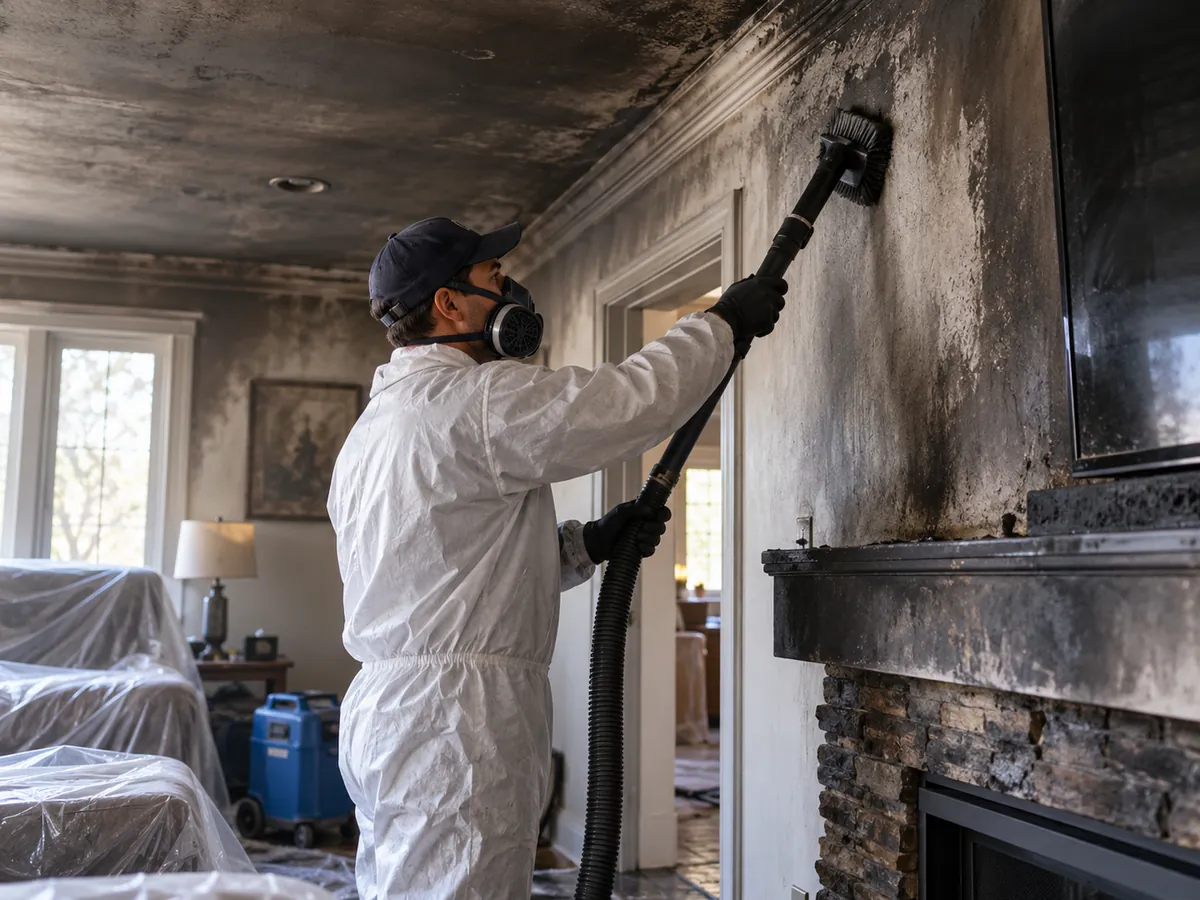
Illustrative image of a technician cleaning smoke residue in a fire-damaged living room
Fire Damage Restoration · Apopka, FL
⌖ Apopka, FloridaCall about this serviceReview the scope before approving work
Recognize the problem

What remains after the fire or smoke event?

When the flames go out, our real work begins. Soot keeps corroding, odor keeps migrating, and firefighting water starts its own clock. Nearly every Apopka fire job we take on involves these three problems.

01 / Symptom

Soot and smoke residue beyond the burn area

Smoke carries soot on air currents past the fire's room into adjacent spaces, closets, and ductwork. In Central Florida humidity it forms an acidic film that etches glass and stains grout — we tell homeowners that weeks-old residue is far harder to reverse than fresh soot.

02 / Symptom

Smoke odor that returns

Odor settles into porous materials: drywall, insulation, carpet padding, upholstery, duct interiors. Where the AC runs most of the year, contaminated ducts re-release odor every cycle — when our customers tell us the smell returns every time the AC kicks on, we start with the ducts.

03 / Symptom

Water from firefighting

Fire hoses soak everything the fire didn't burn. Suppression water saturates drywall, insulation, and subflooring — and in Florida humidity, wet porous materials can grow mold within 24 to 48 hours. On our fire jobs, water damage is often half the restoration scope. (Water damage restoration)

↓

Select the work

Explore fire and smoke restoration work

What NOT to do

The urge to start cleaning is strong — and we spend a lot of our time undoing it. These mistakes turn restorable damage into replacements.

  • Don’t wipe soot off porous surfaces

    — wiping smears it deeper and can set stains permanently. Our crews match dry and wet soot to different professional methods.

  • Don’t run the HVAC

    — it pulls soot through ductwork into rooms the fire never touched. We keep the system off until we've assessed the ducts and air handler.

  • Don’t DIY ozone treatment

    — it requires an empty home, carries real health risks, and we only use it after cleaning, never before.

  • Don’t throw damaged items away

    until we've documented them with your adjuster.

  • Don’t eat food or take medicine

    exposed to heat, smoke, or water. We tell every customer: when in doubt, throw it out.

  • Don’t start demolition

    until the adjuster's scope is set — early demolition can complicate your claim and expose hidden hazards. We wait for the written scope.

Safe while you wait — our advice: open doors and windows; lay tarps over floors; hover a vacuum nozzle above soot-dusted fabrics (never press in); drape damp cloths over vents; run fans blowing outward.

The local picture

Why fire damage hits different in Apopka

Fire restoration is never one-size-fits-all. Central Florida adds three wrinkles we plan for on every job.

Lightning is a leading cause here.

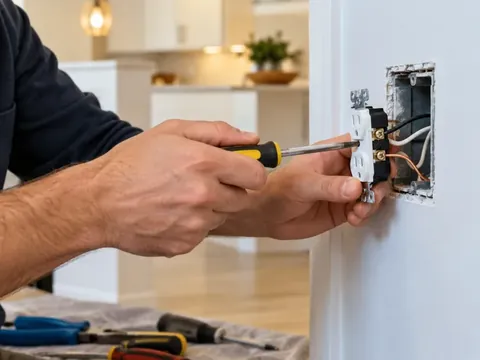
Florida leads the nation in lightning-related homeowners claims — 5,136 claims, roughly $186 million in 2025 (Insurance Information Institute). Daily summer thunderstorms make lightning-ignited house fires a seasonal Apopka risk, and we see the full combination in one event: burn damage, suppression water, and surge-fried electronics. We recommend asking an electrician about whole-home surge protection before storm season. (Electrical services)

Humidity accelerates everything.

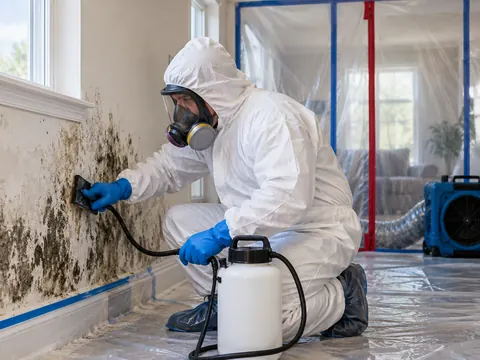
Soot is acidic, and Florida moisture makes it more corrosive, faster. Suppression-soaked drywall in a closed, humid house can show mold in a day or two — so our crews run drying alongside soot cleanup, not after it. (Mold remediation)

Storm season doesn’t pause.

A fire-damaged roof in summer is a water-intrusion event waiting for the next storm. We board up and tarp fast so a fire loss doesn't become a fire-plus-flood loss — Wekiva Village learned that lesson during Hurricane Milton.

How it works

How fire damage restoration works, step by step

We scope every job individually; these are the standard phases our crews follow.

  1. Emergency stabilization.

    Safety assessment, board-up, roof tarping, utilities coordination — stopping further damage is our first priority once we're cleared to enter.

  2. Water extraction and structural drying.

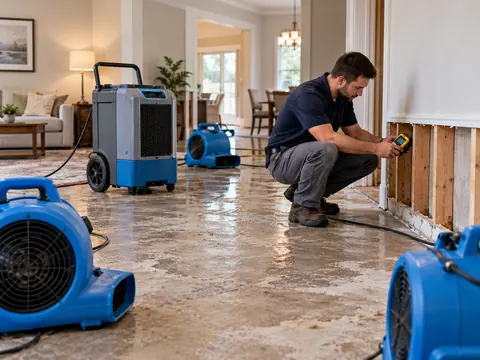
    We extract standing water, map moisture with meters and thermal imaging, and place drying equipment. This phase can't be rushed — wet materials sealed behind new drywall become tomorrow's mold claim. (Water damage restoration)

  3. Soot and smoke cleanup, then odor treatment — in that order.

    We match methods to the soot type and material. We inventory your contents and clean them on-site or pack them out — each item gets our clean-vs-replace evaluation. Deodorization comes only after our cleaning is done.

  4. Repairs and reconstruction

    to Florida building code, with permits. Our final walkthrough includes an odor check — if you still smell smoke with the AC running, we don't call the job done.

Make the right call

Call now, or can it wait?

Need help tonight? Emergency fire damage help in Apopka →

Urgent problems & scheduling

Fire and smoke damage after the property is safe

Call 24/7 about urgent fire or smoke damage restoration. If a fire is active, someone is in danger, or the building is unsafe, call 911 first and follow emergency responders. We can only begin restoration work after the relevant authority says access is safe.

When you call us, tell us whether the fire is out, whether access is permitted, and whether water or soot is involved. Board-up, contents cleaning, and reconstruction are different services — we'll confirm what you need and what we can schedule before you approve repairs. On cost, most Apopka homeowners see: minor smoke cleanup typically from $500, moderate fire and smoke damage typically from $2,000, extensive damage typically from $6,000 or more — typical starting prices, not fixed prices.

Important: We answer calls at the stated hours. An immediate visit or same-day repair is not guaranteed; confirm appointment and arrival options when you call us.

Call now

  • the fire department used water (drying clock is running)
  • smoke reached multiple rooms
  • the HVAC ran during or after the fire
  • structural damage, damaged roof, or broken windows
  • wiring or panel involved
  • you need documentation help for a claim

Can wait for business hours

  • a minor cooking incident left a faint odor with no visible residue, and ventilation plus cleaning is clearing it. If the smell lingers past a few days — or returns when the AC runs — get an assessment; that pattern means residue in ducts or porous materials.

The first 24 hours: what to do, in order

You don't need a whole restoration plan today. We need five things from you, in this order.

  1. Get the fire department’s safety clearance. Don't re-enter until authorities clear it — fires can rekindle from hidden smoldering. Never turn utilities back on yourself.
  2. Call your insurer. No inventory or estimate is needed to file — that develops later. We recommend reporting early: it starts the claim and unlocks temporary-housing help. Florida insurers generally must respond within 14 days (§627.70131).
  3. Document before anything moves. Walk every room with your phone: wide shots, close-ups, a narrated video tour. Start a room-by-room inventory — prices can wait. We ask you not to discard anything until your adjuster has seen it.
  4. Secure the property. We board up broken windows and tarp damaged roofing — the next storm won't wait. Save every receipt.
  5. People and pets first. Most fire-damaged homes aren't habitable even after contained fires. We help you arrange temporary housing through your insurer or the Red Cross; grab medications, IDs, and chargers.

With those five steps handled, the hardest part is restraint — here’s what not to touch while you wait.

When you call, have ready

  • the fire department’s report or incident number
  • your insurer’s claim number
  • photos and video of every room (taken before anything moved)
  • a room-by-room inventory list
  • your policy declarations page

If you’ve decided to call, here’s exactly what happens next — the four phases, in order.

During the restoration

What to expect while restoration is underway

Restoration means a construction site in your home for a while. We help you plan for it.

  1. Adjuster

    The adjuster comes first.

    Expect the insurer's adjuster to walk the property early — the photos and inventory you gathered in the first 24 hours are what they work from. We don't start demolition before their scope is set.

  2. Drying

    Drying equipment runs for days.

    Our air movers and dehumidifiers are loud and stay on around the clock until moisture readings confirm dry — turning them off early is how mold claims start.

  3. Contents

    Contents go through triage.

    We inventory your belongings item by item: clean on-site, pack out for off-site cleaning, or declare unsalvageable. You'll make clean-vs-replace decisions in batches with us — not fun, but normal.

  4. Deodorization

    Deodorization comes last.

    We start odor treatment only after cleaning is complete. Our final walkthrough includes an odor check with the AC running — if you still smell smoke, we keep working.

Homeowners often ask how these jobs connect, because one problem in an Apopka home rarely travels alone. If a fire has left rooms unusable, securing a property after fire damage sets out the restoration path from the first visit.

Helpful answers

What fire damage restoration typically costs in Apopka

We price by what we actually find on site — here is what jobs like yours typically run.

ServiceTypical starting price
Minor smoke cleanup (single room)from $500
Moderate soot & smoke (multiple rooms)from $2,000
Extensive smoke / whole-homefrom $6,000
Soot removalfrom $2,000
Smoke damage, per roomfrom $200
Ozone odor treatmentfrom $400
Thermal foggingfrom $200
Duct cleaning after firefrom $250
Full restoration (avg ~$27,500)from $3,083

Every problem's work and cost is different — the confirmed price comes only on the call or at inspection time. Starting prices below are typical, not fixed prices.

Fire Damage Restoration FAQs

You said not to wipe soot off porous surfaces — can I clean any of it myself?

Light residue on hard, non-porous surfaces can sometimes be wiped carefully — but on walls, ceilings, upholstery, or carpet, we tell homeowners to leave it alone: wiping smears soot deeper and can set stains permanently. We match dry and wet soot to different methods. When in doubt, document it and leave it for our assessment.

Why does the smoke smell come back every time the AC runs?

Usually, yes — the odor is in your ductwork. Soot and smoke particles settle inside ducts and on HVAC components, and every cooling cycle blows them back into the rooms. We clean the system professionally and fit new filters before it runs normally again.

Will my insurance cover the damage — and that 14-day response rule you mentioned?

Report the fire promptly — you don't need a full inventory to file, and we help you document the damage for your claim. Florida law (§627.70131) generally requires insurers to respond to a claim within 14 days. Document everything before cleanup, keep all receipts, and check your declarations page for deductibles, limits, and exclusions — they vary by policy. (General information, not legal advice.)

What makes a restoration take days versus months?

A contained single-room cleanup can take days — we typically price minor smoke-only jobs from $500. Multi-room smoke cleanup with water extraction typically takes weeks and usually starts from $2,000; extensive damage with structural work typically runs from $6,000 or more. For context, full fire restorations nationally ran from $3,083 in 2026, averaging around $27,500 (Angi), and contractors often price affected area from roughly $4 per square foot. Typical Apopka line items: soot removal from $2,000, smoke cleanup from $200 per room, ozone treatment from $400, thermal fogging from $200, duct cleaning from $250 — typical starting prices, not fixed prices; we scope every job before quoting. Drying, cleaning, and deodorization each need their full time — compressing them creates trapped moisture or returning odor.

Can smoke smell be removed from clothes and furniture, or is replacement the only option?

Often it can — we restore more textiles than we replace. They need our specialized cleaning, not a home washer — and never machine-dry anything that still smells like smoke, because heat sets the odor permanently. Upholstery and carpet may need professional treatment; in severe cases, we'll tell you honestly that replacement is the answer.

The fire department soaked everything — with mold possible in 48 hours, how fast does drying need to start?

Immediately — it's the most time-critical part of the job, and we treat it that way. Suppression water saturates drywall, insulation, and flooring, and in Florida humidity those materials can begin growing mold within 24 to 48 hours. Our extraction and structural drying start alongside soot cleanup, not after it.

Can you recap the first 24 hours — what are the five steps in order?

One: get the fire department's safety clearance. Two: call your insurer. Three: photograph and video everything before anything moves. Four: board up and tarp against weather. Five: arrange temporary housing if the home isn't habitable. We ask you not to clean until documentation is done.

How do I find fire damage restoration near me in Apopka?

Look for a team that serves Apopka specifically, explains the work in plain language, and confirms availability for your address before booking. The number on this page connects you with our fire damage restoration team.
Further reading

Sources and technical references

View supporting references and safety sources
  1. IICRC S500/S700

    the restoration industry’s standards for water-damage and fire/smoke restoration: drying verification, soot-cleaning methods, odor-treatment sequencing.

  2. Florida Statute §627.70131

    insurers’ 14-day claim-response requirement referenced above.

  3. Insurance Information Institute (2025 data)

    Florida lightning-claim statistics.

  4. Florida Fire Marshal guidance

    lithium-ion battery fire risk after water exposure.

Before you choose the work: Fire and smoke damage can involve unsafe electrical systems and structural concerns — we put safety decisions before cosmetic repair. If you're unsure whether a situation needs a professional today or can wait,

Read the related homeowner guide ↗

Discuss the fire and smoke damage

Call us when the property is safe to assess; tell us the affected areas and we'll confirm which restoration services are available.

Apopka, FLFire Damage Restoration☎ (407) 904-1291