APOPKA, FL · HOME REPAIR & RESTORATIONExplore Apopka service area
Home Services ApopkaCall (407) 904-1291 ↗
Home services · Apopka, FL

Mold Remediation in Apopka, FL

Seeing mold in your Apopka home — a spot that keeps spreading, a musty room that never airs out, growth that came back after you cleaned it? We handle this every week in Central Florida, and the fix is never just wiping it down. We find the moisture feeding it, contain the area so spores can’t spread through your house, and remediate it the way Florida law requires — independent assessment, contained removal, verified drying. Call us, describe what you’re seeing, and we’ll tell you straight whether you need an assessment, remediation, or just a repair to whatever’s leaking. If you searched for mold remediation near me in Apopka, this page explains the work involved so you can describe the problem clearly when you call.

We connect you with licensed and insured mold remediation contractors in Apopka, FL.

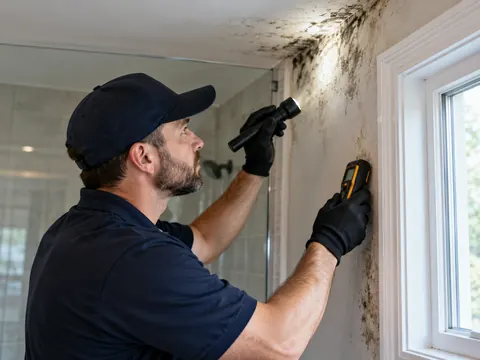
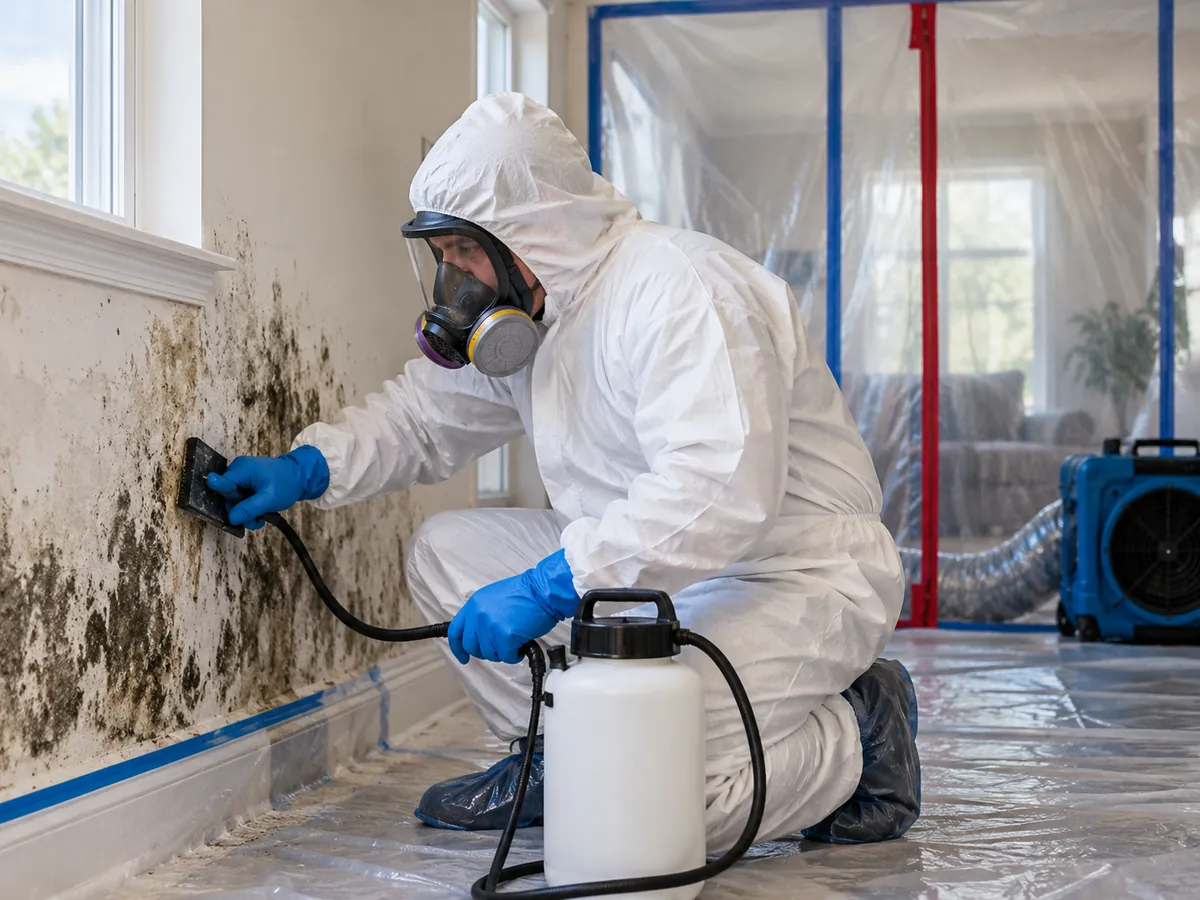
Illustrative image of a remediation technician working on a mold-affected interior wall
Mold Remediation · Apopka, FL
⌖ Apopka, FloridaCall about this serviceReview the scope before approving work
Recognize the problem

Which of these sounds like your home?

01 / Symptom

Musty smell when the AC kicks on

We hear this one more than any other in Apopka. When the air handler kicks on and the house fills with that damp, earthy smell, the cause is almost always at the unit itself — and we work down the same checklist every time: condensate drain line first, then the drain pan, the filter, the coil, and finally the ductwork. One clogged drain line can keep an AC closet wet enough to grow mold for months without you ever seeing a drop.

02 / Symptom

Mold that keeps coming back

If you’ve cleaned it twice and it’s back a third time, stop cleaning and start hunting moisture — that’s exactly what we tell callers. Recurrence means something is still feeding it: a slow supply leak, a backed-up drain line, indoor humidity parked above 60%, or condensation inside a wall cavity. We find the moisture source first, because remediating without fixing it is just a pause.

03 / Symptom

Growth after a leak, storm, or flooding

From summer downpours to Hurricane Milton’s pond overflows, we’ve seen what happens when wet drywall and flooring sit more than a day or two — it stops being a drying job and becomes a mold job. If the water wasn’t professionally dried, assume growth started. We map how far the moisture traveled with meters and thermal imaging, not just where you can see it.

Every symptom above traces back to moisture — and Apopka’s climate manufactures it on schedule. If one of these matched your house, Call (407) 904-1291 and describe what you’re seeing. We’ll tell you straight whether assessment or remediation is the right starting point. Here’s why it keeps happening here:

Select the work

Find the right mold service

Whether this ends at a drain line or full remediation, there’s one more Florida issue that applies if you’re selling:

The local picture

Why mold hits Apopka homes so hard

Mold needs three things — moisture, food (your drywall, wood, and dust), and time. Apopka hands it all three. Indoor humidity sits above 60% much of the year, and your air conditioner, running nine to ten months straight, is the only thing holding it down. When it can’t keep up — or it’s switched off — we start seeing growth within days.

The vacant-home trap:

We get these calls every snowbird season: owners return to mold behind furniture and inside the air handler after a clogged drain or failed thermostat went unnoticed for weeks. If your Apopka home sits empty, keep the AC running at a higher setpoint — “off” is an invitation, and we hate making this call twice.

Storm history:

During Hurricane Milton we watched Wekiva Village pond water rise toward homes, and Clear Lakes Estates has fought Clear Water Lake overflow for years. Storm water that never got professionally dried becomes a colony inside wall cavities — and surfaces as a smell months later. If your home took water and never got dried right, we should talk.

The actual process

What professional mold remediation involves

  1. Assessment and moisture mapping.

    We start with meters and thermal imaging to find how far water traveled — not just where mold shows. In Florida this assessment is legally separate from the cleanup, which protects you: the person who finds it shouldn’t be the one pricing its removal.

  2. Containment.

    We seal the work area under negative air pressure with HEPA filtration, so disturbed spores can’t migrate through your home while we work. Skipping containment is exactly why DIY jobs so often make things worse — we see the aftermath.

  3. Removal.

    Porous materials with heavy growth — drywall, insulation, carpet pad — get cut out and bagged by our crews. Nonporous surfaces are HEPA-vacuumed and treated. We don’t paint over growth and we don’t fog it and call it done.

  4. Drying and moisture correction.

    We fix the leak, drain line, or humidity problem and verify the area is genuinely dry. Remediation without moisture correction is a pause, not a fix — and we’ll tell you upfront what has to change so it doesn’t come back.

  5. Independent verification.

    Florida requires clearance testing by an independent assessor — not the company that did the cleanup. We schedule it, we welcome it, and we don’t consider the job done until it passes.

Make the right call

Handle it yourself, or call a professional?

Urgent problems & scheduling

Urgent moisture and suspected mold after a leak

Call 24/7 about urgent moisture or mold concerns. Tell us the moisture source, which rooms are affected, and whether water is still coming in. Mention vulnerable occupants — but don’t disturb extensive visible growth, and don’t assume a phone conversation is a mold assessment.

A late-night call doesn’t put an assessor or crew at your door — confirm which service is offered and whether assessment and remediation must be arranged separately.

Important: Calls are answered at the stated hours. An immediate visit isn’t guaranteed; confirm appointment and arrival options when you call.

Know before you hire

Florida licenses mold work — and separates who can do what

Florida licenses mold assessors and mold remediators as two different credentials under Fla. Stat. §§468.8413–468.8419 (exams, education or field experience, DBPR licensure). The key protection: the same company generally cannot assess your home and then sell you the remediation. That’s why we connect you with independent assessors and separate remediation crews — independent assessment → remediation → independent clearance — because one company finding the mold and pricing the cleanup was an obvious conflict of interest.

A company defensive about these questions is telling you something — ask us, we’ll answer straight.

(Florida law summary for consumer education. Before hiring, verify the provider’s applicable licensing and qualifications independently.)

The law protects you from the conflict of interest. But before you call anyone — let’s make sure you actually need it:

Unsure which side you’re on? The dilemma we hear most from Apopka callers starts with a smell when the AC kicks on:

Call a professional

  • growth over ~10 square feet — that’s the line where DIY stops working
  • mold inside drywall, under flooring, or in insulation — we find it with meters, not guesses
  • anything in ducts or the air handler — your blower spreads it everywhere
  • growth after flooding — it’s deeper than what you can see
  • recurrence after cleaning — the moisture source is still active
  • a musty smell with no visible source

Do it yourself

  • surface mildew on tile grout, shower caulk, or glass — where you can see all of it. Scrub it, dry the area, and fix ventilation (bath fan venting outdoors, not into the attic). If it comes back, call us.

Don’t: spray, fog, or paint over large growth. Bleach on porous drywall whitens the surface while growth continues inside — and without containment, you’ve just aerosolized spores through your house.

For Apopka sellers

Selling? Florida disclosure law covers mold

Florida’s Johnson v. Davis rule requires sellers to disclose known hidden defects materially affecting value — including known mold, prior remediation, and ongoing moisture problems. “As-is” doesn’t waive the duty. Buyers: we always recommend an independent assessment before closing in a market where half the housing stock has a moisture story. (General information, not legal advice — we’re remediators, not lawyers.)

Staying or selling, the next move is identical: gather the facts, then call us.

Before you call, gather this

  1. Photograph everything, disturb nothing.

    Wide and close-up shots of growth, stains, and the moisture source. Don’t tear into walls — you’ll spread spores and destroy what your assessor needs to see.

  2. Write the moisture history.

    When did it start? Leaks, storms, AC trouble, vacant periods? Cleaned before and returned? Hand us this history — it’s the most useful thing you can give any professional.

  3. Ask the Florida questions.

    Is assessment independent from remediation? Who does clearance verification? How we answer tells you whether you’re dealing with a legitimate operation.

Photos taken, history written, questions ready — that prep turns a vague quote into an accurate scope. Call (407) 904-1291 with it in hand. Here are the questions Apopka homeowners ask most at exactly this point:

During the job

What remediation day looks like in your home

Expect plastic sheeting sealing off our work area, a humming air scrubber running continuously, and technicians in respirators and suits — the gear looks alarming; it’s just standard containment, and we’re used to the questions. We’ll ask you to keep that area clear and off-limits; the rest of the house stays usable. Smaller jobs finish in a day. The noise and equipment leave when our drying checks pass — not before.

Knowing which related service handles the follow-on problem saves a second round of phone calls later. Boarding up and making the home safe again fall under emergency restoration following a house fire in the first phase after a fire.

Helpful answers

What mold remediation typically costs in Apopka

We price by what we actually find on site — here is what jobs like yours typically run.

ServiceTypical starting price
Typical remediationfrom $1,200
National average~from $2,300
Per sq ft of affected areafrom $10

Every problem's work and cost is different — the confirmed price comes only on the call or at inspection time. Starting prices below are typical, not fixed prices.

Mold Remediation FAQs — Apopka, FL

My AC smells musty when it kicks on — do I start with the drain line?

Yes — and that’s where we start too. Flush the condensate drain line, clean the drain pan, and replace the air filter: those three fix most musty-AC complaints we see in Central Florida. Smell still there after a full day? The evaporator coil or ductwork needs professional attention. Call us before assuming it’s remediation — an HVAC fix is cheaper and often the whole answer.

What should a proper remediation scope include?

Moisture mapping first — we use meters and thermal imaging to show how far water traveled, not just visible growth. Then sealed containment under negative air pressure, removal of porous materials with heavy growth, HEPA treatment of the rest, drying plus fixing the moisture source, and independent clearance testing by a separate assessor. On cost: most homeowners we connect with see remediation typically running from $1,200, averaging around $2,300, or about from $10 per square foot of affected area — typical starting prices, not fixed prices, since every job’s scope is different.

Can't I just bleach it and be done?

On tile or glass, yes — go ahead. On drywall, wood, or insulation, no: bleach whitens the surface while growth continues inside, and scrubbing a large patch without containment spreads spores through your house. Anything over ~10 square feet, hidden in cavities, or returning after cleaning belongs to us.

Why can't the same company test my home and do the remediation?

Because Florida law forbids it — and the law is protecting you. Assessment and remediation are separate licenses, and only an independent assessor’s clearance has legal standing. That’s exactly why we operate the way we do: independent assessment, separate remediation crew, independent clearance. If one company offers to do it all, that’s your red flag.

Why does the mold keep coming back after I clean it?

Because the moisture is still there — a slow leak, a clogged drain line, humidity above 60%, condensation in walls, or grading that sends water at the foundation. We see this constantly: remediation removes growth, but only moisture correction stops the cycle. A quote that ignores the source is selling you a repeat visit.

I'm selling my Apopka home — do I have to disclose mold?

Yes. Under Johnson v. Davis, sellers must disclose known hidden defects materially affecting value — including known mold, prior remediation, and ongoing moisture problems. “As-is” doesn’t waive it. Disclose in writing through your Realtor and keep records. When in doubt, ask a Florida real estate attorney — we’re remediators, not lawyers.

We left the house empty and came home to mold. What now?

Find the moisture source first — was the AC off or did it fail while you were gone? Drain line clogged? Photograph everything before disturbing it; those photos matter for insurance. Ventilate, keep the AC running to pull humidity down, and call us — we’ll arrange an independent assessment before anyone tears into affected areas.

How long does the full process take, including independent clearance?

Small contained jobs: a day. Multi-room: one to two days. Whole-home: two to four days, longer after major intrusion. Then add structural drying time plus independent clearance testing — clearance happens on the assessor’s schedule, not the remediator’s, so we build that into your timeline upfront.

How do I find mold remediation near me in Apopka?

Look for a team that serves Apopka specifically, explains the work in plain language, and confirms availability for your address before booking. The number on this page connects you with our mold remediation team.
Further reading

Sources and technical references

View supporting references and safety sources
  1. Fla. Stat. §§468.8413–468.8419

    Florida’s mold assessor/remediator licensing law, and the assessor-remediator separation requirement.

  2. EPA mold guidance

    moisture control as the foundation; cleanup of porous materials vs. nonporous.

  3. IICRC S520

    the industry standard for professional mold remediation (containment, removal, verification).

Before you choose the work: Central Florida’s rainy season is mold season for us — daily downpours and humidity that never drops turn small moisture problems into colonies, and we stay busiest from the first tropical wave through fall.

Read the related homeowner guide ↗

Call for Mold Inspection or Remediation

Tell us where it is and what got it wet — we’ll confirm whether inspection or remediation is the right starting point, and connect you with the right licensed crew.

Apopka, FLMold Remediation☎ (407) 904-1291