A new crack in the wall or a door that suddenly sticks doesn't mean the foundation failed. We get this call every week in Apopka. Here's the rule of thumb we tell every caller: look at the pattern, the spot, and what changed — then we'll tell you straight whether it's worth a visit. Homeowners looking for foundation repair near me in Apopka usually start with the symptoms: this page walks through the common causes and the questions worth asking before you call.
We connect you with licensed and insured foundation repair contractors in Apopka, FL.
Foundation Repair · APOPKA, FL
⌖ Apopka, FloridaCall about this serviceReview the scope before approving work
Recognize the problem
What has shifted or cracked?
Shape, spot, and whether it's still moving — that's what decides if you need us on site. These are the signs that earn a closer look. They aren't a diagnosis, and we'll never diagnose off a phone call alone.
01 / Symptom
Cracks that widen, lengthen, or come back after a patch
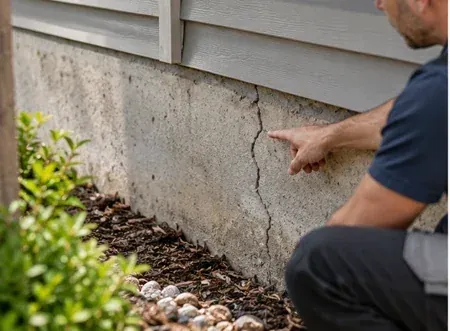
Hairline cracks that never change come with concrete curing and normal settling — we see them on half the homes we look at, and most of the time we tell the caller to watch and relax. What worries us: cracks that grow, come back after a patch, or run diagonally across a wall. Especially after a heavy rainy season — that's when we get the real calls.
02 / Symptom
Doors or windows that start sticking — or gaps opening around frames
A door that worked last year and binds now can mean movement below. But here's the catch we explain to every caller — humidity alone swells wood doors in Florida summers, and paint buildup or a loose hinge does the same thing. One sticky door proves nothing. Our rule: a sticky door plus a crack or a gap around the frame — that's the combo that earns a visit.
03 / Symptom
Uneven slabs, patios, or walkways
A sunken driveway corner or a rocking patio slab is almost always a soil problem under flatwork — concrete that carries no house load. That's a different, cheaper job than structural foundation repair, and we do both. But figure out which one you're looking at before you pay for either — we'll tell you which it is on the visit.
No photo and no crack width settles the question alone. What these examples do: tell you which questions to ask us when you call — so the visit is productive.
Usually suitable for a scheduled evaluation
Stable, limited cracking
A thin hairline crack that hasn't changed — we usually tell you to watch it, not fix it.
One small drywall crack, and nothing else moving.
A settled walkway with the walls near it looking fine — that's flatwork, not foundation.
Watch it over time. We'll tell you whether monitoring — or concrete work — is the right call, and we don't charge for that judgment.
Needs professional assessment
Movement or multiple warning signs
Cracks that widen or come back after patching.
Stair-step cracks in block or brick mortar with shifting or gaps — we take these seriously.
Sloping floors plus binding doors plus wall separation — two or more together. That's the pattern that earns an evaluation.
If the building looks unsafe, get out of the affected area and call emergency services first. Then call us.
These signs help you decide when a structural evaluation makes sense — they aren't a diagnosis from afar. Call us and we'll confirm the right evaluation and when it's available.
Repair decisions start with a structural assessment
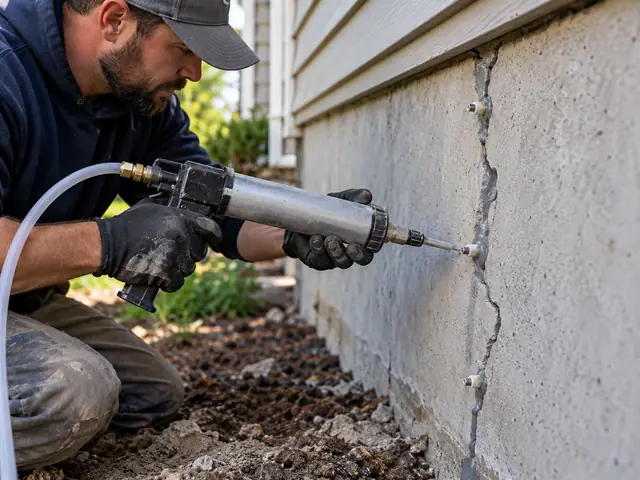
Settlement, uneven floors, broader structural movement — that's the category this hub covers, and the work we do. When the worry is one specific crack, start with our foundation crack repair guide: it tells you exactly what to record — width, direction, change over time. One warning we give every caller: a tube of crack filler is not a substitute for checking whether the ground is still moving.
What waiting does
What happens if you wait
Foundation movement doesn't reverse on its own. It sits still or it gets worse — there's no third option. We've never seen it go the other way.
A drainage problem, caught early
It stays a drainage job
Grading and downspout work fixes it → water leaves the foundation zone instead of feeding it → the problem never turns structural. We see this every week in Apopka: the cheapest fix is the one you do before the ground starts moving. We say it so often it should be on our trucks.
The same problem, ignored
It turns into uneven settlement
The ground keeps moving → one part of the slab sinks faster than the rest → now you're talking piers — a far bigger job with a far bigger number. We've watched drainage jobs turn into pier jobs. The difference is timing.
Anything still moving, month to month
Monitoring costs nothing; waiting costs
Monitoring costs nothing → dated photos and a monthly walk-around show whether it's still moving → waiting on active movement is what gets expensive. That's the sentence we repeat most on this trade, because it's the one that saves people the most money.
Three safety checks before any repair conversation
✓
Sinkhole signs mean engineer first, not a contractor
Florida's limestone makes sinkholes real, even if uncommon. Circular dead patches in the yard, a sudden depression, tilting fence posts, cloudy well water — call a geotechnical engineer and report it to local authorities. And check your policy now: standard homeowner's coverage usually excludes sinkhole damage without a separate endorsement. We'll tell you the same thing on the call — some jobs aren't ours, and we'd rather say so.
✓
No method before the cause
If a contractor names piers or underpinning before explaining why the ground moved, pump the brakes. Our rule: a contractor prices repair methods — a licensed structural or geotechnical engineer determines cause. On significant or ongoing movement, get the engineer first. Any contractor who's offended by that is telling you something, and we mean that.
✓
Don't buy a scope from photos
Photos can't show soil conditions, how far movement runs, or whether it's settlement, erosion, or something deeper. Our scopes need boots on site with measurements. Anyone who names the method off a picture is selling, not diagnosing — and we'll never do that to you.
Why it happens here
Why Apopka soil moves the way it does
Most of Apopka sits on sandy, loosely compacted soil. The wet/dry moisture cycle — not one storm — is what moves most Central Florida foundations. Here's how we see it play out:
Heavy rain washes support away
Summer downpours and tropical systems wash soil out from under and beside a slab. Voids open up; the concrete above a void eventually cracks, sinks, or tilts. Driveways, pool decks, and patios show it first — they're thin and carry no house weight to hide the movement. We read these like a map.
Drought shrinks the soil and pulls it back
In dry stretches the sandy soil consolidates and pulls back from the foundation edge. Then the next storm's water pours straight into the gap and the cycle starts over. We watch this swing play out every year — it's the rhythm of this trade in Central Florida.
Tree roots lift and dry
Big trees in older Apopka neighborhoods drink hard — especially in drought — pulling moisture out of the soil while roots physically lift nearby concrete. We check the trees before we blame the slab.
The pattern is seasonal
Most of our callers first notice cracks, sticking doors, or sloping floors after hurricane season or a long wet stretch. The ground shifted weeks earlier; the house just took its time showing it. New cracks after a wet season is our most common call — we'll ask about the weather before we ask about the crack.
Pond-adjacent ground stays saturated longer
Homes near retention ponds and low lakes — Wekiva Village saw pond overflow during Milton, and Clear Water Lake has a history of rising into yards — sit on ground that stays saturated longer and carries less weight. For those homes, we fix drainage and grading early. It's the cheapest insurance in this trade.
Prepare for your call
Prepare useful foundation observations
The rule we live by: the cause gets evaluated before any repair is recommended. Never the other way around. If a contractor reverses that order, call us instead.
1
Document the changes
Note where the cracks are and how wide, which doors or windows stick, where floors slope, and when you first noticed each. Photos weeks apart show whether it's still moving — that's the single most useful thing you can bring us. We'll ask for these on the call.
2
Ask about the cause
Drainage, soil, settlement — and whether you need a structural or geotechnical engineer's opinion before anyone picks a repair method. We'll tell you honestly when the answer is yes.
3
Review the proposed fix
Exactly what gets done, which areas it covers, how we get to the work area, what permits are needed, and whether follow-up monitoring is included. We put it in writing before you approve anything — and we'd want the same from anyone.
Before you call
Call now or wait — and what to have ready
Urgent problems & scheduling
Rapid structural movement or a building that feels unsafe
Serious foundation or structural concerns — call and report them: sudden widening cracks, new wall separation, leaning walls, floors sloping fast, or movement after water intrusion. A cosmetic hairline crack alone isn't an emergency, and we'll tell you that straight.
If collapse looks possible, leave the area and call 911 or the local authority. A call can't guarantee an urgent engineer, shoring, or a same-day repair — we'll confirm what's actually available and when, honestly.
Important: our calls are answered during stated hours. An immediate visit or same-day repair isn't promised — we'll confirm appointment and arrival options when you call. No false urgency from us.
☎
Call now
Cracks actively growing week to week
A floor that's visibly sloping
Possible sinkhole signs — yard depressions, tilting posts, cloudy well water. Engineer first, not a contractor — and we'll say so on the call.
◷
Can wait for a scheduled visit
Hairline cracks that haven't changed in a year
A settled walkway with no wall symptoms — keep monitoring and photographing meanwhile, and we'll look when you're ready
Have ready when you call
Walk the full perimeter — new cracks, or gaps where soil pulls away from the slab
Check exterior brick or block for stair-step mortar cracks
Open and close the same doors and windows and note any change
Photograph every crack with a coin beside it for scale — and date the photos. We'll ask for these first.
Expect heavy equipment and digging around the work area, some noise and vibration. Our crew explains each phase as it happens. If we go quiet, ask — we'd rather answer than have you wonder.
Staged work — we run piers in stages, with measurements between them
That's the work being verified, not stalling. We'll show you the readings.
After — keep the zone clear, and expect follow-up
Keep the work zone clear and expect our follow-up monitoring visits; we confirm settlement repair over months, not at the final invoice. That's how this trade is done right.
Helpful answers
What foundation repair typically costs in Apopka
We price by what we find on site — typical foundation repairs run from $2,200 (averaging around $4,800), crack injection from $500 per crack, piers from $1,400 each, and mudjacking from $500. Typical starting prices, not fixed prices.
Service
Typical starting price
Typical foundation repair (avg ~from $4,800)
from $2,200
Crack injection, per crack
from $500
Piers, per pier
from $1,400
Mudjacking / slab leveling
from $500
Every problem's work and cost is different — the confirmed price comes only on the call or at inspection time. Starting prices below are typical, not fixed prices.
Foundation Repair FAQs
+Do I need to worry about sinkholes in Apopka?
Sinkholes are uncommon but real in Florida — most of the state sits on soluble limestone. The warning signs: circular patches of dying vegetation, sudden yard depressions, tilting fence posts, cloudy well water. See those, and you call a geotechnical engineer and report it to local authorities — that's engineering work, not standard foundation repair, and we'll tell you so. And check your policy: typical homeowner's coverage needs a separate sinkhole endorsement in Florida.
+Why did cracks appear after the rainy season?
Apopka's sandy soil shifts with moisture swings. Heavy rain washes supporting soil from under or beside the slab, and the symptoms — cracks, sticking doors, sloping spots — often show up weeks after the storms pass. We tell callers: new cracks after an unusually wet season is the most common reason Central Florida homeowners call us. It's almost a calendar event.
+My doors stick in summer but work fine in winter — is my foundation moving?
Not necessarily. Humidity alone swells wood doors and frames, and Florida summers are humid enough to make doors stick seasonally with no structural cause. The pattern we take seriously: sticking plus other signs — wall cracks, gaps around frames, sloping floors — or sticking that keeps getting worse year after year. One sticky door in August? We usually tell you to watch it.
+Is concrete leveling the same as foundation repair?
No. Concrete leveling lifts settled non-structural slabs — driveways, patios, walkways — usually by injecting material beneath them. That's a different crew and a different price. Foundation repair addresses the load-bearing structure the house sits on — piers, underpinning. Different problems, different methods, very different scopes. A sunken driveway with no wall cracks is almost certainly a leveling job, and we'll say so — we'd rather do the smaller job than sell the big one.
+Why can't a contractor scope my foundation repair from photos?
Because the method follows the cause. Photos can't show soil conditions, how far movement runs, or whether it's settlement, erosion, or something deeper. Our scopes need an on-site evaluation with measurements — crack widths, floor elevations, drainage patterns. Anyone who names a method before that is guessing, and we don't guess with your foundation.
+Should a contractor or an engineer evaluate my foundation?
For significant or ongoing movement, yes — get an engineer's read on the cause before picking a repair method. Especially with possible sinkhole activity. We won't flinch at an independent evaluation; on structural-scale jobs we suggest it ourselves. A contractor who's threatened by a second opinion is telling you everything.
+Will my homeowner's insurance cover foundation repair in Florida?
Usually not — gradual settlement and soil movement are typically excluded as maintenance. Sudden covered events are different, and sinkhole damage needs a separate endorsement in Florida. Read your policy's exclusions before you need them, and document sudden changes with dated photos. We'll help you document what we find.
+Do you offer foundation repair near me in Apopka?
Yes — we serve homes across Apopka, and the number on this page connects you with the team that handles foundation repair for your address. Confirm availability and timing when you call.
Further reading
Sources and technical references
View supporting references and safety sources
01
Florida Building Code — foundation, soils, and structural requirements for residential construction and repair
We build to it.
02
Florida Geological Survey (FDEP) — sinkhole occurrence, warning signs, and reporting in Florida's limestone geology
03
Industry practice — independent engineering evaluation before picking a structural repair; monitoring periods to tell active movement from historic
Our process follows both.
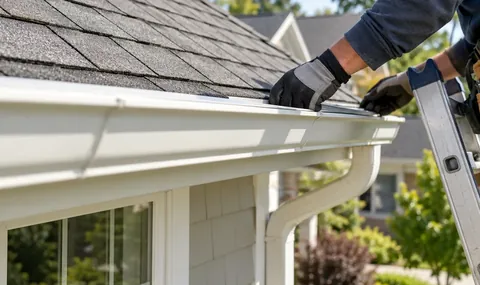
Most foundation conversations in Apopka start with water that starts at the roof, and a clogged trough pours a whole roof of rain against one stretch of slab edge, which is why scheduled gutter cleaning is the simplest foundation protection most homes can arrange. Homes under heavy tree cover go a step further with gutter guards chosen for the debris actually falling on that roof, so overflow stops being a monthly event. The same pooling that lifts a walkway also undermines a patio build, so drainage gets settled before installing an outdoor kitchen on that slab rather than after the counters start to shift. Inside, the cosmetic symptom owners notice first is often cabinet doors drifting out of line, a problem no amount of hinge adjustment fixes the way refacing or resetting the cabinets can once the movement underneath has been addressed. If you want to confirm your street is covered before booking an assessment, the areas we serve in and around Apopka list the neighborhoods we visit.
Before you choose the work: foundation cracks and settling symptoms can need a separate evaluation from rainwater drainage or pooling around the house. Read our rainy-season checklist — and when to call a pro versus handling it yourself. We'll help you sort which is which.
Call us with the location of the movement or cracks and ask about inspection and repair options. The more specific you are about what you're seeing, the better our visit goes — photos with a coin for scale, dated, are worth more than a paragraph.