
Water spilling out of the sink
Turn off the faucet, stop the dishwasher cycle if safe and protect nearby flooring. Standing water alone does not prove the sewer main is blocked.
Standing water in the kitchen sink, a gurgling disposal or dishwasher water returning into the basin? The blockage may be in the P-trap, disposal outlet or shared kitchen branch—not necessarily the main sewer.
Emergency calls answered 24/7 for active overflows or sewage backups. Service and appointment availability are confirmed when you call.
Stop using the sink and dishwasher if wastewater is rising, spilling onto cabinets or floors, or returning into the sink. Keep people and pets away from contaminated water. Do not run the garbage disposal to force a blockage through, and avoid adding chemical drain cleaners—especially when water is already standing.
Turn off the faucet, stop the dishwasher cycle if safe and protect nearby flooring. Standing water alone does not prove the sewer main is blocked.
Backflow when the dishwasher drains or the other sink basin is used may point to a blockage at the common trap or kitchen branch drain.
A problem affecting multiple fixtures may be in the building drain or sewer line, not just the kitchen sink. Avoid using water elsewhere until the source is assessed.
Tell us whether water is overflowing, whether other drains are affected and if a dishwasher or disposal is involved.
Call (407) 964-8991 — Emergency Plumbing24/7 emergency call answering; on-site plumber availability and timing are confirmed when you call.
Cooking oils can cool and coat the pipe. Food particles and soap residue may cling to that buildup, gradually narrowing the line.
The curved P-trap catches debris and can restrict one fixture. The trap also prevents sewer gases from entering the kitchen when functioning properly.
Waste may collect at the disposal outlet or connected piping. A humming or jammed disposal is a separate electrical/mechanical issue and should not be treated as an ordinary pipe clog.
Dishwasher discharge may back up into the sink when a shared drain line is blocked. Connection problems can also cause symptoms that look similar.
If bathrooms and toilets also back up, see sewer line repair or emergency plumbing instead of assuming this is a kitchen-only clog.
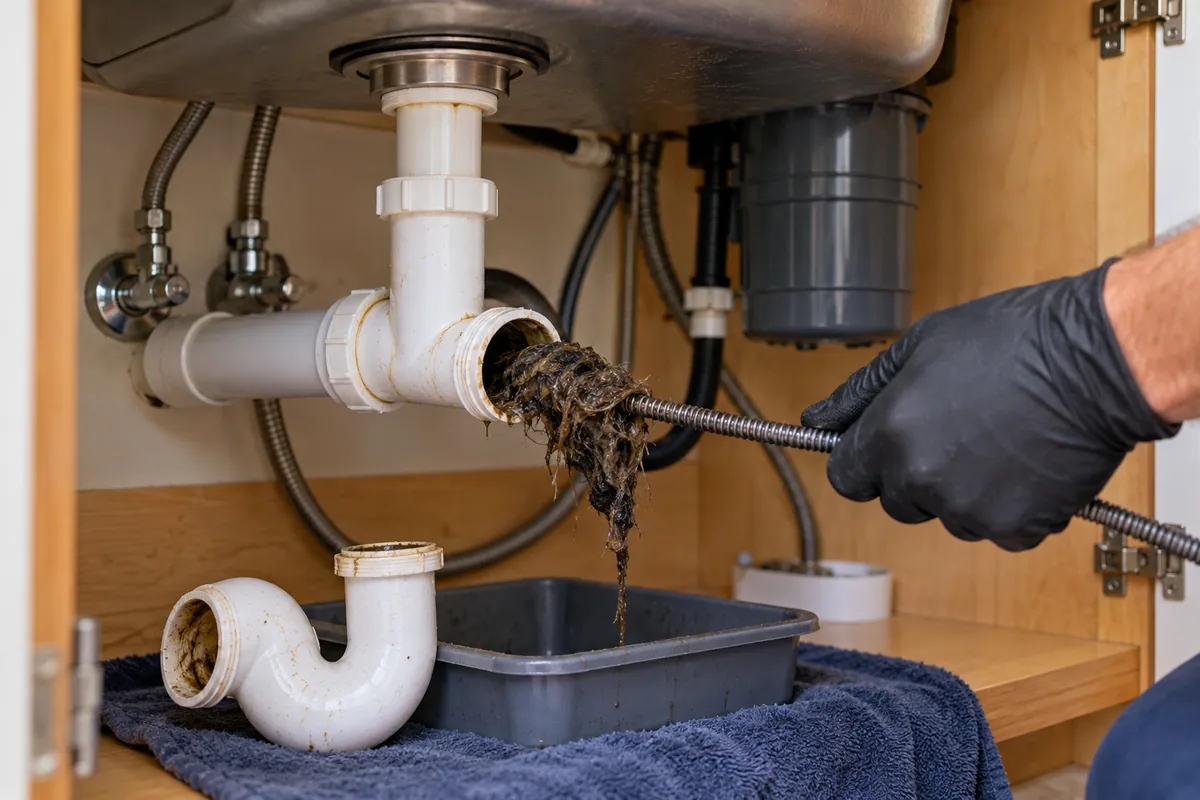
Unclogging starts by identifying whether the restriction is at the strainer, trap, disposal connection or farther down the drain line. The repair method follows the actual cause rather than treating every slow sink the same way.
A localized blockage may be accessible beneath the sink. The trap and connections should be reassembled and checked for leaks afterward.
A suitable drain cable can reach farther into the kitchen branch line where the blockage cannot be cleared at the trap. Method and cable size depend on the pipe and access.
If the issue is tied to running the disposal or dishwasher, the drain hose, air-gap arrangement where present, outlet and shared connections may need inspection.
Repeat clogs can indicate significant buildup, deteriorated piping or an obstruction deeper in the system. Camera inspection or additional drain work may be warranted; hydro jetting is not right for every kitchen drain.
Share whether one basin or both are blocked, how long the clog has lasted, and whether running the dishwasher creates backup.
Check accessible connections first, then use an appropriate drain-cleaning method if the blockage is farther into the line.
Run water and confirm flow at the sink, while checking disturbed connections for leakage. Discuss next steps if symptoms suggest a deeper restriction.
Before service, share whether a chemical opener was poured into the sink. Mixing chemicals or opening a treated trap without precautions can cause injury.
Single-basin, double-basin and island sinks can have different trap and vent configurations. A disposal-equipped kitchen may share drain connections with a dishwasher, while an older kitchen may have fittings and pipe materials that affect safe cleaning methods. The proper approach depends on the home's actual layout, not its ZIP code.
For recurring kitchen sink clogs, an inspection should distinguish a limited trap obstruction from a branch-line issue. A main sewer line problem is more likely when other fixtures are involved. For broader household blockages, visit Drain Cleaning in Apopka.
A kitchen-specific diagnosis can prevent unnecessary sewer cleaning and avoid damaging the disposal.
Inspect the trap and the shared connection beneath the sink. On a double-bowl setup, the clog may sit past the point where the two sides meet.
Dishwasher discharge routing and disposal connections can contribute to backups. A noisy or jammed disposal is not the same as a blocked drainpipe.
A common branch or downstream obstruction becomes more likely. If wastewater rises in another fixture, stop using the affected plumbing until the shared line is assessed.
They may share a drain connection. A restriction at the trap or branch line can force wastewater back toward the sink; connection issues are also possible.
A slow sink is usually a scheduled repair. An active overflow, wastewater flooding cabinetry, or sewage backing up into multiple fixtures is urgent.
Avoid adding chemicals to standing water or combining cleaners. Chemicals may damage some materials and create hazards for anyone opening the line. Tell the plumber if one was used.
Yes. When the shared outlet or downstream drain is obstructed, wastewater can rise into the other basin. A jammed disposal motor is a different diagnosis.
Snaking can clear many reachable restrictions, but the result depends on pipe condition and the obstruction. Repeat grease buildup may require a different follow-up approach.
Recurring symptoms justify checking beyond the trap for buildup, poor drainage configuration or pipe deterioration rather than repeating the same short-term clearing.
It is safer not to. Dishwasher discharge can push more water into the obstructed sink drain and cause overflow.
No. Many sink clogs are local to the kitchen. Multiple affected fixtures or repeated wastewater backups can justify investigating the main line.
Slow drainage, standing water or a repeated kitchen backup? Call and describe what happens when the sink, dishwasher or garbage disposal runs.
Call (407) 964-8991 About Kitchen Sink UncloggingEmergency calls answered 24/7; plumber availability and repair appointments are confirmed when you call.