
Toilet bowl rising or overflowing
A local obstruction or shared drain blockage can push wastewater over the rim. Repeated flushing makes the overflow worse.
Running toilet, weak flush, water at the base or a bowl that keeps clogging? Toilet repair depends on whether the fault is inside the tank, at a supply connection, in the fixture seal or farther down the drain. An overflowing bowl requires different precautions than a slow tank leak.
Emergency calls answered 24/7 for overflows and active leaks; on-site availability and repair timing are confirmed by phone. Routine toilet repairs are scheduled.
Do not flush again. If you can safely reach the shutoff valve behind the toilet, turn it clockwise to stop the tank refilling. If wastewater is backing up into other fixtures, stop using sinks, showers and washing machines as well. Keep children and pets away from sewage; avoid electrical hazards near wet floors.
A local obstruction or shared drain blockage can push wastewater over the rim. Repeated flushing makes the overflow worse.
Turn off the toilet's water supply when safe. A cracked porcelain tank or failed connection can release water quickly.
Toilet backups combined with gurgling tubs or multiple slow fixtures can indicate a larger drain or sewer problem.
Tell us whether clean water or sewage is spilling, whether the shutoff valve works and if other drains are backing up.
Call (407) 964-8991 — Emergency Toilet HelpEmergency calls answered 24/7; plumber dispatch and on-site availability are confirmed when you call.
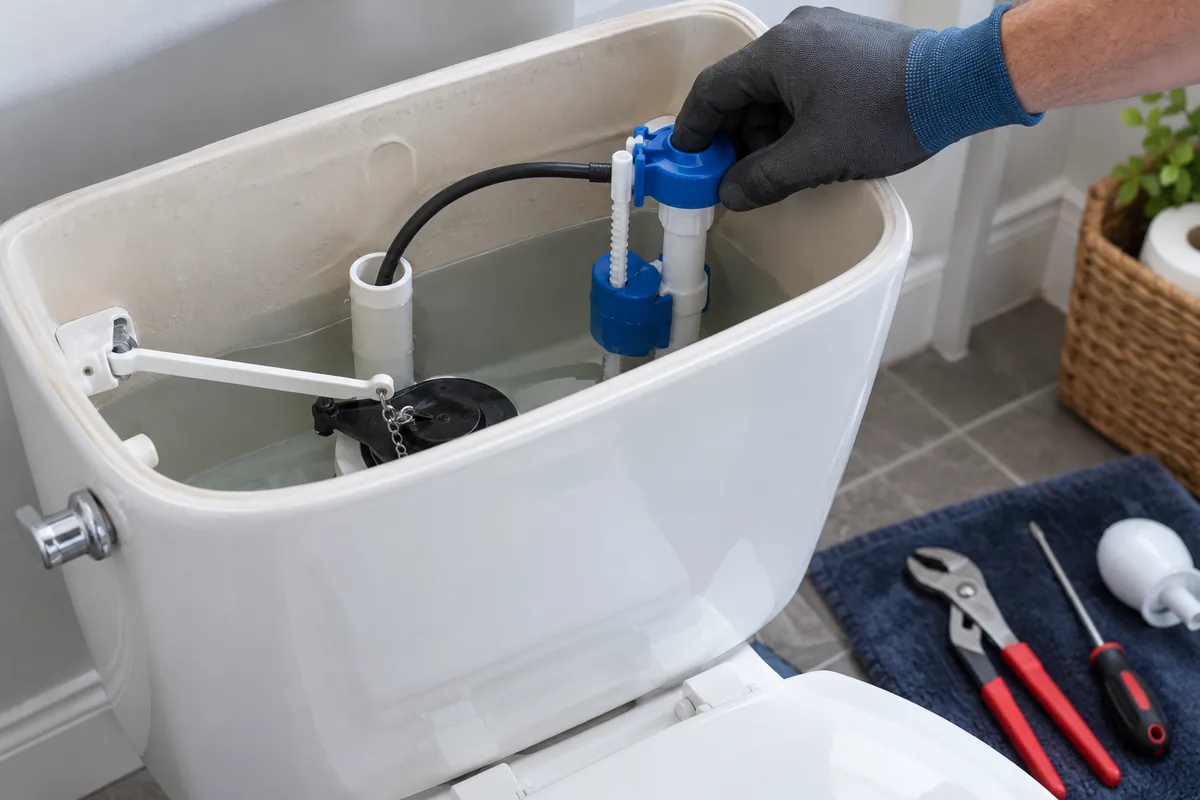
A worn flapper, incorrect chain tension, fill valve or overflow adjustment may keep water flowing long after a flush.
Restricted trap passages, toilet mechanism problems or drain-line obstructions can prevent complete flushing. The right repair depends on where the blockage is.
A failed wax or wax-free seal, damaged flange, loose toilet or nearby supply leak can produce similar puddles. Caulking over the leak does not fix the source.
Movement can damage the drain seal. The flange and floor condition should be checked before the fixture is reset.
Supply shutoff problems, sediment in the inlet or a failing fill valve may reduce water flow to the tank.
A damaged porcelain fixture may require replacement, particularly if cracking causes leaks. Do not overtighten mounting hardware.
When the porcelain and tank are sound, accessible components can often be adjusted or replaced to fix running water, ghost flushing or poor tank refill.
A toilet auger may clear a trap obstruction without damaging the bowl. Repeated clogs or backup into other drains may require broader drain diagnosis, not repeated plunging.
The toilet may need to be lifted so the drain flange, floor support and seal can be inspected. A new seal alone will not stabilize a broken flange.
Leaking flexible connectors, angle stops or tank bolts may need targeted replacement with compatible parts.
A cracked fixture, recurring repairs or a planned bathroom upgrade may justify replacement. Verify flange alignment, fit and water-supply connection before installation.
Toilet-specific problem or whole-house backup? A single fixture clog can be very different from a main sewer obstruction. For multiple fixtures backing up, see Sewer Line Repair or Drain Cleaning.
Describe whether the toilet is overflowing, running, leaking or failing to flush and whether any other bathroom fixtures are affected.
Inspection can cover tank components, supply connections, toilet stability, the trap and the connected drain as needed.
Target the failed part or blockage, test flushing and refill, and verify the base and supply are not leaking before normal use resumes.
In a home with more than one bathroom, check whether the problem is isolated to one toilet before assuming the main drain is blocked. A single running tank usually points to a fixture component; several slow-draining fixtures may indicate an issue farther down the shared line.
For older bathrooms, floor movement, previous toilet resets and flange condition can matter as much as the fixture itself. For newer bathrooms, compatible flush components and proper sealing are still essential. The service scope should be based on the actual plumbing condition, not the home's age alone.
A toilet can waste clean water, leak wastewater or be affected by a blocked shared drain. Each needs a different repair.
Check flapper sealing, the fill valve and tank water level. These faults can often be repaired without replacing the complete fixture.
A compromised wax seal, flange or drain connection may allow wastewater escape. Stop using the toilet until the source is assessed; replacing only the seal may not fix a damaged flange.
If a nearby shower or other toilet backs up, assess a shared drain or sewer line rather than repeatedly treating the first toilet.
Yes when wastewater is escaping, you cannot stop the water, or other fixtures are backing up. Stop flushing and use the toilet shutoff if safely accessible.
Often. Flappers, fill valves and other tank mechanisms can frequently be serviced if the porcelain tank and bowl are in sound condition.
A worn seal or damaged flange is possible, but a loose supply fitting or tank leak can also send water to the floor. The source needs to be traced.
The toilet trap, drain connection, poor flushing action or downstream pipe can contribute. Recurring clogs justify diagnosis rather than repeated chemical treatments.
A crack that leaks through the porcelain generally calls for replacing the damaged fixture or component, not relying on a surface patch.
No. Movement may compromise the drain seal and allow concealed leaks. The toilet, flange and floor attachment should be inspected.
Not always. An isolated toilet clog may be local to that fixture. Multiple affected drains, recurring sewage backup or wastewater emerging elsewhere can signal a main drain or sewer issue.
Replacement can make sense for cracked porcelain, severe damage or persistent problems where the repair cost and fixture condition do not justify another repair.
From a running toilet to an urgent overflow, call and describe the symptoms so the repair options can be discussed.
Call (407) 964-8991 for Toilet RepairEmergency calls answered 24/7 for active overflows and leaks. On-site assistance and appointments depend on availability.