
Unexplained wet yard
A wet patch when irrigation is off can indicate a water service leak, but rainwater and irrigation leaks must be ruled out.
A wet yard, moving meter with fixtures off or sudden supply pressure loss may indicate a buried service-line leak. The first steps are confirming the source and determining whether the affected pipe is on the utility or customer side of the meter.
Emergency calls answered 24/7 for serious active plumbing problems; availability and scheduling confirmed by phone.
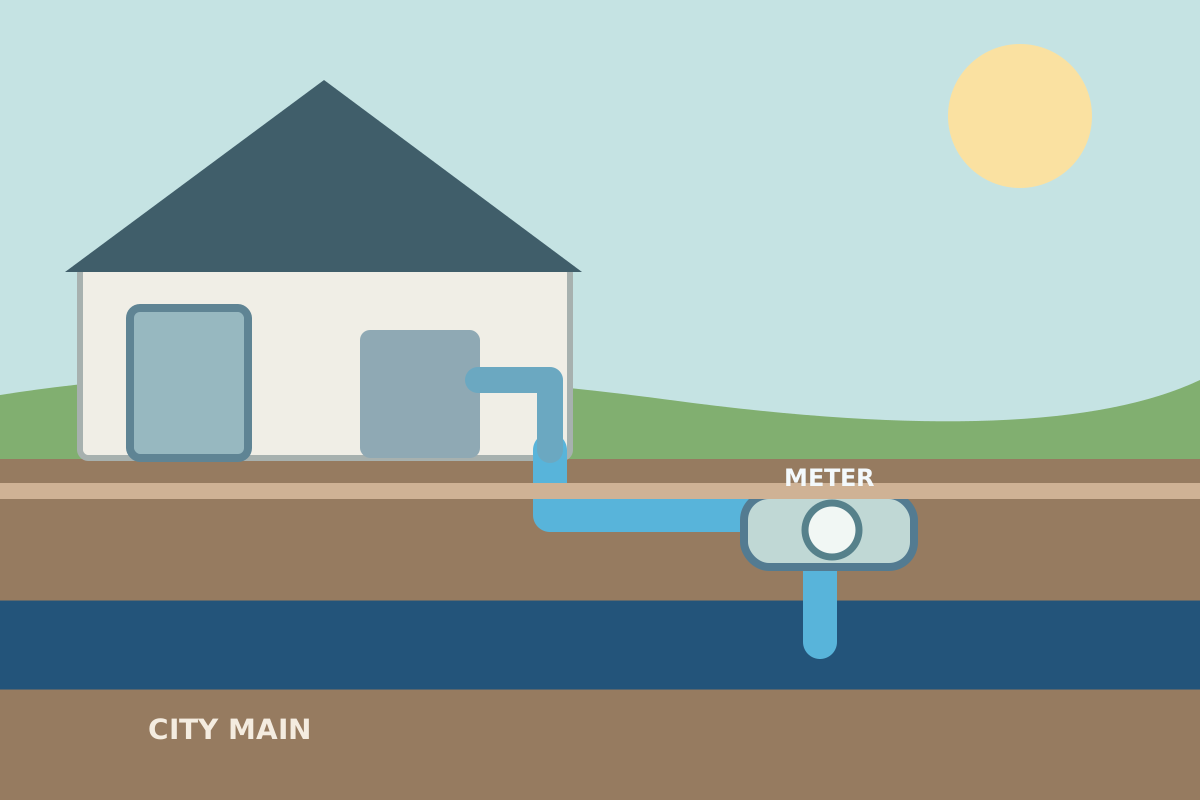
Water pouring into the yard or a sudden major pressure loss? Shut off the safe, accessible private-side valve if you can, avoid electrical hazards in wet areas, and call about urgent water service line repair. If the leak appears at the meter or on the utility side, contact the water utility as well. Emergency calls are answered 24/7; on-site response depends on availability.
Emergency call answering is available 24/7. Dispatch and service coverage must be confirmed by phone.
Urgent Water Service Line Leak? CallEmergency calls answered 24/7. On-site attendance is confirmed when you call.
A wet patch when irrigation is off can indicate a water service leak, but rainwater and irrigation leaks must be ruled out.
A meter-flow test can help locate ongoing consumption when the property supply is otherwise idle.
Supply restrictions, valve issues or leaking water lines can reduce pressure; the service line is not automatically the cause.
Identify whether the leak falls before or after the meter and which utility or property owner is responsible.
Confirm the leak with meter checks, line isolation and suitable locating methods. Ground wetness alone does not identify a failed service line.
Where pipe condition and access allow, replace a damaged segment or fitting using approved materials and connections.
A line with repeated leaks, widespread corrosion or incompatible material may justify replacing the full private section rather than another spot repair.
Verify line integrity, pressure and safe water quality procedures, then address excavation, landscaping and any applicable inspections.
The City of Apopka says it maintains utility service lines up to the customer meter; the remaining private portion belongs to the property owner. Confirm responsibility before authorizing work.
Irrigation lateral, reclaimed-water piping and potable water service lines serve different functions. Incorrect identification causes unnecessary excavation.
Some service lines can be installed with boring or pulling methods depending on alignment, utilities and access. Trenchless does not always mean zero excavation.
Locating buried utilities and obtaining required approvals matters. Never excavate blindly near electric, gas, fiber or municipal infrastructure.
First confirm that a fixture, toilet fill valve, irrigation system or outdoor hose bib is not consuming water. If the meter still indicates flow with all fixtures off, isolate the private supply when a safe shutoff is available. Compare readings before and after isolation to narrow whether the leak is between the meter and home. These checks guide professional leak detection; residents should not open utility-owned fittings or excavate to find a leak.
A small accessible damaged section may be repaired, but a corroded or brittle line with repeated failures can justify replacement. Pipe diameter, material, installation depth, permitted route, meter connection and supply pressure affect the plan. A proposed directional bore still needs entry and exit access and utility locating. Ask how disturbed landscaping, hardscape and site restoration will be handled.
Water service work can interrupt household water and involve utility coordination. Confirm whether planned work includes required approvals, pressure testing, appropriate flushing and any water-quality precautions. Work beyond the private property side may belong to the utility or require additional authorization; the site should not promise to repair municipal mains.
The correct repair depends on pipe material, age, accessibility, the damaged length, and the route between the meter and building. Copper, approved plastics and other materials have different connection requirements. A short, accessible failure may justify a spot repair; repeated failures or degraded piping may justify replacement. No material or trenchless method fits every property.
Before excavation, underground utilities need locating through applicable procedures, and permit/inspection requirements must be checked locally. The scope should address driveway or landscape access, temporary water interruption, pressure/leak testing, backfilling and any agreed surface restoration. Meter tests are clues, not a stand-alone diagnosis—irrigation branches, private wells and inaccessible valves can change the investigation.
City of Apopka ownership guidance applies to city-served lines; verify the actual utility and meter boundary for the property.
The City says it maintains its service line up to the customer meter; the remaining private segment is the property owner’s responsibility. Other utilities and private-well properties can differ.
Use appropriate utility-location procedures and establish the leak route, depth, access and surface conditions before excavation.
Compare pipe material, the number of failures, repair accessibility, water interruption and driveway/landscape restoration. Trenchless methods require suitable site conditions.
Apopka states that it maintains through the meter, while the private service line after the meter is the owner’s responsibility.
No. Irrigation, storms and drainage may cause wet ground; line isolation or location testing is needed.
Sometimes. The method depends on access, line path, utilities and pipe condition.
No. Valve restrictions, fixtures, pressure regulation and municipal supply can also affect pressure.
For uncontrolled leaking, use a safely accessible shutoff if possible; do not enter energized standing water.
Repeated failures, material, age, leak extent, access and the comparative scope of work.
Wet ground near your water meter or pressure suddenly dropping? Call about diagnosing the supply pipe, locating the responsible section, and choosing a repair or replacement plan.
Call (407) 964-8991