APOPKA, FL · PLUMBING SERVICE INFORMATIONExplore Apopka service area
Home Services ApopkaCall (407) 798-8765 ↗
RESIDENTIAL PLUMBING · APOPKA, FL

Slab Leak Repair in Apopka, FL

Hot spot on the tile? Bill jumped for no reason? We get these calls every week in Apopka — and our rule never changes: we don't call it a slab leak until the meter test, the line isolation, and our acoustic gear all point at the same place. Then we walk you through the fix — a spot repair through the floor, or a reroute overhead — whichever costs you less over the life of the pipe. When you need slab leak repair near me in Apopka, it helps to know what the job actually involves first — the sections below lay it out in plain language.

We connect you with licensed and insured plumbing contractors in Apopka, FL.

Emergency calls are answered 24/7; routine visits are booked on confirmed availability — one call to (407) 798-8765 sorts out which is which.

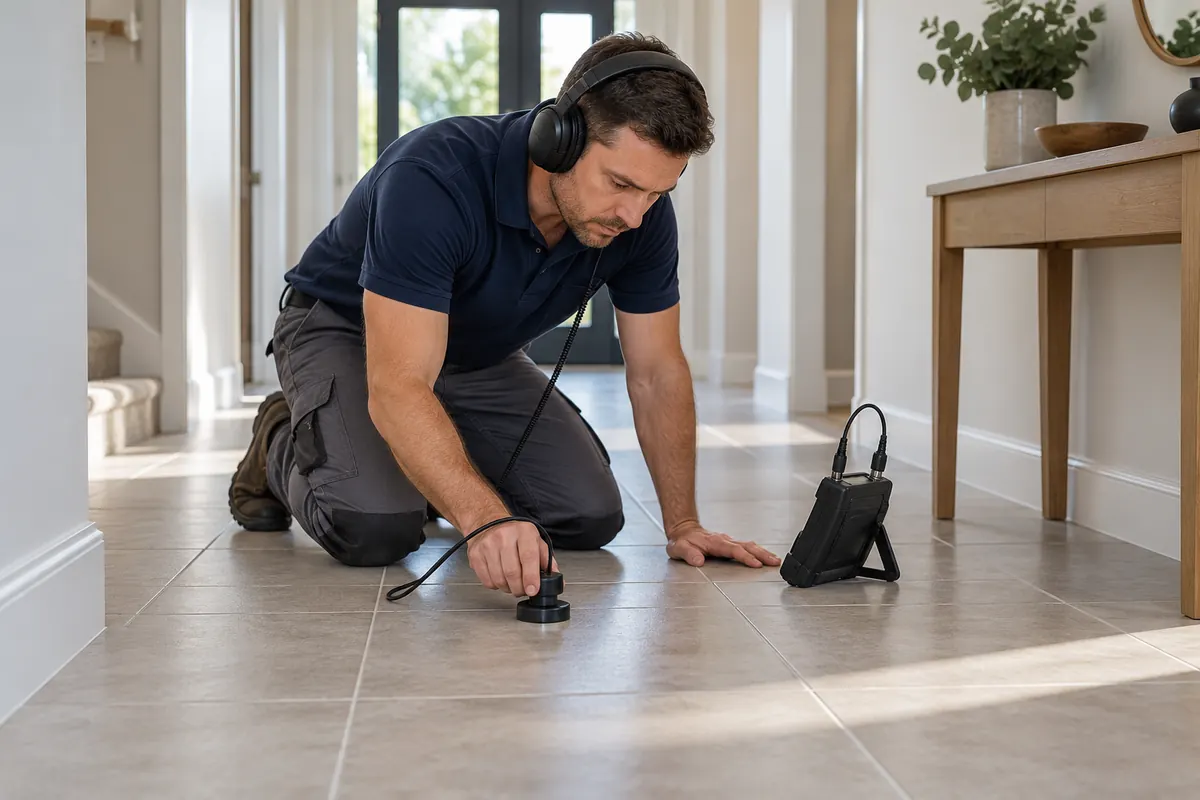
Illustrative specialist using an acoustic listening sensor on intact residential tile flooring
Illustrative residential service scene
CLUES TO INVESTIGATE

Signs of a Possible Slab Leak

Your bill or meter changed

We tell every caller the same thing: a jumped bill is a lead, not a diagnosis. We read the meter with every fixture off. If it still moves, we rule out the two things that fool people most — the irrigation system and a running toilet — before we say a word about pipes under concrete.

Warm or damp spots on the floor

A wet spot on the slab isn't always a slab leak. We've traced warm tile to afternoon sun through a sliding door, and damp patches to AC condensate running along a wall. We photograph the pattern and watch it over days before we blame any pipe.

Losing pressure or hearing water run

Tell us whether the pressure drop hits one fixture or the whole house, and exactly when you hear water running. One fixture is a fixture problem. The whole house, with a hiss that never stops — a pressurized leak runs 24 hours a day — that's the call that gets us to your door with detection gear. We don't open concrete on a hunch.

DETECTION IS A SEPARATE STAGE

Establish the source before opening a floor

Here's how we work a slab leak: everything above the floor gets checked first — fixtures, supply connections, anything else that could be wetting that spot. Then we isolate sections of the line and pressure-test them one at a time. Our acoustic gear chases the sound of escaping water, but we'll tell you its limits straight: deep pipe under a quiet slab is easy to hear; shallow pipe under a noisy household is not.

Thermal cameras read temperature on the surface. They do not see through concrete, and a warm patch is not a confession — the leak can sit three feet away, with water tracking along a crack. Moisture meters tell us what's wet, not where it started. We lay every reading on the table and show you exactly where our certainty ends, because that's where guessing begins.

Nobody cuts your floor until we can point at the spot and say why. We show you the line, the test results, and the exact opening we need — before any saw comes out. And finding the leak, fixing the pipe, and putting your floor back are three separate scopes with three separate prices. You approve each one in writing.

COMPARE THE ACCESS CHOICES

Spot repair, reroute or broader pipe work?

Trade-offs after the leak is investigated
ApproachPossible reasonWhat to clarify
Open the slab at the spotThe right call when the leak is one spot and the pipe around it is sound. A two-foot opening beats breaking half the room.We agree on the opening size, dust control, the pressure test after the fix, and who patches the concrete and matches your floor — in writing, before we cut.
Reroute the line overheadWhen the under-slab run already failed once, a new line through the wall or attic usually costs less than breaking concrete a second time.We walk the route with you — where the new line runs, what gets opened, and how we cap the dead section so it can never fill again.
Partial or whole-home repipeTwo leaks in a year on the same run? That pipe is telling you it's done. We stop patching and start replacing.We show you the actual pipe we pulled out, then compare material options, fixture reconnections, permits, and who fixes the walls. You decide with evidence, not pressure.

We cut enough pipe to know what's actually under your floor — copper, CPVC, PEX, polybutylene — instead of guessing from the year on your appraisal. A 1970s house can hold perfect copper; a 1990s house can hide crumbling polybutylene. Age tells us where to look, not what to sell you.

IF WATER IS SPREADING

Protect people first, then limit the water source

Close the nearest shutoff if you can reach it from a dry spot — but don't muscle a stuck valve, and never walk through water to get to one. Water anywhere near an outlet or appliance means stay out. A spreading leak is an urgent visit, not a wait-and-see.

One thing contractors don't always say: fixing the pipe doesn't dry anything. The slab, the baseboards, the wall cavities — they're still wet, and wet stays wet until it's dried. We flag what needs drying as its own scope. For uncontrolled flow, see Emergency Plumbing.

COST AND PROJECT PLANNING

What Your Slab Leak Repair May Include

Here's what moves the number: how long detection takes, where the leak sits, tile versus wood, slab depth, route length, pipe condition, and how much pipe gets replaced. The spot repairs we do typically land from $500, and rerouting a failed under-slab line typically runs from $1,500 — typical starting prices, not fixed prices. We itemize detection, pipe work, testing, concrete, and flooring separately, so you see what each step costs.

We price your home's actual construction — never what the neighbor needed. Before work starts, we confirm who issues permits at your address: the City of Apopka permitting portal covers city addresses, but an Apopka mailing address doesn't automatically mean city jurisdiction. We check, so the job passes inspection the first time.

  1. Bring the history

    Tell us about every earlier leak, every repair, and exactly when the floor changed. History shortens our hunt by half — we've cracked cases from a two-sentence description.

  2. Compare access in writing

    Ask us why this route and not the other one, exactly what gets opened, and which options we ruled out. Get it in writing — a contractor who won't write it down is selling, not diagnosing.

  3. Plan verification and restoration

    We confirm the pressure-test procedure, when your water is back to normal, and whose truck patches the floor. If restoration isn't us, we name who it is. “Somebody” is not a plan.

WHAT MATTERS BEFORE REPAIR

Choose a slab-leak repair only after confirming the source

Concrete is expensive to cut and expensive to put back. We don't touch it until the failed line is isolated and the spot is confirmed — that's the rule that keeps a simple job simple.

Start with a suspicious meter or pressure drop

We run the meter test, isolate the supply line, and kill the usual suspects first — the irrigation, the toilet flapper, the hose bib you forgot about. Concrete gets touched only after the line is narrowed.

Repair through the slab or reroute

One bad fitting in good pipe? Spot repair. A run that's pinholing in three places? We reroute overhead and abandon the dying line. We put both prices side by side and you pick — not us.

Check what remains after plumbing work

After the repair we pressure-test the line at your real water pressure — not shop air. Then we walk you through what's still wet and what drying it needs, so nothing gets sealed in damp.

PLANNING YOUR BUDGET

What slab leak repair typically costs in Apopka

Every slab is different, so treat these as planning ranges — we confirm your price on the call or at inspection.

ServiceTypical starting price
Slab leak spot repairfrom $500
Reroute around failed sectionfrom $1,500

Every problem's work and cost is different — the confirmed price comes only on the call or at inspection time. Starting prices below are typical, not fixed prices.

Knowing which related service handles the follow-on problem saves a second round of phone calls later. When the bill climbs but no tap is dripping, leak detection to pinpoint hidden water loss finds where the water is actually going. Many pre-1980s Apopka homes still run on original pipe, and repiping corroded galvanized water lines is the long-term answer when repairs stop holding.

Homeowners often ask how these jobs connect, because one problem in an Apopka home rarely travels alone. Musty smells and soft floors can start below the house, where crawlspace pipe leak repair deals with the leaking line directly.

QUESTIONS ABOUT THIS SERVICE

Slab Leak Repair FAQs

Does a warm spot on the floor prove a hot-water slab leak?

No. A warm spot is a clue, not a verdict. We see warm tile from sun, from AC condensate, from a dishwasher line running hot — before we call it a slab leak, the meter test, the line isolation, and the acoustic read all have to point at the same place.

Can you always find the source without opening anything?

Not always, and a contractor who promises otherwise is selling you. Our instruments narrow the search to a few square feet. If the pipe is deep or the background noise is high, one small test opening is the honest next step — and we'd rather do that than cut a trench on a maybe.

Is rerouting always the better choice over a spot repair?

No. Rerouting a good pipe because of one bad fitting is throwing money at concrete you don't need to touch. But rerouting beats a spot repair when the run is already failing in two places — we show you the pipe, the route, and both prices, then you decide.

Does one slab leak mean I need to repipe the whole house?

Not automatically. One pinhole in copper doesn't condemn the house. But if we pull the pipe and it's green with corrosion in three places, we'll show it to you and compare a spot repair against a repipe — with numbers, not pressure.

Who fixes my floor after you open the slab?

Whoever the written scope says. Before we cut, we confirm — in writing — who patches the concrete, who dries the area, who matches your flooring, and who does the trim. If it's not us, we tell you exactly who to call. “Somebody” is not a plan.

What should I do while I wait for the assessment?

Limit water use, or close the supply shutoff if you can reach it from a dry spot. Stay out of wet areas near anything electrical, and watch whether the damp area grows — that tells us how fast the leak is moving. Then call (407) 798-8765 and we'll tell you what we can do today.

What should I check before booking slab leak repair near me in Apopka?

Check that the team covers Apopka, handles your specific problem, and can confirm an appointment for your address. This page lists what slab leak repair involves and the number to call.

A slab leak rarely travels alone, and the checks around it matter. Water migrating up through a wall cavity can stain the ceiling of the room below, which is why some slab cases also involve ceiling pipe leak repair. In a commercial slab the search area is wider and the documentation heavier, so that version of the job runs through commercial leak detection. A leak that appears to start at the slab sometimes actually begins in the yard, and separating the two is the work of water service line repair. Pressure testing after the repair can also expose a heater fault that the leak was masking: a repairable unit goes to water heater repair, while a tank that has to be drained and moved for access anyway may be the right moment for water heater installation.

Technical and local references
DISCUSS THE NEXT STEP

Get Help With a Possible Slab Leak

Tell us the symptoms. We'll tell you what the assessment covers, what it costs, and whether we can get there today — before you commit to anything.

(407) 798-8765
Apopka, FLSlab Leak Repair ☎ (407) 798-8765