APOPKA, FL · HOME REPAIR & RESTORATIONExplore Apopka service area
Home Services ApopkaCall (407) 783-0923 ↗
HVAC & AC Repair · Apopka, FL

Air Duct Cleaning in Apopka, FL

Dust puffing from a vent, a musty smell when the AC starts — or a $99 "whole-house duct cleaning" coupon showed up in your feed and you're wondering if your ducts are secretly filthy. Here's the honest answer we give every caller: sometimes duct cleaning is exactly the right call, and sometimes it's wasted money — or an outright scam. We wrote this page so ten minutes of knowing the difference protects you more than any coupon. Homeowners looking for air duct cleaning near me in Apopka usually start with the symptoms: this page walks through the common causes and the questions worth asking before you call.

We connect you with licensed and insured air duct cleaning contractors in Apopka, FL.

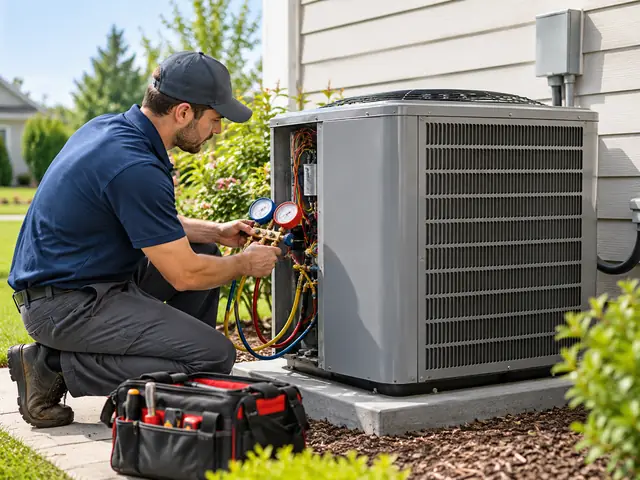
HVAC technician inspecting ductwork inside an Apopka, FL attic
Air Duct Cleaning · Apopka, FL
⌖ Apopka, FloridaCall about this serviceReview the scope before approving work
The moment worth a call

The moment worth reaching for a phone

We tell every caller: don't start from a coupon — start from evidence. Each of these is a real decision moment: what you're seeing, the mechanism behind it, and what we do about it.

01 / Symptom

Debris puffs from a supply register on startup

What we find: settled debris in a duct run gets dislodged when the blower kicks on and rides the airstream out. A one-time puff after months of disuse is normal; repeated puffs from the same vents mean material is sitting in the runs.

What we tell you: note which vents do it. Don't keep cycling the system to "test" — each start blows more of it into the room.

02 / Symptom

Musty odor in the first minute after the AC starts

What we find: microbial growth on a wet surface somewhere in the airstream — and in Florida's humidity, that wet surface is usually the condensate drain, the drain pan, or the evaporator coil, not the duct walls. The smell is strongest at startup because the first air through carries the concentrated buildup.

What we tell you: check the filter and look at the drain line exit outside — water should be dripping when the AC runs. If the line's dry while the pan area looks wet, that's your lead. We also say don't spray deodorizer into the vents; it masks the smell and leaves the moisture feeding whatever's growing.

03 / Symptom

Fine dust coating everything after a renovation

What we find: drywall and sanding dust stays airborne for hours, and open ductwork during a remodel acts as a collection system. The first cooling cycles redistribute what settled.

What we tell you: change the filter, run the system, and watch. Debris visibly blowing from supply registers means the runs need attention; surface dust on furniture is cleanup, not duct cleaning.

04 / Symptom

A $99 duct-cleaning offer that feels too easy

What we see in the scam pattern: documented bait-and-switch. The low price gets a stranger into your home; the "mold" they "discover" — sometimes shown on a phone photo from someone else's house — is the lever for a bill that climbs into the hundreds. A Winter Springs homeowner paid $600 for cleaning that, per the WFTV Action 9 investigation, never actually happened.

Our advice: don't book it. The vetting section below tells you how a legitimate provider behaves — run any offer through it before anyone enters your home.

Protect yourself

The $99 trap: how the duct-cleaning scam works here

Central Florida has a documented duct-cleaning scam problem. We lay out the exact pattern below because it's worth more than any coupon.

Step one, the ad. A company — often with no verifiable license and sometimes a name confusingly close to a real local business — advertises whole-house duct cleaning starting at $49 on Facebook, Nextdoor, or a door hanger. Same-day availability, friendly on the phone, price confirmed. We hear this story from callers every month.

Step two, the arrival. The technician shows up, sometimes in an unmarked van. Within minutes, "problems" appear: mold in the ducts, blockages that will "damage your system," contamination needing "special treatment." Each discovery has a price tag, and the total climbs — $400, $700, sometimes past $1,000. You're standing in your own hallway being told there's a serious problem by a stranger. Some people pay just to get them out — and then they call us.

Step three, the aftermath. The "cleaning" was a vacuum hose stuck into one vent — not the register-by-register source removal a real job requires. In some cases the system is left worse than found. The Florida Attorney General specifically warns Floridians about too-good-to-be-true HVAC prices and low-cost duct-cleaning offers used as bait, and the state DBPR has acted against unlicensed operators running this scheme.

The red flags, all together: no inspection before quoting. Cash-only or large upfront deposits. A whole-house job finished in under two hours. "Mold" declared without showing you inside your own ducts. Pressure to decide on the spot. Newly created social accounts with no reviews. Two or more of these — close the door. That's our vetting rule too.

Now the other side of the question — because the scams make people dismiss a service that is sometimes genuinely needed. Here's what our contractors' real cleaning covers.

Understand the work

What a legitimate duct cleaning actually includes

Our contractors' real job takes three to five hours for an average home and looks like a project, not a hose in one vent. Here's the scope we describe before starting:

That's our scope when cleaning is warranted. But warranted is doing a lot of work in that sentence — here's what happens when the real answer is "not yet" or "too late."

What waiting costs

What waiting costs you

Not fear — mechanisms. Here's what time does to each situation, and what each typically costs:

The musty smell with a moisture source.

We follow the EPA's mold guidance, which is blunt: HVAC systems can spread mold throughout a building. A clogged drain feeding growth in the pan or coil doesn't stay a drain problem — the blower distributes it, run by run, into every room the system serves. In Florida's humidity, mold colonizes wet material within 24 to 48 hours. What starts as a drain-line clearing becomes a system-wide remediation the longer the moisture feeds it. For reference, most Apopka homeowners see whole-home duct cleaning typically from $300; larger Apopka homes commonly from $500.

The scam you almost booked.

Every month those $99 ads run, more homeowners pay hundreds for nothing — and some end up with torn flex liners or a system left worse than found, then pay a real provider like ours to fix what the scammer broke. The cost of waiting here isn't time; it's the cost of saying yes to the wrong person first. And remember: legitimate cleaning is never a $99 whole-house special — if a quote looks far below this range, check what is actually included. A dryer vent add-on typically runs from $100, quoted separately, not folded into a vague "whole house" price.

The flood-soaked ducts you "dried out."

We tell you straight: wet duct insulation doesn't dry clean — it incubates. Waiting turns a contained insulation replacement into replacement plus remediation of everything the moisture reached while you hoped it would air out.

Safety before

Safety before anyone starts work

Three checks, in this order, before a single register comes off:

  • The system stays off.

    Our rule: nobody opens, agitates, or scopes ductwork with the blower running — a running system spreads loosened debris through the house, the opposite of the job. If a tech starts work with the air handler on, stop them.

  • Don't disturb old insulation yourself.

    We ask you: if your home is older and the duct insulation looks suspect, leave it alone — some older insulation materials contain fibers you don't want airborne. Photograph, don't poke. Assessment is our provider's job.

  • Biocides mean you leave.

    If mold is confirmed and a biocide is genuinely necessary, EPA guidance says it goes on strictly per label — and you and your pets leave the premises during application. A provider casual about spraying your airstream while you're home is telling you who they are — and it's not us.

The Apopka factor

Why Florida humidity changes the duct question

In drier states, ducts are mostly a dust question. In Apopka, they're a moisture question — and we plan every job around that.

Musty smell? Follow the water, not the dust.

Your cooling system wrings several gallons of water out of humid air on a hot day, all of it traveling through one narrow drain line. When that line clogs — and in our climate, organic growth chokes it year-round — water backs up into the pan and coil housing. Clean the ducts without fixing the water and the smell is back within weeks. We check drain, pan, and coil first. Always.

Sweating ducts in hot attics.

Most Apopka homes run ductwork through unconditioned attics, where cold supply air meets extreme attic heat. Where insulation is thin or seams leak, moisture condenses on duct surfaces and feeds microbial growth on and around them. We tell you honestly: no interior vacuuming fixes condensation — the correction is sealing and insulating, not cleaning.

Flood exposure means replacement, not cleaning.

The EPA is explicit: duct insulation that gets wet or moldy cannot be effectively cleaned — it gets removed and replaced. After the kind of flooding Apopka neighborhoods saw when retention ponds overflowed, any provider offering to "clean" soaked duct insulation is selling the wrong service. We won't sell you that either.

Vacant homes come back damp.

Seasonal houses where the AC sat off for months return to humidity baked into every surface, ducts included. Before you pay for anything, we establish the moisture story: a leak, a flood, or months of uncontrolled humidity? The answer decides whether you need cleaning, replacement, or just a running system and dry air.

How the job runs

How a proper duct cleaning runs, step by step

  1. Assessment and access plan.

    Our provider scopes the system before touching it: duct type (flex, sheet metal, duct board), vent and return count, access points, visible condition. This is where a legitimate operator earns the job — and where a scammer skips straight to a price.

  2. Seal and pressurize.

    We seal the registers, connect the HEPA-filtered vacuum at the trunk or air handler, and pull the whole system under continuous negative pressure. Nothing gets loosened until that pressure is holding — it's the containment that keeps debris out of your rooms.

  3. Register-by-register agitation.

    We open and work each supply register and return grille individually, with agitation suited to the duct material — soft contact brushing or air whips for flex, firmer tools only where sheet metal and duct condition allow it. Takeoffs, the return drop, and boots get the same treatment, not just the visible grilles.

  4. The equipment.

    We clean the blower wheel, coil housing, drain pan area, and both plenums so loosened dust isn't pulled back through dirty components into freshly cleaned runs. This is the step the two-hour "whole house" jobs skip.

  5. Verification.

    We finish with before-and-after photos of representative runs and a walk-through of everything accessed. The 2025 NADCA standard treats cleanliness verification as part of the job, not a courtesy — it's the endpoint that proves the work happened.

Make the call count

Call now, or can it wait? How to decide — and what to have ready

Call now

  • You have evidence of rodents or insects inside duct runs (they got in somewhere — that entry needs finding and sealing, not just vacuuming)
  • Visible mold with an active moisture source
  • Debris persistently blowing from supply registers after a filter change
  • Post-flood ductwork needing a replacement assessment

Can wait for a scheduled visit

  • It's dust on vent covers (wipe them)
  • Normal household dust on furniture
  • A musty smell you haven't traced yet (check the drain line, pan, and coil first — that's an HVAC diagnostic call, not a duct-cleaning call)
  • A coupon made you curious (curiosity is free; the inspection shouldn't be far behind it)

If the system itself has stopped cooling or heating, that’s not a duct question at all — call us for an emergency HVAC call instead.

Have ready when you call

  • Which vents show the problem and whether it's every cycle
  • When it started
  • Any recent renovation, flood, or pest activity
  • Your duct type if you know it (flex in the attic is the Apopka default)
  • The filter's age

Ask for the inspection first. We look before quoting: duct type, access points, visible condition. Refuse any firm commitment quoted sight-unseen over the phone — two identical-looking homes can need completely different work.

"Show me — in my house." If they claim mold, ask to see it inside YOUR ducts, not on a phone photo. A substance that looks like mold can only be confirmed by lab analysis — a microbiology lab can tell you from a clear-tape sample for a small fee. Get three estimates, check references, and verify the Florida license yourself: this state specifically requires air duct cleaners to hold one, and our contractors do — an unlicensed operator isn't cutting corners, they're operating illegally.

Lock the scope in writing. We lock the scope in writing: every supply register and return included? Blower wheel, both plenums, coil housing? Flex-safe methods named? Before-and-after photos promised? What happens if we find damage mid-job? A quote that can't answer these isn't a quote — it's a number. For comparing any home-service estimate, see how to compare home service estimates.

Vetting done, decision made. Here's what the day of the job actually looks like with our crew.

Day of the job

What to expect while the work is underway

  1. Noise

    It's loud.

    Our vacuum — truck-mounted or a large portable — runs continuously for hours. Plan calls and naps around it; the sound means the negative pressure is holding, which is the job being done right.

  2. System off

    Your system stays off the whole time.

    Three to five hours for an average home, system dark throughout. On an Apopka afternoon the house warms up — we tell you to plan for kids, elderly family, and pets.

  3. Attic & registers

    Techs in the attic, registers off one by one.

    We open and work every supply register and return grille individually, including rooms you rarely use. Access panels may be cut where runs are otherwise unreachable — our provider explains each cut before making it.

  4. Containment

    Doors stay closed.

    Our crew seals the system and keeps exterior doors shut to hold the pressure differential — a minor inconvenience that keeps loosened debris in the vacuum instead of your living room.

  5. Your call

    You can stay — mostly.

    Watching part of it is smart: you'll see whether we open every register. The exception is biocide application — if that's in the scope, you and your pets leave until it's done and ventilated.

  6. Verification

    It ends with proof.

    We show you before-and-after photos of representative runs, plus a walk-through. If a crew ever packs up without showing you anything, the verification step didn't happen — say so before they leave.

Helpful answers

What air duct cleaning typically costs in Apopka

We price by what we actually find on site — here is what jobs like yours typically run.

ServiceTypical starting price
Duct cleaningfrom $300
Larger homesfrom $500
Dryer vent cleaningfrom $100

Every problem's work and cost is different — the confirmed price comes only on the call or at inspection time. Starting prices below are typical, not fixed prices.

Air Duct Cleaning FAQs

I got a $99 whole-house duct cleaning coupon. Is it legit?

Judge it by behavior, not the number. We inspect before quoting — we need to see your duct type, vent count, and access. The coupon outfits quote sight-unseen, push cash or big deposits, finish a "whole house" in under two hours, declare mold without showing you inside your own ducts, and pressure you on the spot. A Winter Springs homeowner lived this pattern and paid $600 for work that never happened, per the WFTV investigation.

Does dust on my vents mean my ducts need cleaning?

No — we tell you this one honestly. Dust on a register or on your furniture is normal household dust — a cleaning rag's job, not a duct cleaner's. The EPA names three legitimate triggers: substantial visible mold in hard-surface ducts, a vermin infestation, or ducts so clogged with debris that particles actually blow from the supply registers. A dirty vent cover alone meets none of them.

My AC smells musty when it starts. Will duct cleaning fix it?

Only if the ducts are the source — and in Florida they usually aren't. That startup musty smell most often comes from a clogged condensate drain, a dirty evaporator coil, or standing water in the drain pan. Clean the ducts without fixing the water and the smell returns within weeks, because the moisture kept feeding the growth. We check the drain, pan, and coil before quoting any duct work.

Can flood-damaged ducts be cleaned?

No — and in Apopka this matters. The EPA is explicit: duct insulation that gets wet or moldy cannot be effectively cleaned; it must be removed and replaced. After storm flooding or a roof leak, a provider offering to "clean" soaked duct insulation is selling the wrong service. Sheet-metal ducts with surface mold can be cleaned — we do that. Wet insulated ductwork gets cut out and replaced.

Will duct cleaning fix weak airflow?

Don't count on it — we say this upfront. Weak airflow usually traces to a clogged filter, closed dampers, duct leaks, blocked returns, or blower problems — restrictions, not dirt. A provider promising airflow miracles from cleaning alone is overselling. We diagnose airflow first; if the ducts are genuinely contaminated, cleaning helps what you breathe, but the restriction still needs its own fix.

What's the right way to clean flex ducts?

Gently — and this is the question that separates our qualified techs from the rest in Apopka, where most homes run flex through the attic. Flex has a fragile inner liner that aggressive rotary brushes can tear. Our method is source removal under continuous negative pressure with soft contact brushing or air whips suited to flex, covering every register, both plenums, the blower wheel, and the coil housing. Ask how we handle flex runs; a vague answer is your answer.

Should I also get my dryer vent cleaned?

We treat it as a separate job, because it is one. Dryer vents carry lint — a genuine fire hazard — and cleaning them is its own service with its own scope. Some duct companies bundle it fairly; others use it as an upsell line item. Either way, judge it on its own: is the vent actually restricted, and is the work quoted separately? Don't let it serve as proof your ducts needed cleaning.

Do I need to leave the house during duct cleaning?

Not for a standard cleaning — you can stay, and watching confirms we open every register. The house will be loud and warm with the system off for three to five hours, so plan around that. The exception is biocide application: if mold treatment is in the scope, EPA guidance says the product goes on strictly per label and you and your pets leave until it's done and ventilated.

Can I find air duct cleaning near me in Apopka?

Start here: this page explains the work, the common causes, and the questions worth asking. Then call the number listed for air duct cleaning and confirm coverage for your address.

Further reading

Sources and technical references

View supporting references and safety sources

Not from us — from the people who write the standards:

  1. The U.S. EPA

    "Should You Have the Air Ducts in Your Home Cleaned?" The federal baseline: clean for visible mold, vermin, or heavy debris; replace wet insulation; fix moisture first; biocides only when necessary and per label. epa.gov

  2. NADCA (National Air Duct Cleaners Association)

    The ACR Standard, updated 2025: source removal under continuous negative pressure, HEPA-filtered collection, full-system scope, cleanliness verification. The definition of "done right."

  3. The State of Florida

    Air duct cleaners must hold a state license here; the Department of Business and Professional Regulation takes complaints against unlicensed operators.

  4. The Florida Attorney General

    Consumer warnings on too-good-to-be-true HVAC pricing and low-cost duct-cleaning bait offers; scams reportable to 1(866)9NO-SCAM.

Those four sources are the entire backbone of this page — every claim above traces to one of them.

Clean ductwork only helps if the rest of the system is moving air the way it should, so treat weak airflow as a whole-system question rather than a duct question alone. If rooms are still warm after the ducts are cleared, step back and work through the checks for an AC that runs but does not cool before assuming the equipment has failed. Ductless rooms play by slightly different rules — a bonus room or addition on its own head unit depends on mini-split troubleshooting and repair when output drops, not on the central duct run at all. Pairing the cleaning with a scheduled full-system HVAC tune-up catches the coil, drain, and filter issues that make clean ducts dirty again, and the wider Apopka homeowner guides explain how these maintenance pieces fit together across the house.

Before you book, we give you the EPA's rule of thumb that fits on an index card — visible mold, vermin, or heavy debris means clean; wet insulation means replace; moisture gets fixed first. Hold any quote to that card — including ours.

Read the related homeowner guide ↗

Get an honest answer about your ducts

Call us with what you actually see or smell — dust from vents, a musty startup odor, renovation debris, or a coupon that felt off. We do the inspection first, lock a written scope, and finish with before-and-after verification. The right provider welcomes all three.

Apopka, FLAir Duct Cleaning ☎ (407) 783-0923