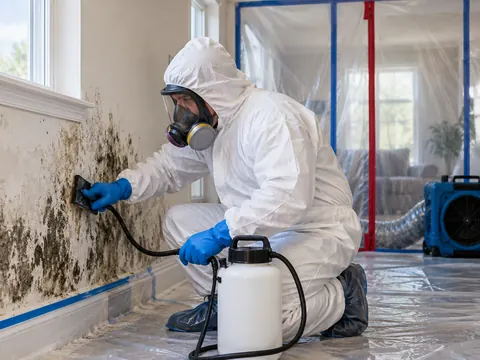
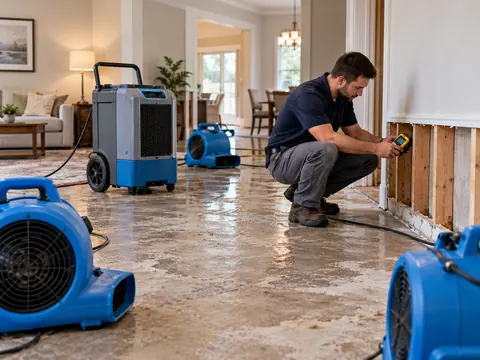
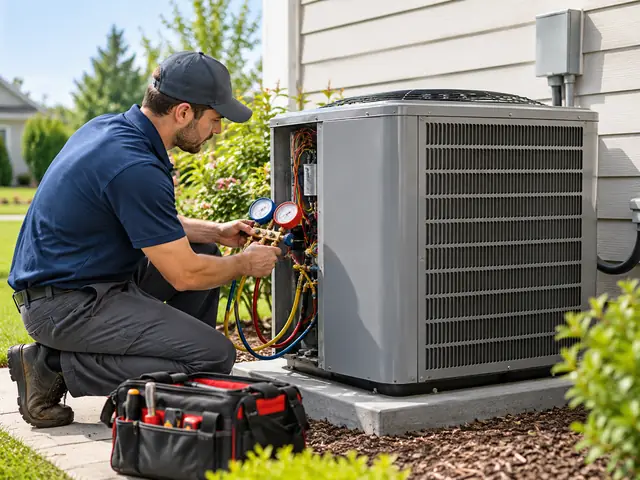
APOPKA, FL · HOME REPAIR & RESTORATIONExplore Apopka service area
Home Services ApopkaCall (407) 904-1291 ↗
Mold Remediation · Apopka, FL

Mold Inspection & Testing in Apopka, FL

Something smells off when the AC runs, or a home inspector flagged a stain you can’t explain. Before anyone talks cleanup, you need facts: is it actually mold, where is the moisture feeding it, and how far has it traveled? A proper inspection answers those three in order — and in Florida, it has to come from someone legally independent from whoever would do the cleanup. Here’s how we handle it: what our assessors do on the visit, what testing is worth paying for, and when it’s a waste of your money. If you're searching for mold inspection near me in Apopka, this page is a good place to start — it explains the work, the warning signs, and what to ask before anyone begins.

We connect you with licensed and insured mold remediation contractors in Apopka, FL.

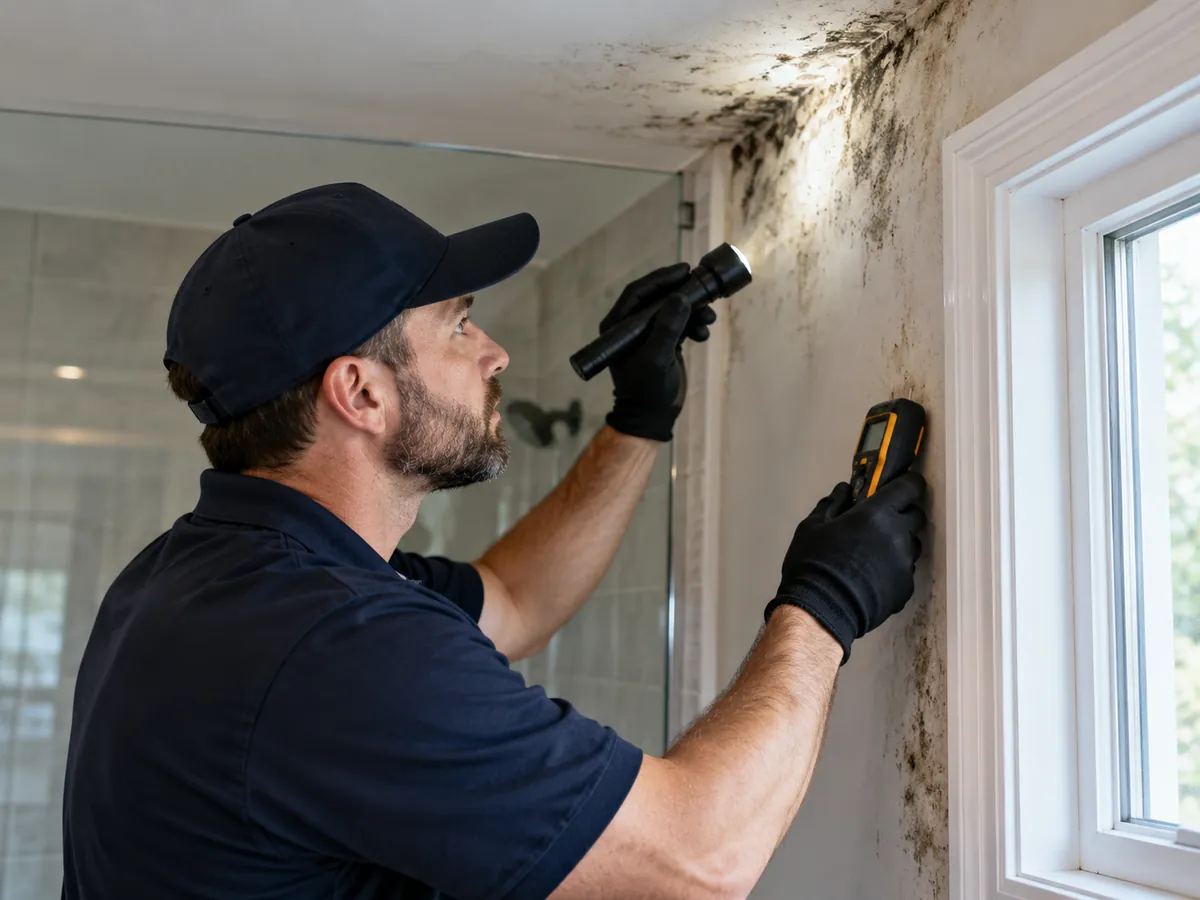
Illustrative image of a technician inspecting suspected mold on an interior wall
Mold Inspection · Apopka, FL
⌖ Apopka, FloridaCall about this serviceReview the scope before approving work
Know the signs

The moments that mean "get it inspected"

01 / Symptom

A musty smell you can't place

We get this call constantly. It hits when the AC kicks on, or in one room that never airs out — microbial volatile organic compounds, the gases mold releases as it feeds. When the smell strengthens with the blower running, the growth is likely in or near the air path: drain pan, coil, or ducts. Before you call us, note which rooms are affected and whether the smell follows the AC cycle — that history saves us real time.

02 / Symptom

A stain, spot, or growth you can see

Discoloration on drywall, baseboards, window sills, or ceiling. We see plenty of stains that aren’t mold — water stains, dust, and soot all masquerade convincingly. Tape-lift or swab sampling settles it: our lab confirms whether it’s mold and what type, which matters when growth is near a sleeping area or a child’s room. Photograph it, don’t scrub it — scrubbing destroys what our assessor needs to see.

03 / Symptom

Symptoms that follow you home

Allergies or congestion that ease when you leave and return when you’re back. We’ll be straight with you: no lab result diagnoses illness — only a clinician does that. But elevated indoor spore counts compared to an outdoor baseline tell us whether mold is actively growing inside versus just drifting in. Track the pattern for a week — rooms, times, AC on or off — and bring it to the call.

04 / Symptom

A home inspector or buyer flagged something

A general home inspector notes “possible microbial growth” and moves on — they don’t identify it, map it, or clear it. We do. Florida buyers can add a dedicated mold inspection period to the contract, and our assessor starts from the inspector’s photos and notes — get them in writing before you call us.

You know the trigger. Here’s exactly what our inspection covers — and what it deliberately doesn’t.

Understand the work

What a mold inspection covers — and where it stops

  • Building and moisture history. When did the smell or stain start? Leaks, storms, AC trouble, vacant periods, prior cleanings that returned? We start every visit with this interview — it’s the cheapest diagnostic tool in the appointment, and it shapes everything we do after.
  • Visual assessment. We walk the property room by room — bathrooms, kitchens, laundry, attic, and anywhere water has intruded, past or present — building a theory of where moisture traveled.
  • Moisture mapping. Our meters probe walls, ceilings, and floors for elevated readings; thermal imaging finds cold spots behind surfaces where moisture hides. Moisture content above roughly 16–19% in wood is a problem we chase.
  • Air sampling. We run calibrated cassettes for 5–10 minutes per sample, always collecting an outdoor baseline at the same time — indoor counts are meaningless without it. Elevated indoor levels versus the baseline mean mold is actively growing inside.
  • Surface sampling. Tape lifts, swabs, or small material samples from visible growth — we confirm whether a suspicious stain is actually mold and identify the type.
  • Written report with a remediation protocol. You get our findings, the moisture map, lab results (typically 24–48 hours), and a written scope of what remediation should cover — the document a separate remediation company works from.
  • What it doesn’t include: the cleanup. In Florida, the assessor and the remediator are separate licenses, and a remediator may not assess a structure their own company remediated within the last 12 months (Fla. Stat. §468.8419). If the same company offers to inspect and then sell you the cleanup, that’s your red flag — it’s why we connect you with independent assessors and separate remediation crews.

That’s the inspection. Whether you need one comes down to one question — what waiting does to your options.

Cost of waiting

What waiting does to a mold question

Moisture doesn’t pause. A damp wall cavity in October is a colony by December — growth doubles down inside materials while the surface looks unchanged. And every cooling season your AC runs, the blower distributes spores from any duct or coil growth through the whole house. We’ve watched small questions become demolition jobs.

The inspection itself gets harder with time, not easier: a small, contained moisture problem gives us a clean moisture map and a short protocol. A spread one gives us demolition. And if you’re selling, Florida’s Johnson v. Davis rule requires disclosing known hidden defects — including known mold and prior remediation — so “wait and see” can become a disclosure problem at closing.

Safety first

Three rules before the assessor arrives

  • Don’t disturb visible growth.

    Scrubbing, scraping, or tearing into a suspect wall releases a burst of spores — and destroys the pattern our assessor reads. Photograph it; leave it alone.

  • Don’t fog or spray first.

    DIY fogging and heavy bleach use before we arrive can contaminate samples and mask what the lab needs to see. Test first, treat second — we mean that literally.

  • Limit exposure if anyone’s vulnerable.

    Asthma, allergies, or immune conditions in the household? Keep the affected area closed off and reduce time near it until our inspection clarifies what’s there. A lab result can’t diagnose illness — but it can tell you whether to keep your distance.

Apopka specifics

Why Apopka generates so many inspection calls

Apopka sits in one of the highest-risk indoor-mold environments in the country: year-round humidity, high water tables, aging housing stock built before modern vapor barriers, and lake-adjacent homes with elevated subsurface moisture. The rainy season brings our surge — homeowners notice a musty smell or staining and can’t identify the source. The HVAC system is almost always the first place our assessors look, because in this climate it’s the most consistent site of hidden growth.

The vacant-home pattern is an Apopka classic we see every year: a clogged condensate drain or failed thermostat goes unnoticed for weeks while nobody’s home, and the owners return to growth behind furniture and inside the air handler. And storm history lingers — pond overflows and floodwater from Hurricane Milton that was never professionally dried is still surfacing as smells months later.

How the job runs

What happens during a mold inspection

  1. Intake and history.

    The call starts with your moisture history — when it started, leaks or storms, AC behavior, vacant periods, anything cleaned before that returned. Bring the home inspector’s notes if you have them; we start from them, not from scratch.

  2. Visual walkthrough.

    Bathrooms, kitchens, laundry, attic, and every spot with a water-intrusion history. Our assessor is building a theory of where moisture traveled — not just where mold shows.

  3. Moisture mapping.

    Our meters probe walls, ceilings, and floors; thermal imaging scans for cold spots behind surfaces. This is the heart of the visit — it finds the moisture feeding growth you can’t see.

  4. Sampling plan — theory first.

    We follow the EPA’s guidance: develop a confirmable theory of what’s happening before sampling, then sample to prove or disprove it. Air cassettes (5–10 minutes each, indoor plus outdoor baseline), surface samples from suspect spots — every sample answers a specific question, which is why we don’t sell sample bundles.

  5. Lab and written report.

    Samples go to an accredited lab, results typically back in 24–48 hours, and you receive our comprehensive written report with the moisture map, findings, and a remediation protocol if cleanup is warranted. On pricing: a standard inspection with lab work typically runs from $200 in Apopka, and lab analysis typically runs from $50 per sample, with basic testing most homeowners see prices from $250 — typical starting prices, not fixed prices, depending on how many samples the plan calls for.

Before you call

When inspection is worth it — and when it's not

Call 24/7 about urgent mold or moisture concerns. An appointment must be confirmed. Urgent moisture concerns can be discussed by phone any time — but an immediate inspection or a licensed assessor on your doorstep isn’t guaranteed. Confirm the service and appointment first. Our on-site response and scheduling are subject to availability.

Call now

  • Musty smell with no visible source — that’s the #1 reason Apopka homeowners call us
  • An inspector’s flag on a home you’re buying — get our assessment before closing
  • Visible growth over roughly 10 square feet — beyond this, DIY stops working
  • Recurrence after a previous cleaning — the moisture source is still active
  • Any growth after flooding — it’s deeper than what you can see

Can wait for a scheduled visit

  • Surface mildew on tile grout or shower caulk where you can see all of it — scrub it, dry the area, fix the ventilation. Call us if it comes back.
  • Visible mold you’re already planning to remediate — the EPA notes that sampling is usually unnecessary when growth is visible and the plan is cleanup. We’ll tell you the same: put the money into moisture correction, not lab fees.

Have ready when you call

  • Photos of every stain or growth (close and wide)
  • Your moisture history in writing — the single most useful thing you can hand us
  • The home inspector’s report if this is a purchase
  • Records of any prior remediation — who worked on it and when

Call made, visit scheduled. Here's what the day looks like.

During the visit

What to expect while the inspection is underway

Plan on one to two hours for an average home — longer for larger properties or extensive moisture. Our assessor walks every room with you, asks about the history, and narrates findings as they go: meter readings on walls, the thermal camera’s cold spots, where cassettes will run. Air sampling is quiet — a small pump running 5–10 minutes per location while you stay out of that room so the air settles. Nothing gets cut open without your explicit permission; most of our inspections are fully non-invasive. You’ll typically have the written report within 24 hours of the visit, with lab results following in 24–48 hours.

Related problems tend to show up together in Apopka homes, so it helps to know which service covers which symptom. A pressure drop across the house often starts with leak detection for damp spots and pressure drops to rule out a concealed break. Where a hidden leak threatens stock or equipment, leak detection for shops, offices and rentals narrows the location so repairs stay targeted.

Helpful answers

What mold inspection typically costs in Apopka

We price by what we actually find on site — here is what jobs like yours typically run.

ServiceTypical starting price
Mold inspectionfrom $200
Lab testing, per samplefrom $50
Basic testingfrom $250
Remediation, if needed (avg ~$2,300)from $1,200

Every problem's work and cost is different — the confirmed price comes only on the call or at inspection time. Starting prices below are typical, not fixed prices.

Mold Inspection FAQs — Apopka, FL

Do I need testing if I can already see the mold?

Usually not — and the EPA says so directly. When growth is visible and the plan is cleanup, lab fees add little: the work is moisture correction and removal, not identification. Testing earns its keep when the source is unclear, there’s a dispute, health concerns are involved, or you need to confirm a cleanup worked. When an inspection is warranted, most homeowners we talk to see prices from $200, and lab testing typically runs from $50 per sample — typical starting prices, not fixed prices.

What's the difference between air sampling and surface sampling?

Air sampling captures what’s floating in a room right now — we always compare against an outdoor baseline taken the same day, since outdoor air carries spores too. Surface sampling (tape lifts, swabs) targets a specific stain to confirm whether it’s actually mold and identify the type. Different questions, different tools. On price: basic focused testing typically starts at $250; broader multi-sample investigations run higher — and we’ll tell you upfront which samples your situation actually needs.

Why can't the same company inspect my home and do the cleanup?

Florida law generally forbids it — and that rule protects you. Assessors and remediators hold separate licenses, and a remediator may not assess a structure their own company remediated within the last 12 months (Fla. Stat. §468.8419). The company finding the mold shouldn’t price its removal. Independent assessment, then remediation, then independent clearance — that’s how we connect you.

My home inspector flagged "possible microbial growth." Isn't that enough?

No — a general inspector notes and moves on. Our licensed assessor identifies the growth, maps the moisture feeding it with meters and thermal imaging, samples where the plan requires it, and writes the remediation protocol a cleanup company follows. Different license, different depth, different document.

Will the inspector cut into my walls?

Almost never on a first visit. Our moisture meters and thermal imaging find hidden moisture non-invasively — that’s their whole purpose. Invasive investigation (a small exploratory opening) happens only with your explicit permission, usually when readings strongly suggest growth inside a cavity and the protocol needs confirmation.

I'm buying a home in Apopka. Should I order a mold assessment?

If anything suggests moisture — stains, musty rooms, a lake-adjacent lot, a vacant period, or the general inspector’s flag — yes. Florida buyers can add a dedicated mold inspection period to the contract, and an independent assessment before closing is cheap protection where much of the housing stock has a moisture story. Sellers must disclose known mold under Johnson v. Davis — and we’ll put it all in writing.

How is this different from a store-bought petri-dish test kit?

A petri dish on the counter collects whatever drifts by — no outdoor baseline, no moisture mapping, no theory of the source, no remediation protocol. The EPA requires professional sampling design and lab methods for results that mean anything. Kits answer “are there spores in my air?” — spores are in everyone’s air. The real question is whether mold is growing inside, and only a structured inspection answers that.

What do I get at the end — and what do I do with it?

Our written report: moisture map, visual findings, lab results, identified growth locations, and a remediation protocol if cleanup is warranted. Hand the protocol to a separately licensed remediation company for bidding — we can connect you — and keep the report. If you sell later, it’s your documentation; if clearance testing is needed after cleanup, an independent assessor uses it as the baseline. If the protocol calls for cleanup, remediation in Apopka typically runs from $1,200 depending on the affected area — typical starting prices, not fixed prices.

What should I check before booking mold inspection near me in Apopka?

Check that the team covers Apopka, handles your specific problem, and can confirm an appointment for your address. This page lists what mold inspection involves and the number to call.

Further reading

Sources and technical references

View supporting references and safety sources
  1. Fla. Stat. §§468.8413–468.8419

    Review the service information on this page, describe the symptoms when you call, and confirm the scope before approving work.

  2. EPA, "Mold Testing or Sampling"

    Sampling usually unnecessary when growth is visible; no federal mold-spore limits exist; surface sampling's role in verifying cleanup.

  3. EPA, Mold Remediation in Schools and Commercial Buildings, Ch. 3

    Develop a confirmable sampling theory before sampling; pre- and post-remediation sampling uses.

  4. AIHA / ACGIH

    The analytical methods professional lab analysis follows.

Before arranging an assessment: Daily downpours and humidity that never drops turn small moisture problems into colonies — here’s what we tell homeowners to check each season.

Florida rainy-season home checklist ↗

Daily downpours and humidity that never drops turn small moisture problems into colonies; what to check each season.

When to call a home professional ↗

The call-now vs. wait decision, generalized across every trade.

Know what you're dealing with before anyone talks cleanup.

Call with your moisture history — when it started, what you’ve noticed, and any inspector’s notes. We’ll give you a straight answer on whether you need testing, a different trade, or nothing at all.

Apopka, FLMold Inspection ☎ (407) 904-1291