
Rising water usage
Compare utility patterns and shutoff zones; tenant use, cooling equipment and irrigation can change meter demand.
Unexpected building water use, wet tenant ceilings or unexplained moisture can disrupt operations. Commercial leak assessment should distinguish domestic supply, drains, roof entry, HVAC and fire-protection systems before invasive access.
Urgent commercial leak calls may be answered 24/7. Confirm business-site coverage, technician availability and dispatch by phone.
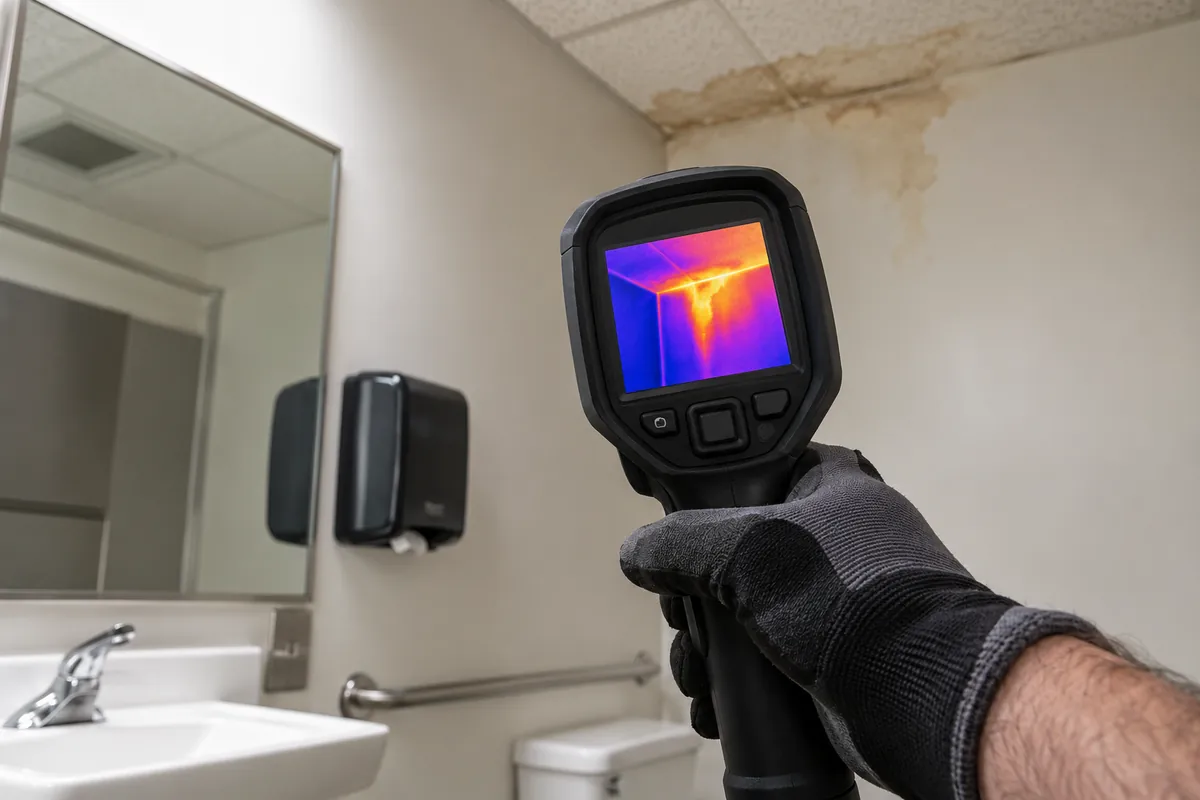
For rapidly spreading water inside a shop, office or multi-tenant building, isolate the affected supply where safe, protect people from electrical hazards, and arrange urgent leak assessment. Emergency phone calls may be answered 24/7, but commercial technician coverage and after-hours appointments must be confirmed when calling.
Emergency call answering is available 24/7. Dispatch and service coverage must be confirmed by phone.
Active Commercial Water Leak? CallEmergency calls answered 24/7. On-site attendance is confirmed when you call.
Compare utility patterns and shutoff zones; tenant use, cooling equipment and irrigation can change meter demand.
Leaks may originate from domestic pipes, condensate, drains or roof assemblies; do not assume every stain is plumbing.
Supply joints, wall drains and fixtures can leak intermittently when a tenant uses them.
Underground supply, fire systems, irrigation and drainage need distinct troubleshooting routes.
Locate meters, isolation valves, risers, occupied suites and any available plumbing drawings.
Use suitable moisture mapping, acoustic methods, thermal imaging or pressure isolation where the equipment and site conditions support them.
Separate potable water leaks from roof, HVAC, fire-sprinkler, sanitary drain or irrigation issues before selecting repairs.
Plan shutoffs, access permissions, tenant notices, post-repair testing and any restoration work as appropriate.
A leak survey may locate a suspected source; opening walls or changing commercial piping is a separate scope requiring approval.
Document which suites and business processes might be interrupted, and who authorizes shutoff access.
Fire sprinkler, fire pump and life-safety system work may require different qualified contractors and compliance requirements.
Relevant meter records, photos, previous repair history, fixture schedules and water use anomalies can narrow the search.
Domestic supply leaks may register on the water meter even with fixtures closed. Condensate can track from rooftop or ceiling-mounted cooling equipment. Roof penetrations and envelope leaks can worsen after rainfall, while drain leaks often appear only when a fixture discharges. Fire-protection piping is a separate safety-critical system. Comparing timing, meter behavior, fixture operation and weather helps choose the appropriate qualified trade instead of opening random walls.
Before testing, identify access windows, on-site contacts and any isolation valves shared by multiple tenants. An occupied medical office, restaurant or retail building may require temporary shutdown notices, sanitation safeguards and alternative facilities. A property manager should agree on investigation boundaries, documentation, and who may authorize invasive access or a later repair.
Request the suspected source and location, evidence used to support it, limits of certainty, any follow-up access needed and whether repair, drying or restoration falls outside the original scope. If concealed piping cannot be confidently identified from non-invasive tools alone, a limited confirmation opening may be necessary. Avoid claims that thermal imaging can always see through walls or pinpoint every leak.
Acoustic equipment may help locate pressurized leaks where sound transmission and site conditions allow. Thermal imaging identifies temperature differences, not water leaks by itself; moisture meters also require interpretation. A concealed leak may still need controlled access to confirm the source. Do not assume equipment can pinpoint every leak without opening a surface.
Prepare meter readings, affected-unit locations, plumbing plans if available and a safe access contact. For occupied suites, coordinate tenant notice, business hours, shutoffs and any protection of equipment or stock. A useful detection summary distinguishes confirmed findings from suspected locations and records recommended next steps; detailed written reports or specialist equipment should not be promised without confirmed scope.
A ceiling stain or wet slab may come from plumbing, roof intrusion, HVAC condensate, irrigation or a neighboring tenant. Fire-suppression piping needs an appropriately qualified specialist; do not test or shut it off casually.
Commercial scope and after-hours availability must be confirmed before scheduling; specialist fire-protection work is separate.
Map meters, valves and occupied suites first. Agree on who may authorize temporary water interruption and how tenants will be notified.
Temperature differences and sound patterns can narrow a search, not prove a failed pipe by themselves. Document the evidence and any uncertainty.
Life-safety piping and roof systems may require another qualified trade. The diagnosis should separate their systems from ordinary domestic plumbing.
Some can be narrowed using meters, instruments and isolation; confirmation sometimes requires access openings.
Scheduling and service capability must be confirmed for the building.
No. Tenant usage, irrigation, cooling and billing changes should be considered.
These may require a qualified fire-protection specialist; service scope must be confirmed.
Yes. Shared risers, concealed pipe routes and floor penetrations may carry water between suites.
Meter data, access arrangements, building contacts, existing drawings and details of observed moisture.
Managing unexpected water use or moisture complaints in a business property? Call to discuss the building, suspected leak location, safe access and whether commercial detection service is available.
Call (407) 964-8991