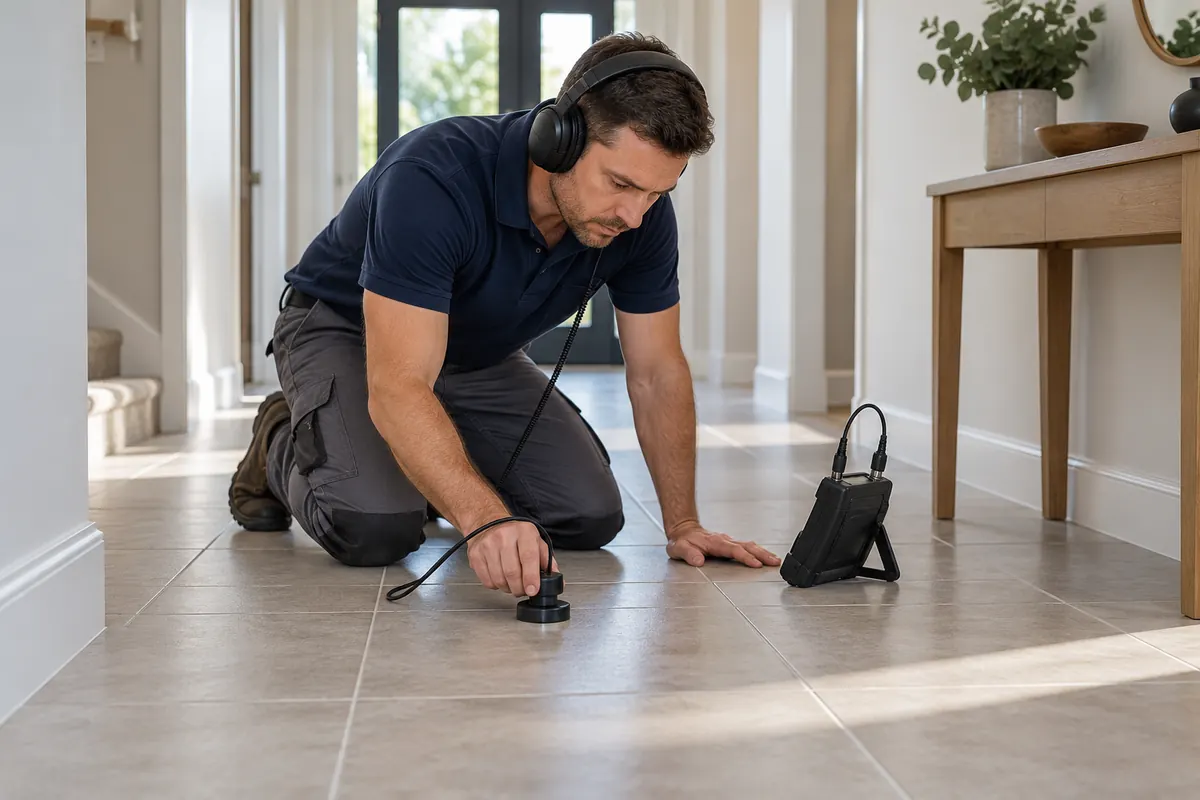
How do you find a leak inside a wall without tearing it open?
We listen first — acoustic microphones pick up the hiss of pressurized water escaping, even through drywall and concrete. Then we confirm with thermal imaging, which shows the temperature difference where water is collecting. We only open a wall after the equipment has told us exactly where to cut, and usually that means one small opening, not exploratory demolition.
My water bill doubled but I do not see water anywhere — is that a leak?
Most likely, yes — and it is the most common way hidden leaks get found. Start with the two-minute meter test: everything off, watch the dial. If it moves, water is leaving your house. We have traced doubled bills to slab leaks, buried service lines, running toilets, and stuck irrigation valves. The meter test tells us which hunt to run.
How long does leak detection take?
Most residential visits run one to three hours. A clear acoustic signal on an accessible line can take under an hour; a buried service line or an intermittent leak takes longer because we isolate and test section by section. We do not rush it — a rushed location is how walls get opened in the wrong place.
Can you tell if the leak is under the slab or inside a wall?
Yes — that is exactly what the layering is for. Thermal imaging shows slab-surface temperature patterns for under-floor leaks; acoustic sweep distinguishes wall-cavity sound from slab-transmitted sound; pressure isolation tells us which pipe run is losing pressure. By the time we mark the spot, we know which structure it is in.
Do I have to do the repair with you after you find it?
No. The detection report — the marked location, the photos, the findings — belongs to you. Take it to any plumber for a repair quote. We will quote the repair too, separately, but there is no obligation. A located leak gets you honest prices from everyone.
Will my homeowner’s insurance cover leak detection?
Often, yes — many policies cover the cost to locate a leak under trace-and-access provisions, separate from the repair itself. We document everything in writing with photos, which is what adjusters ask for. Check your policy’s trace-and-access language and call your insurer before the visit if you want to file.
My meter spins when everything is off — what does that mean?
It means you have an active supply-side leak — pressurized water is leaving your system right now. That is the clearest positive test there is. Call us today rather than next week: every day it runs is money in the ground, and if it is under the slab, water against the foundation.
Do you detect irrigation or pool leaks too?
Yes. Irrigation leaks are one of the most common causes of jumped bills we see — a stuck valve or a cracked lateral line can run thousands of gallons silently. Pool and spa leaks we check as well. Tell us on the call what systems you have so we bring the right approach.