
Ceiling dripping below an upstairs bathroom
Stop using the bath, shower and toilet above the affected area. Leaks can come from a supply pipe, drain, overflow or a failed fixture seal—not every ceiling leak is a burst pipe.
A dripping ceiling or spreading water stain needs its source identified before the ceiling is opened. A supply pipe, waste line, roof leak or AC condensate problem can look similar from the room below.
24/7 emergency calls for active leaks. Plumber availability and on-site scheduling are confirmed when you call.
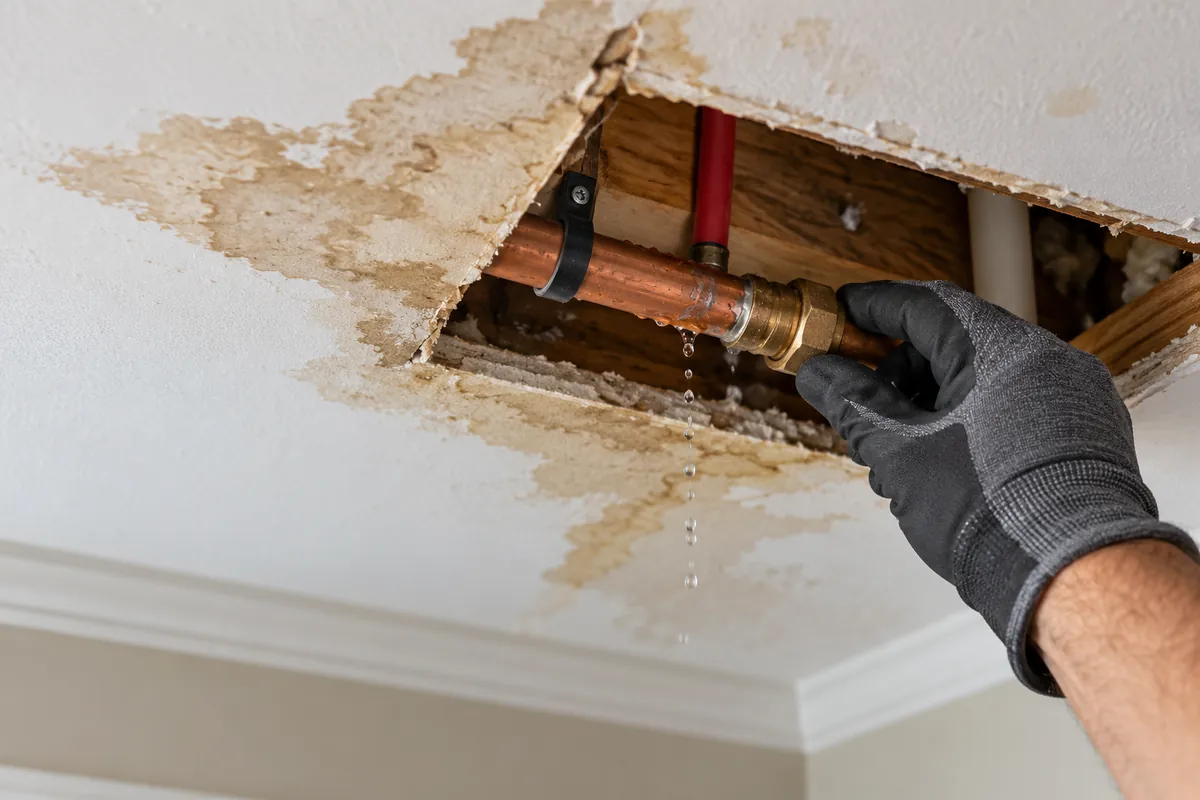
Water actively pouring or dripping through your ceiling is urgent. If safe, close the affected fixture's shutoff valve or the home's main water supply. Keep people away from a sagging or bulging ceiling. Do not touch wet electrical fixtures or stand in water to reach a breaker. If electrical isolation cannot be done safely, stay clear and call a qualified professional.
Stop using the bath, shower and toilet above the affected area. Leaks can come from a supply pipe, drain, overflow or a failed fixture seal—not every ceiling leak is a burst pipe.
Stay out of the wet area and avoid operating affected electrical fixtures. Electrical safety must be addressed before access or repairs.
Keep clear of the area underneath. Repairing the leaking pipe and restoring soaked ceiling materials are separate steps.
Emergency phone calls are answered 24/7. Plumber dispatch, on-site availability and appointment times are confirmed during your call.
A shower drain, tub overflow, valve connection or waterproofing failure may be responsible. The water can travel along framing before becoming visible.
A pressurized supply-line leak is possible, but other water sources must be ruled out before opening the ceiling.
Condensate drainage or roof intrusion may be involved rather than plumbing. Correct diagnosis prevents repairing the wrong system.
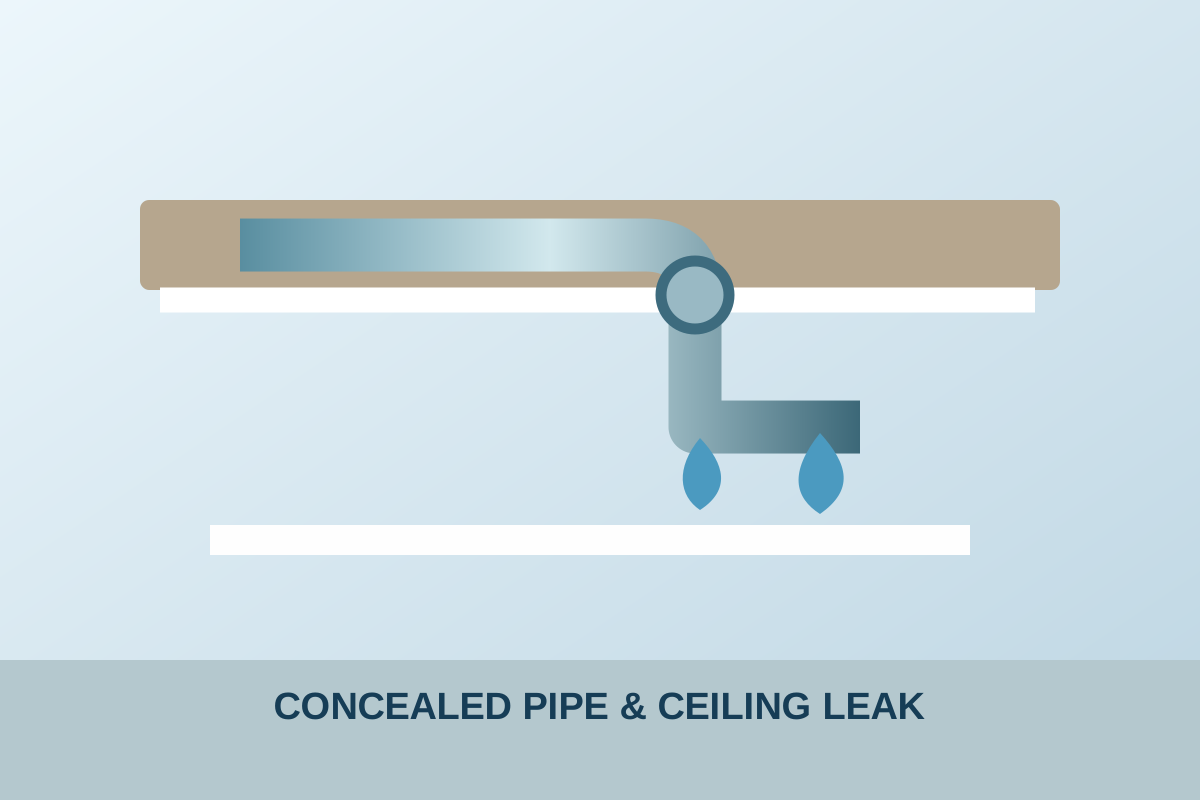
Repair begins by identifying whether the leak is coming from a supply pipe, a waste-and-drain connection, or a fixture above. Access and repair methods depend on the material, condition and location of the damaged line.
Review when the leak occurs, isolate fixtures as appropriate and inspect accessible connections. Moisture mapping or limited access may be needed when the source is concealed.
Once the source is confirmed, the repair may involve replacing a pipe section, fitting, valve connection or drain assembly. A failed pipe joint needs a different repair than a cracked fixture drain.
Repeated leaks, corrosion or brittle material can justify evaluating a longer section instead of patching one point. Replacement decisions should be based on actual condition.
1. Make the area safe. Stop the water when safe and avoid wet electrical equipment or a weakened ceiling. 2. Identify the source. Distinguish the supply line from drains, roof leaks and AC condensate. 3. Confirm the repair scope. Review pipe access, material and whether a localized repair is suitable. 4. Check the result. Re-test the affected plumbing before ceiling finishes are restored.
Pipe repair does not automatically include removal of soaked insulation, structural drying or drywall reconstruction. For that separate need, review Ceiling Water Damage Repair.
Central Florida homes may have plumbing routed through attic spaces, walls or between floors. A ceiling stain near an AC vent may involve condensate, while staining beneath an upstairs bath can suggest a plumbing fixture or drain. The time and location of the leak matter more than assuming the first visible stain is directly below the damaged pipe.
Before calling, note whether the leak started during rainfall, air-conditioning use, toilet flushing or showering. Tell the plumber if the ceiling is bulging, the electrical fixtures are wet, or the main shutoff has already been closed.
Timing, nearby fixtures and safety conditions help distinguish plumbing from other water entry.
A shower drain, toilet seal or other waste connection can leak intermittently; the ceiling may stay dry when those fixtures are not used.
A pressurized supply line is possible, but roof and mechanical sources still need consideration. Avoid electrical fixtures below a wet ceiling.
Roof flashing and AC condensate lines can imitate a plumbing leak. Fix the actual source first; drywall replacement or drying is a separate step.
Active water flow, a bulging ceiling or water near electrical equipment calls for urgent action. Even a slow leak should be investigated promptly.
Sometimes. Accessible plumbing can be checked first, but hidden damage may require carefully planned access after the leak is narrowed down.
Yes. An AC condensate problem, roof leak or plumbing pipe can create similar stains. The source must be verified before repair.
Not necessarily. Pipe work and water-damage restoration are different services, and both may be needed.
No. Water can travel across beams, insulation and finishes before becoming visible.
Avoid using the suspected fixture until the source is checked, especially if water appears when it runs.
Water stains, active drips or leaking plumbing above a room? Call to discuss the problem, repair options and available appointments.
Call (407) 964-8991 About Ceiling Pipe Leak RepairEmergency calls answered 24/7; service availability and repair appointments are confirmed when you call.