Ceiling leaks have three usual suspects, and you can narrow it down before anyone climbs into your attic. Note where the stain sits, when it gets worse, and what’s directly above it:
Stain grows during or after rain
Roof or flashing. Check the attic side of roof penetrations (vents, valleys, skylights) — that’s where most Florida roof leaks start.
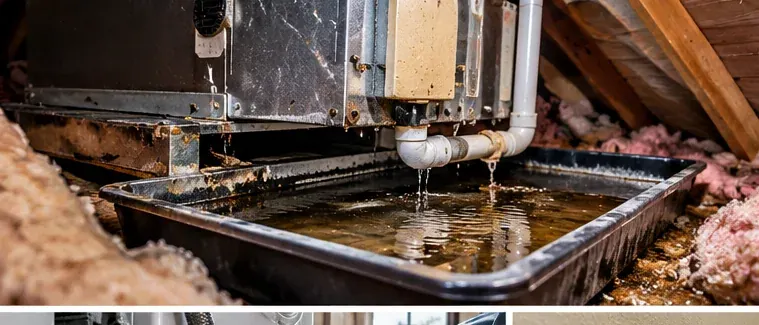
Stain sits under the air handler or near an AC vent, or drips when the AC runs
A blocked condensate drain at an air handler is one possible cause of a ceiling leak. When a drain or pan fails, water can reach insulation and ceiling drywall. Confirm the source before opening the ceiling or assuming the roof is leaking. If your AC keeps shutting itself off, that’s the float switch doing its job; don’t keep resetting it and don’t fight it. It’s the messenger.
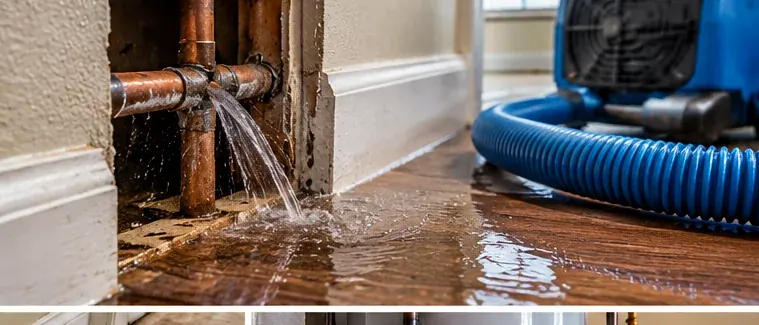
Stain below an upstairs bathroom, worse after showers or flushing
Plumbing: toilet seal, shower pan, tub drain, or a supply line.
Stain grows during dry weather
Plumbing, HVAC, or moisture trapped from an older event. If it appeared once and never changed, the source may be fixed — but trapped moisture could still be in the ceiling assembly.
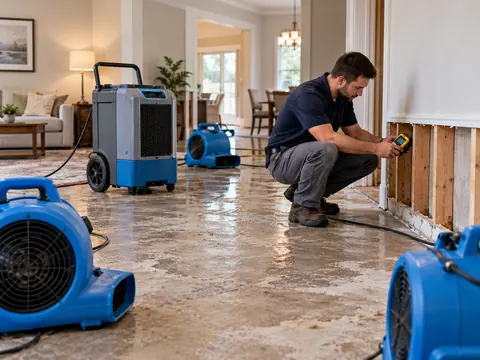
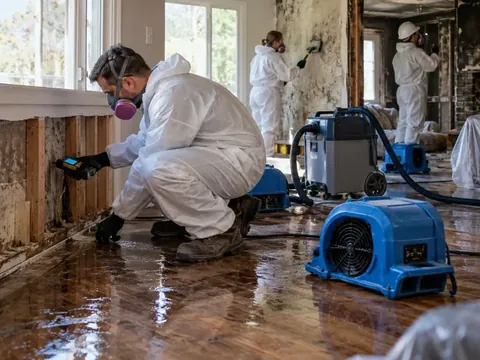
None of these clues are a diagnosis on their own. A moisture meter reading above the ceiling is what confirms it — professionals check before they cut, because guessing wrong means opening the wrong ceiling. And one caution for older Apopka homes: if your ceiling has popcorn texture and the house predates 1980, say so on the call. That texture may contain asbestos, and disturbing it takes testing and a licensed abatement contractor — it changes how the repair is scoped.