
Water bill rises unexpectedly
A hidden pressurized pipe leak may run even when fixtures are off; meter checks can help narrow the source.
Moisture beneath a floor may come from a leaking supply pipe, a drain connection or something unrelated to plumbing. Confirm the actual source and safe access before cutting piping or opening the floor.
Emergency calls answered 24/7 for serious active plumbing problems; plumber availability and scheduling are confirmed by phone.
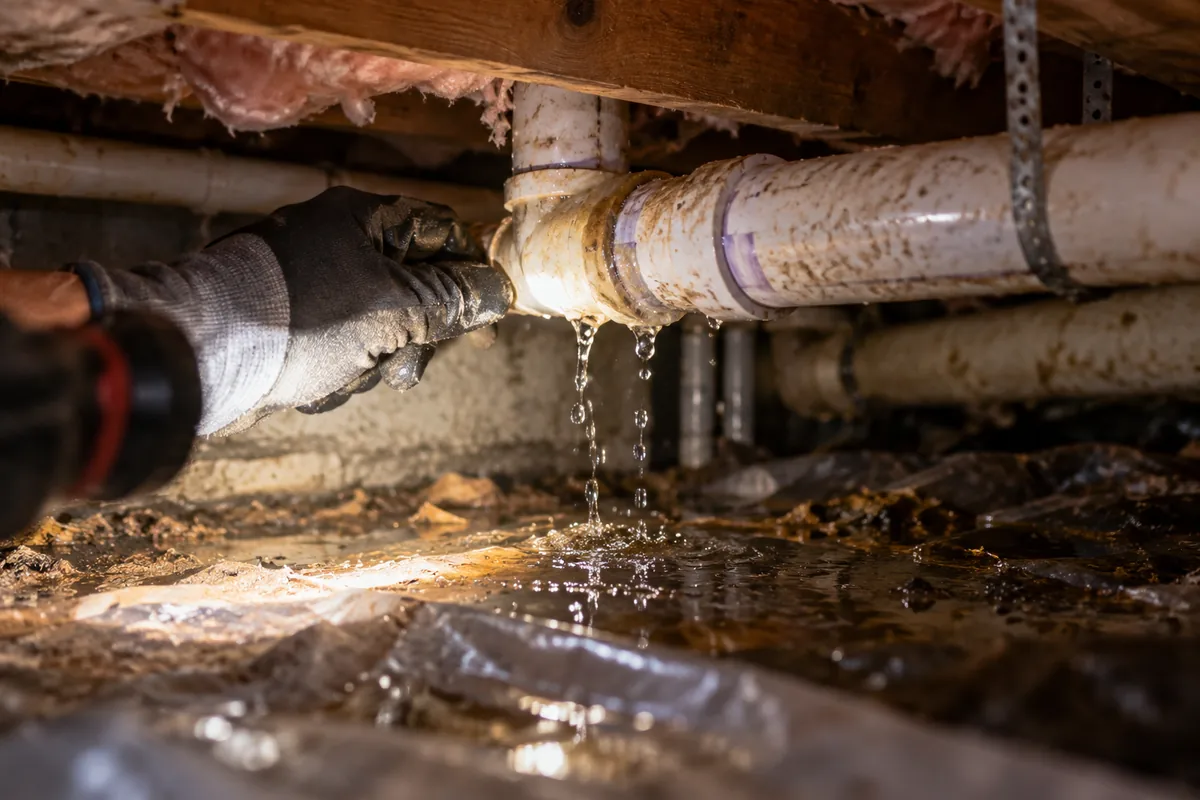
A broken pressurized supply pipe can release water continuously beneath a house and may need urgent isolation and repair. Shut off the water at a safe accessible valve when possible. Stay out of crawlspaces containing standing water near electrical equipment, sewage, pests or unsafe structural conditions. Emergency calls are answered 24/7; service availability is confirmed when calling.
For a major active supply leak, turn off the water at a safe accessible shutoff and avoid wet electrical equipment. Do not enter a flooded or unsafe crawlspace; call for urgent leak help.
Call for an Active Under-Floor Leak — (407) 964-899124/7 emergency call answering. Technician availability and dispatch are confirmed when you call.
A hidden pressurized pipe leak may run even when fixtures are off; meter checks can help narrow the source.
Moisture can come from plumbing, drainage, HVAC condensate, rainwater or ground conditions.
Leaks that appear only when a sink, tub or washer drains can point to a waste pipe or fitting.
Persistent moisture deserves diagnosis, though odor alone does not prove an active plumbing leak.
Compare wet and dry conditions, fixture use and water-meter evidence; inspect supply and waste lines where safe.
Check crawlspace entry, standing water, electrical proximity and structural hazards before arranging pipe access.
Fix accessible fittings or replace damaged sections with approved materials; broad repiping is only appropriate when condition justifies it.
Pressure/flow or drainage testing should match pipe type. Drying, insulation and material restoration may require a separate scope.
Supply leaks may run continuously while waste-line leaks often show up during fixture use. Distinguishing them prevents an unnecessary repair.
Rain intrusion, high groundwater, air-conditioning condensate and ventilation issues can wet a crawlspace. Plumbing work will not resolve these sources.
Pipe type, accessibility, clearance, insulation removal, amount of damaged pipe and resulting restoration affect estimates.
Do not enter a flooded or sewage-contaminated crawlspace without appropriate assessment. Water near wiring and compromised supports can create serious hazards.
A supply leak may continue when no fixtures are being used, while a waste-pipe leak can appear only when a bathroom or laundry fixture discharges. A dry-weather versus rain-event comparison can help distinguish plumbing from ground-water intrusion. These clues narrow diagnosis but do not substitute for a safe inspection.
Under-floor pipe repairs may involve copper, PEX, PVC, CPVC or other existing materials. Connections need to be approved for the particular system and installed where accessible as required. Where damage extends across a longer run, replacing that section can be more reliable than repeated small patches.
Stopping the leak does not automatically dry wet framing or insulation. Ask whether plumbing verification, moisture assessment, water extraction, insulation replacement and any remediation are included or separate. Contaminated wastewater requires different protective measures from a clean-water supply leak.
Describe where the floor feels wet, whether the meter moves, and whether water appears during fixture use.
Confirm safe access and identify supply, waste, condensate, rain or groundwater sources.
Discuss a localized pipe repair versus partial pipe replacement and any access work needed.
Verify the repair, then assess remaining wet insulation, subfloor or other moisture needs.
Many Central Florida homes are built on slabs. If pipes run under concrete rather than an accessible subfloor, slab leak diagnosis may be a better fit. The construction type changes both the inspection and repair approach.
Wet insulation, framing or contaminated material can remain after the leak stops. Moisture removal and any needed restoration should be assessed separately, rather than claiming pipe repair alone resolves all damage.
Wet crawlspace materials alone do not prove that a pressurized water line is leaking.
A supply-pipe failure is possible. Meter observations or controlled isolation can help distinguish water supply from other moisture sources.
A waste line or fixture connection may leak only while water is flowing. Access and safe contamination precautions differ from clean supply-water repairs.
Groundwater, roof drainage, condensation and ventilation problems must be considered. Pipe repair will not solve a non-plumbing moisture source.
Evidence can include water-meter changes, visible dripping and damp material, but outside moisture must be ruled out.
Not always. Safe access from below may permit a localized repair; some situations require openings.
No. Active flooding or a burst supply line is urgent, while old stains without ongoing leakage may be scheduled.
Yes. Wastewater flow during fixture use can reveal a leaking joint or cracked drain.
No. Moisture drying and remediation are separate services when needed.
No. A localized repair can be appropriate when the remaining line is sound.
Call about the symptoms, suitable repair options and appointment availability.
Call (407) 964-8991