
Water spraying under the sink
A split supply connector, loose fitting or damaged valve can release water even when the faucet is off.
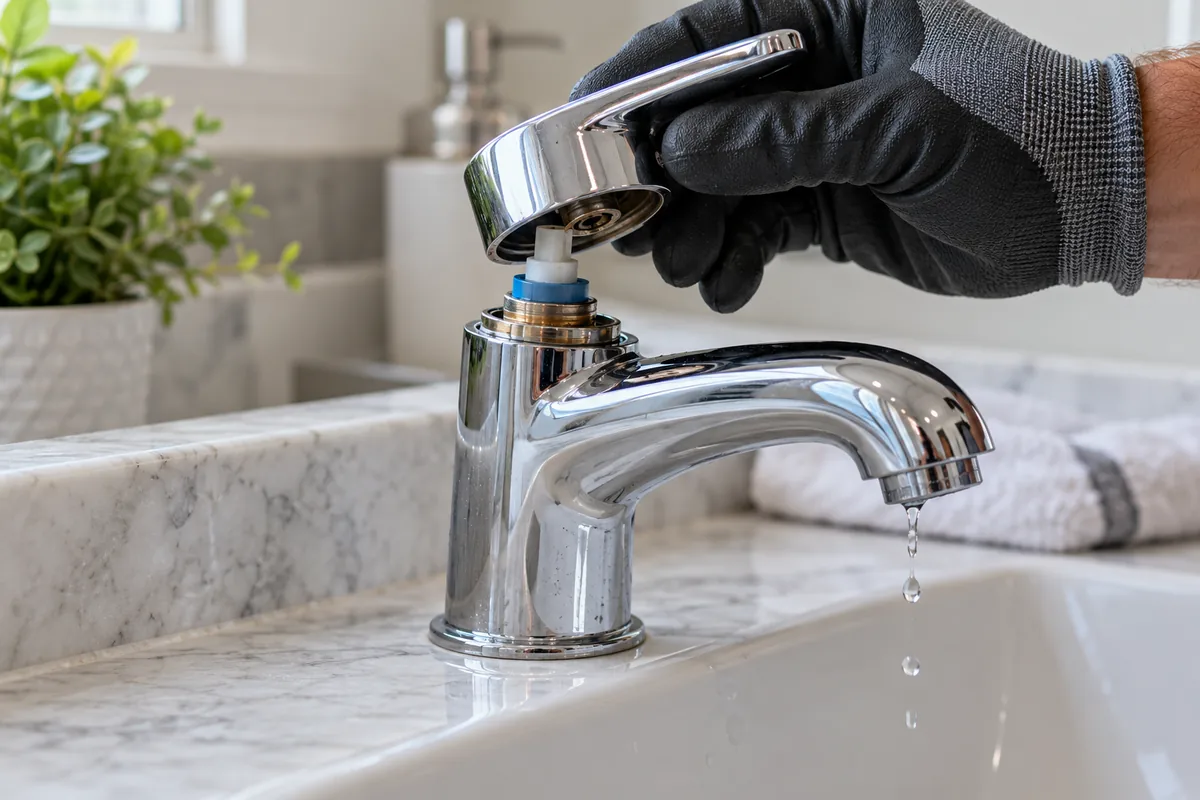
A dripping spout, leaking handle, weak flow or water beneath the sink does not always require a new faucet. The repair depends on whether the problem is in a cartridge, seal, sprayer, supply line or the fixture body.
Routine faucet repairs are scheduled. For uncontrolled leaks, emergency calls are answered 24/7; plumber availability is confirmed when you call.
A slowly dripping spout is normally a scheduled repair. Water spraying from the supply hose, flooding the cabinet or escaping from a broken shutoff connection is urgent. If safe, close the hot and cold shutoff valves under the sink. If those fail, locate the home’s main water shutoff. Avoid electrical equipment around standing water.
A split supply connector, loose fitting or damaged valve can release water even when the faucet is off.
Stop using the fixture and contain water only when safe. Wet cabinets and flooring may require additional drying after the leak is stopped.
A seized or failed stop valve can prevent isolation of the fixture. Tell the plumber whether the main water supply can be shut off.
Tell us where the water is escaping, whether the shutoff works and whether it is still flowing.
Call (407) 964-8991 — Urgent Leak HelpEmergency calls answered 24/7; on-site availability and dispatch are confirmed by phone. Small drips are usually scheduled repairs.
A worn cartridge, washer, ceramic disc or damaged valve seat may prevent the faucet from sealing. The internal design determines the correct replacement part.
Failed cartridge seals or worn O-rings can allow water past the handle when the faucet is operated.
Check whether moisture starts at a supply connector, faucet body, sprayer hose or sink rim. A cabinet puddle does not always mean the faucet itself has failed.
Corroded hardware, mineral deposits or deteriorated internal components can affect control and temperature adjustment.
A blocked aerator can restrict one faucet; low flow at several fixtures may indicate a broader supply or pressure issue.
Retractable spray hoses, head connections and switching mechanisms can leak or stop returning correctly.
Replace compatible cartridges, washers or discs when they are available and the faucet body is still sound. Identification of the model matters for part fit.
Target worn seals and loose fittings without replacing an otherwise functional fixture.
Repair or replace defective connectors and accessible stop valves where they are the actual leak source, then test connections under normal pressure.
Mineral buildup, plugged screens or damaged spray heads can cause erratic flow. Cleaning or compatible component replacement may restore operation.
Replacement may make more sense when parts are unavailable, the fixture body is corroded or repairs approach the cost of a new faucet. Check sink-hole configuration, clearances and water connections first.
Not every sink leak needs a faucet replacement. Leaking drain traps and disposal connections require different repairs. For standing water that will not drain, see Kitchen Sink Unclogging.
Check the spout, handles, faucet body, supply lines, shutoff valves and nearby drain connections to distinguish fixture leaks from other plumbing problems.
Identify cartridge style, fixture condition and replacement-part availability. Review the repair versus replacement options before work begins.
Operate hot and cold controls, inspect under-sink joints for leaks and verify normal flow after repair or installation.
Mineral buildup can contribute to slow flow or stiff faucet operation, but it is not the only cause. A blocked aerator, worn cartridge or supply restriction may produce similar symptoms. A reliable diagnosis starts by checking whether the problem affects one faucet or multiple fixtures.
Kitchen faucets with pull-down sprayers have more hose and head connections to inspect. Bathroom faucets may have separate handles and older stop valves that complicate part replacement. If a cabinet has been wet for an extended period, stopping the leak and addressing existing moisture damage are separate tasks.
The leak position and how the faucet behaves help narrow the repair.
A worn cartridge, washer, seat or ceramic disc may be responsible. Compatible parts and faucet model identification matter.
Trace moisture to the supply hoses, stop valves, sprayer, drain or faucet mounting area before assuming the faucet body has failed.
A new fixture may be more practical when replacement parts cannot be sourced or a corroded casting leaks. Match mounting holes and existing connections before installation.
Usually not. A small drip is typically scheduled. A ruptured hose or uncontrolled leak that cannot be isolated is urgent.
Often, if compatible cartridges or seals are available and the body is in sound condition. Corrosion and part availability affect the decision.
Common sources include loose supply fittings, a sprayer hose, an angle stop, the faucet mounting area or a drain connection. The leak should be traced before replacing parts.
An aerator or cartridge blockage may affect a single faucet. If several fixtures lose pressure, the issue may be farther upstream.
Depending on the model, hoses, spray heads or diverter mechanisms may be replaceable.
Caulk will not repair a leaking cartridge or supply connection. The failed seal or fitting needs to be addressed directly.
Consider replacement if the faucet body is damaged, compatible parts are unavailable or repair costs are unreasonable relative to replacement.
Call to discuss the faucet location, symptom and fixture type so the appropriate service and available appointment can be confirmed.
Call about a dripping faucet, damaged cartridge, sprayer problem or an under-sink connection leak. Describe the symptoms and whether water is still flowing.
Call (407) 964-8991 for Faucet RepairRoutine visits are scheduled. Emergency calls are answered 24/7 for uncontrolled leaks; plumber availability and arrival timing are confirmed by phone.