APOPKA, FL · HOME REPAIR & RESTORATIONExplore Apopka service area
Home Services ApopkaCall (407) 557-9753 ↗
Gutter Services · Apopka, FL

Gutter Guard Installation in Apopka, FL

You’re up the ladder again — third time this year, scooping the same trough. Or the trough looks fine but water still pours over the edge every afternoon. You’ve heard guards fix this, and you’ve heard they don’t. We install them, so here’s our honest version: which guard types actually beat the debris Apopka trees drop, which ones fail here and why, what no guard can do no matter what the ad says — and how we help you decide between guards and scheduled cleanings for your roofline. Typing “gutter guard installation near me” into a search is how many Apopka homeowners find this page — and the guide below is written to help you describe the problem clearly when you call.

We connect you with licensed and insured gutter contractors in Apopka, FL.

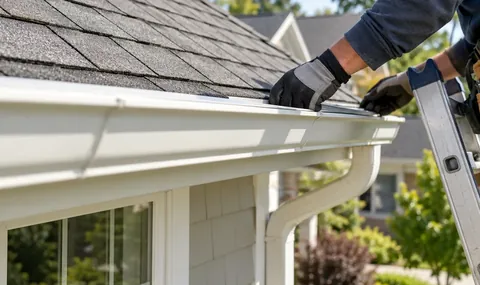
Gutter guard installed along residential roof edge
Gutter Guards · APOPKA, FL
⌖ Apopka, FloridaCall about this serviceReview the scope before approving work
The moment it’s worth calling

Four moments that mean “talk about guards”

01 / Symptom

You’re cleaning three, four times a year and it’s never enough

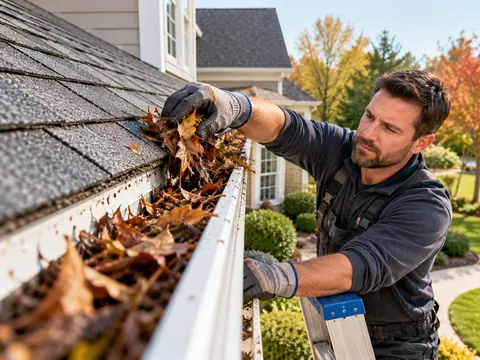
Live oaks shed nearly year-round here; pines drop needles in every season. If the trough is full again six weeks after a cleaning, you’re not behind on maintenance — you have a debris-load problem, and guards are the tool built for exactly that.
Do now: note what’s actually in the trough — broad leaves, needles, seed pods, or shingle grit. We match the guard type to the debris type.

02 / Symptom

Water overflows but the gutter looks clean

This is the classic pine-needle signature we diagnose weekly. Needles slip through cheap screens, wash down, and mat into the downspout elbows — the downspout jams solid while the trough above looks spotless. Screens made it worse, not better.
Do now: check whether downspouts dribble while the trough overflows. If yes, the blockage is in the elbow — and our guard conversation is about needle-proofing, not leaf-blocking.

03 / Symptom

Your old screens are warped and trapping debris

First-generation screens buckle in Florida heat, lift at the edges, and catch leaves along the rim instead of shedding them. We call a warped screen a debris shelf.
Do now: lift a section and look underneath. If there’s a sludge layer of decomposed leaves and grit, those screens have been failing quietly for seasons.

04 / Symptom

You’re done with the ladder

Two stories, a steep pitch, or just no interest in climbing anymore — we hear this daily. Guards don’t eliminate roofline attention, but the right system turns four ladder trips a year into an occasional ground-level check.
Do now: be honest about access. The harder your roofline is to reach, the stronger our case for guards — and the more the guard type matters.

What the job includes

The guard types, honestly ranked for Apopka debris

Micro-mesh. A fine stainless-steel mesh stretched over the gutter, openings around 0.2 to 0.5 millimeters — a pine needle is 1 to 2 millimeters across, so it physically can’t thread through. Independent testing (This Old House, 2026) found micro-mesh blocked long and short needles plus shingle grit. It needs our professional install so the mesh sits taut and pitched — a sagging mesh pools water. This is our answer for pine-needle country.

Standard screens. Perforated metal or plastic with 3–5 mm openings. Fine for broad oak leaves, useless against needles, seeds, and grit — the fine stuff drops straight through and mats inside. The cheapest option, and the one we see regretted most in needle zones.

Reverse-curve (surface-tension) guards. A curved hood that pulls water around a lip while debris overshoots. Handles big leaves well in moderate rain. The documented weakness we warn about: in heavy, wind-driven rain the curve gets overwhelmed and water shoots past the gutter entirely — a real issue in our afternoon deluges. Needles can also slide into the front slot.

Brush and foam inserts. We skip both in Florida, period. Brush bristles have gaps wide enough to swallow needles whole. Foam catches debris on its surface until the surface degrades — and in our humidity, foam grows mold. Both turn into a worse maintenance problem than the open gutter.

That’s the menu. Before you choose, here’s what the debris does while you decide.

What waiting costs

What the debris does while you decide

By the time overflow shows

The dam builds from the bottom

The dam builds from the bottom needles and grit settle and compact at the bottom of the trough, wicking moisture upward until the lower third has been a wet sponge for weeks wet debris is heavy debris: bent hangers, flattened pitch, and the slow pull away from the fascia

A trough that can’t drain through the warm season

Standing water breeds mosquitoes

Standing water breeds mosquitoes a gutter that can’t drain becomes a nursery — in Florida’s warm season, larvae mature in days neglected gutters are among the most common residential breeding sites inspectors cite

Every afternoon deluge over a clogged gutter

Overflow excavates your slab edge

Overflow excavates your slab edge sheeting overflow lands in the same strip of soil against your foundation — Apopka’s sandy soil washes easily, storm after storm downspout-side soil migrates away from the slab

Dry spells after granule wash-off

Grit becomes concrete

Grit becomes concrete shingle granules wash off aging asphalt roofs and settle as sludge — left long enough, it hardens over dry spells we end up chiseling it out — and it corrodes aluminum troughs from the inside

Three checks before anyone climbs

  • The ladder is the most dangerous tool in this job.

    Falls from roofline height are the leading cause of serious DIY injury in home maintenance — we’ve seen the aftermath. Two stories, a steep pitch, or soft wet ground under the ladder feet: any one of those is our reason to keep your feet on the ground and let our crew handle it.

  • Never install guards over damaged gutters.

    Sagging runs, rotted fascia, failed hangers — we won’t install guards over any of it. Guards add weight and hide the problem; a guard over a failing gutter is a lid on a problem, not a fix. We repair first, then guard.

  • Look up before the ladder goes up.

    Overhead service lines run close to roof edges on many Apopka streets, and aluminum ladders and gutters conduct. If lines are within reach of the work zone, tell us on the call — we plan around it.

Why Apopka changes the math

Why Apopka debris defeats ordinary guards

Two tree types, zero off-season

Live oaks shed leaves, catkins, and twigs nearly year-round — there’s no “after the leaves fall” here. Pines around Wekiwa Springs and the northwest subdivisions drop needles in every season, and needles are the debris that defeats the most guards. We tell every caller: most homes face both.

Downpours test overshoot, not just clogging

An inch or two of rain in under an hour is routine June through September. Reverse-curve guards that behave in a drizzle get overwhelmed when water moves fast off a steep pitch — the documented bypass problem we warn about. If your roof is steep and your storms are violent, we fit micro-mesh: its flat profile handles the deluge better than a curved hood.

Humidity kills foam

Foam inserts grow mold in Florida humidity — not eventually, reliably; we’ve pulled out enough of them to say so. What starts as a debris filter becomes a damp, heavy, moldy mass sitting in your gutter. We rule this guard type out categorically here.

Shingle grit is the invisible debris

Asphalt shingles shed granules faster under Florida UV. The grit washes into gutters as a fine sludge that screens can’t stop and most folks never notice until the trough is half full of it. We fit micro-mesh to stop it; everything else lets it through.

How the job runs

What happens during a guard installation visit

  1. Assessment

    We walk the roofline and name your debris: leaves, needles, grit, or a mix. We check gutter condition — sag, pitch, hanger spacing, fascia soundness, downspout discharge. Anything failing gets flagged for repair first; we install guards on sound gutters only.

  2. Cleaning and prep

    We clear the troughs and flush downspouts before a single guard goes on. Installing guards over existing sludge locks the problem inside.

  3. Fitting

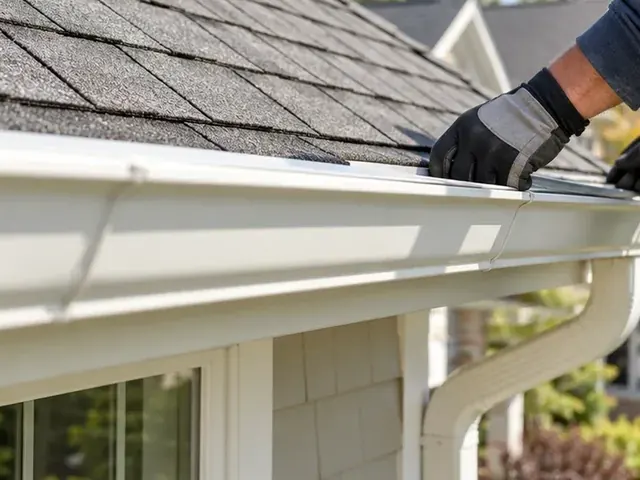
    We cut micro-mesh sections to the run, set them under the shingle edge or fasten to the fascia (method depends on roof type — sliding under shingles must not disturb the drip edge or void the shingle warranty), and screw them so the mesh sits taut with a slight forward pitch. Valleys get splash attention — the highest-volume, highest-debris zones on the roof.

  4. Water test

    We flow-test every downspout before leaving. You should see water moving freely at each outlet — that’s the whole point of our visit.

Before you call

Call now, or can it wait? — and what to have ready

Call now

  • Water sheeting over clogged gutters and pooling against the foundation
  • A run visibly sagging under wet debris
  • Mosquitoes breeding in a trough that never drains

Can wait for a scheduled visit

  • Recurring cleanings that are merely annoying
  • Old warped screens
  • Planning guards with a full gutter replacement (typically from $1,200) — but book before June; once the daily downpours start, every storm is a test you haven’t prepared for

Have ready when you call

  • Your debris type (leaves, needles, grit — or “all of it”)
  • Gutter size (5-inch or 6-inch)
  • Stories and roof steepness
  • Whether you have old screens now
  • Photos of the worst run
  • If pines overhang the roof, say so — the single most useful fact for matching the guard

Call made. Here’s what the day of our work looks like.

During the visit

What to expect while the work is underway

  1. Full roofline

    Ladder work along the roofline

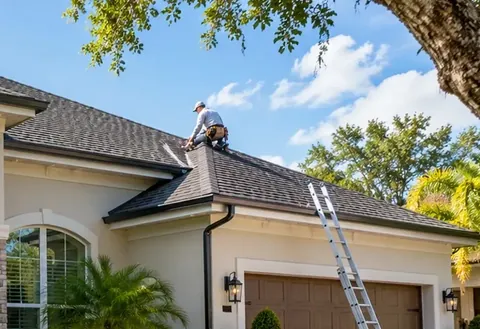
    Expect our ladder work along the full roofline and a few hours on site for a typical home — longer if troughs need serious cleaning first. It’s not loud work: cutting mesh, fastening sections, flushing downspouts.

  2. Work zone

    Keep clear of the ladder zone

    Keep kids and pets inside, away from our ladder zone.

  3. Testing

    Watch the water test

    We walk you through each run afterward and show you the water test at the downspouts — watch for it.

  4. After

    Ask how to service the guards

    Before we leave, ask us how to service the guards: what to brush off, how often, and which areas (valleys, north-facing runs) need the occasional check.

Helpful answers

What gutter guard installation typically costs in Apopka

Our honest read on cost: a standalone cleaning — the prep every guard install starts with — typically runs from $100, and a full gutter replacement with guards typically runs from $1,200 — the confirmed price comes only on the call or at inspection time.

ServiceTypical starting price
Full gutter installationfrom $1,200
Gutter cleaningfrom $100

Every problem's work and cost is different — the confirmed price comes only on the call or at inspection time. Starting prices below are typical, not fixed prices.

Gutter Guard FAQs — Apopka, FL

Will gutter guards work with my pine trees?

Micro-mesh, yes — and we call it close to mandatory under pines. Quality mesh runs 0.2 to 0.5 millimeters, narrower than a pine needle’s 1–2 millimeter diameter, so needles physically can’t thread through. Standard screens with 3–5 millimeter openings let needles drop straight in, where they mat into the downspout elbows. If pines overhang your roof, we’ll tell you screens are the wrong answer.

Do gutter guards stop overflow in heavy Florida rain?

Guards stop debris, not capacity problems — we say this on every call. In a 1–2-inch-per-hour deluge, water moves fast off a steep roof, and reverse-curve guards can get overwhelmed, shooting water past the gutter entirely. If your gutters overflow while clean, the fix is capacity (6-inch troughs, more downspouts), not guards. Guards and capacity solve different problems.

Do I still have to clean my gutters with guards installed?

Less often, differently — and anyone who promises “never again” is selling, not advising. Guards change our maintenance visits from scooping the trough to servicing the guard: brushing debris off micro-mesh surfaces, clearing valley buildup, checking that downspouts still flow. Wind clears some of it, but valleys and north-facing runs still collect material. Expect an occasional check from us, not a ladder-free life.

Why are foam and brush guards a bad idea in Florida?

We won’t install either in Florida. Foam inserts grow mold in our humidity — reliably, not eventually; what starts as a debris filter becomes a damp, heavy mass sitting in the gutter. Brush guards have bristle gaps wide enough to swallow pine needles whole, and trapped needles are harder to pull from bristles than from an open trough. Both create worse maintenance than no guard at all.

Can guards go on my existing gutters?

Only if the gutters are sound — we insist on this. Sagging runs, failed hangers, bad pitch, or rotted fascia must be repaired first; guards add weight and hide problems, so installing them over damage is a lid on a problem, not a fix. Our assessment checks all of this before we talk guard types. Five-inch vs. six-inch size also matters for matching the right product.

What's the real difference between micro-mesh and regular screens?

Opening size — it’s the whole game, and we prove it with a needle. Regular screens have 3–5 millimeter openings: fine for oak leaves, useless against needles, seeds, and shingle grit, which all slip through and mat inside. Micro-mesh uses openings around 0.2–0.5 millimeters, finer than most window screen, blocking needles and grit while water passes. It’s the difference between delaying the clog and preventing it.

Will gutter guards void my roof warranty?

It depends on the mounting method and your shingle manufacturer. Some systems slide under the bottom shingle course, which can disturb the drip edge or conflict with warranty terms if done poorly — we flag this before we quote. Fascia-mounted options avoid the roof interface entirely. Ask us which method we use and confirm it against your shingle warranty before approving the work.

Should I get guards or just schedule regular cleanings?

Heavy tree cover — especially pines — plus a hard-to-reach roofline: we recommend guards; you’re buying fewer ladder trips and needle-proofing. Light tree cover with easy access: we recommend scheduled cleanings, which are simpler and let our tech spot gutter damage early. Our honest answer: guards don’t eliminate maintenance, they change it. We choose based on your debris, not the sales pitch.

How do I find gutter guard installation near me in Apopka?

Look for a team that serves Apopka specifically, explains the work in plain language, and confirms availability for your address before booking. The number on this page connects you with our gutter guard installation team.

Further reading

Sources and technical references

View supporting references and safety sources
  1. This Old House 2026 gutter-guard testing

    Independent pine-needle testing — the ~275-micron surgical-grade stainless mesh data behind our micro-mesh recommendation.

  2. SMACNA architectural sheet metal standards

    Gutter and downspout sizing, pitch, and hanger practice — why we treat capacity and pitch as seriously as debris.

  3. UF/IFAS Extension

    Florida grading, drainage, and moisture guidance for homes — the standard behind our discharge-point rules.

  4. Florida Building Code

    Roof drainage and rainwater disposal provisions — the code we build to.

Guards manage debris, but the reason to manage debris is everything downstream of the downspout. Keeping troughs flowing is the first line of the broader foundation protection work that starts with drainage, because soil stays put when roof water lands where it was routed to land. A panel that has already tipped from years of overflow may still need concrete leveling to bring back its original pitch even after the guards stop new washout. Likewise, a joint that has opened and taken on water calls for sealing the foundation crack itself, not just drying it out. And on the patio side of the house, steady, controlled runoff is what makes an outdoor kitchen installation a durable build instead of a counters-and-cabinets setup that floods at its base every June.

Before you decide: guards are one line of defense in a wet season that tests everything we install. Read the Florida rainy-season home checklist — gutters, drainage, and roof edge as one system.

Read the related homeowner guide ↗

Gutter service — regular appointment scheduling

We run gutter cleaning, repair, and guard installation as scheduled visits — call to confirm our hours and the next available slot. After a storm, stay off ladders and away from loose gutters and downed wires.

Need Gutter Guard Installation in Apopka, FL?

You know your debris type now, and which guards survive Apopka’s trees and downpours. Call with your gutter size and what’s overhanging the roof — we’ll match the guard to those two facts.

Apopka, FLGutter Guards ☎ (407) 557-9753