APOPKA, FL · HOME REPAIR & RESTORATIONExplore Apopka service area
Home Services ApopkaCall (407) 358-0493 ↗
Foundation Repair · Apopka, FL

Foundation Crack Repair in Apopka, FL

You found the crack. Now the real question: is the house breathing, or is it moving? In Apopka it almost always comes down to three things — the crack's shape, whether it's changing, and what the sandy soil underneath has been doing lately. We read cracks every week. Here's how we read yours, how repairs actually work — epoxy vs. polyurethane, and why the difference matters — and how we tell a cosmetic crack from one that needs us. If you're searching for foundation crack repair near me in Apopka, this page is a good place to start — it explains the work, the warning signs, and what to ask before anyone begins.

We connect you with licensed and insured foundation repair contractors in Apopka, FL.

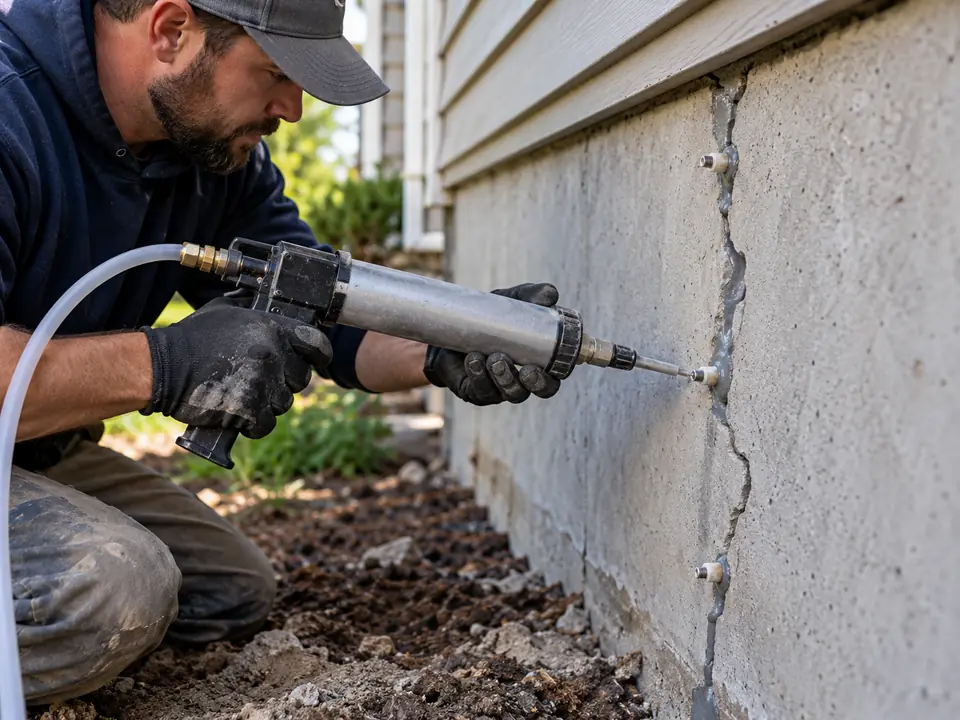
Illustrative close view of a specialist sealing a crack in a residential concrete foundation
Foundation Crack Repair · APOPKA, FL
⌖ Apopka, FloridaCall about this serviceReview the scope before approving work
Know the signs

What your crack is saying — shape, direction, change

01 / Symptom

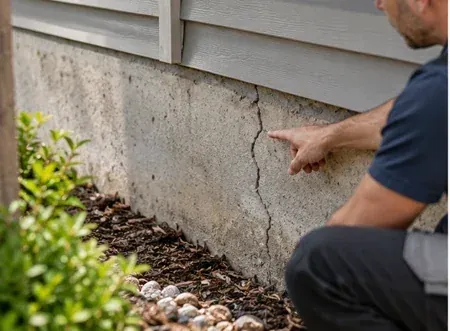
Vertical hairline, dry, hasn't moved

The most common crack in Florida homes — usually shrinkage as the concrete cured, or the house settling gently into sandy soil. Thinner than about 1/8 inch, dry, unchanged for months? We usually call that a monitor, not a repair. Photograph it with a coin beside it for scale, date the photo, and we'll tell you what to watch.

02 / Symptom

Diagonal crack from a corner

Diagonal cracks radiating from door or window corners tell a different story — they often mean differential settlement: one part of the foundation moving more than the rest. Check whether the doors or windows near it are sticking, and look for companion cracks in the drywall inside. Then call us — diagonals get our attention.

03 / Symptom

Stair-step through block or brick mortar

The classic settlement signature in masonry: the crack follows the mortar joints in steps. Small and stable can be cosmetic. Steps that grow longer or open wider at midheight mean the movement is active. Draw a pencil line across the crack and date it — if the line separates, the crack is growing, and we need to see it.

04 / Symptom

Horizontal crack, or water coming through

Horizontal cracks — and any crack leaking water after a heavy rain — are a different category for us. Horizontal usually means pressure against the wall; water entry means the crack runs through the full thickness. Note whether the leak shows only in downpours (drainage-driven) or hangs around after (ongoing pressure). Then call us for an evaluation — these don't wait well.

Understand the work

What crack repair covers — and what it doesn’t

Crack diagnosis and monitoring. We read the pattern — shape, width, orientation — check whether the edges have shifted, and set up monitoring so our decision is based on movement data, not one glance.

Epoxy injection (structural). We inject a high-strength resin under pressure into a dry, stable crack. It cures into a rigid bond — chemically rejoining the concrete and restoring strength. We call for epoxy when the crack needs strength back, not just sealing.

Polyurethane injection (waterproofing). We inject a resin that reacts with moisture, expands to fill the full crack depth, and stays flexible. We call for polyurethane on wet or actively leaking non-structural cracks — it seals water out and tolerates the minor seasonal movement Florida's soil cycles create.

Carbon fiber reinforcement. Here's our honest version: carbon fiber straps are mostly a basement-wall product — bowed block walls below grade. On Florida slab-on-grade homes they rarely apply. If someone quotes carbon fiber for a hairline stem-wall crack, ask what it's holding back. We'd rather you save your money for the actual fix.

Surface patching (cosmetic only). We use hydraulic cement or sealant over hairline, stable, dry cracks — it keeps water and bugs out of the surface. It's a surface treatment, not a structural repair, and we won't sell it as one. Patching is fine for what it is; it's just not injection, and we'll say which one you need.

You know the fixes. Next: what does waiting do to the house — that's the part that decides urgency:

Crack treatment versus whole-foundation repairs

We determine whether the fracture is stable, leaking, or tied to movement — surface sealing is not automatically a structural remedy, and we won't pretend it is. If floors slope, walls separate, or cracking speeds up, we compare the broader foundation assessment and repair pathway with you. If an area looks structurally unsafe, get out and call emergency services first.

Cost of waiting

What waiting does to a foundation crack

Every wet season, through the crack

Cracks don't heal

Water finds the crack → a dry hairline becomes a leaking one, and a leaking one starts carrying fine soil out with it → the wet-dry, swell-shrink rhythm works the crack a little wider every cycle. We've watched hairlines become leak paths in a single wet season.

Patching a crack while the wall is still moving

The repaired crack comes back

The seal fixed the opening, not the movement → the repair fails, sometimes within one rainy season → a monitor-and-inject job becomes a stabilization job. Waiting on active movement is what escalates the scope — and the invoice. We say this on every call because it's the most expensive mistake in this trade.

Three checks before the work starts

  • Is the wall actually stable?

    If a block or poured wall is bowing, leaning, or shedding chunks — or a crack is wide enough to fit your finger — don't wait on our quote. That's an evaluation-first situation, possibly an engineer, before anyone injects anything. We'll tell you the same on the call.

  • Water plus electricity near the crack

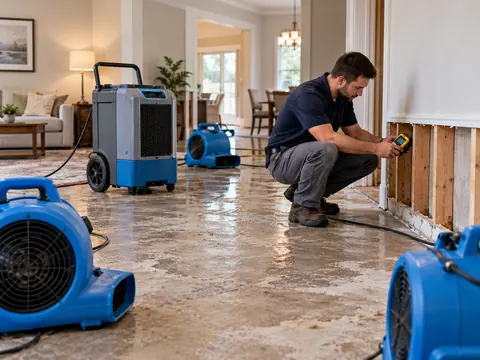
    A leaking crack can route water toward outlets, breaker panels, or garage wiring. If water is reaching anything electrical, kill the circuit from a dry spot and don't touch the wet area until it's dry. Then call us.

  • Possible sinkhole signs change everything

    A crack plus circular dead patches in the yard, a sudden depression, tilting fence posts, or cloudy well water — stop and call a geotechnical engineer and local authorities before any crack repair. Sealing a crack over sinkhole activity is worse than doing nothing, and we'll refuse that job.

Apopka specifics

Why Apopka’s ground is hard on foundations

Most of Apopka sits on sandy, loosely compacted soil — and sand's weakness is that it doesn't hold moisture, so it doesn't hold still. The pattern we see every year: summer downpours and tropical systems wash supporting soil from under and beside the slab; dry stretches shrink the soil and pull it back from the foundation edge; the next storm's water pours into the gap and the cycle restarts.

Irrigation leaks wash soil silently

The local accelerants are mostly man-made. Irrigation leaks wash soil from under slabs with no surface sign that anything is wrong. We find these constantly — a slow leak doing quiet work for months. It's the first thing we check when the story doesn't match the weather.

Downspouts routed back toward the house

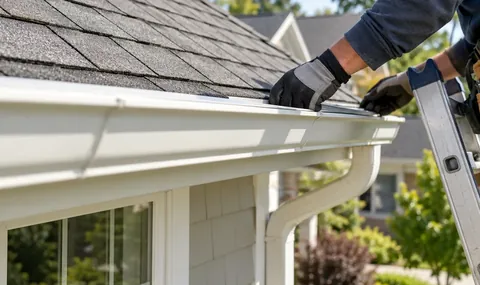
Gutter downspouts buried under landscaping can route water right back toward the house — undoing the drainage the gutter was built to provide. It's one of the first things we check on every visit, and it's free to fix.

Oaks and palms drink the soil dry

Mature oaks and palms planted close to the house drink hard in drought — pulling stabilizing moisture out of the soil — while roots physically lift nearby concrete. We factor the trees into every assessment.

Pond-adjacent ground stays saturated

Homes near retention ponds or low lakes (Wekiva Village saw pond overflow during Milton; Clear Water Lake has a history of rising into yards) sit on ground that stays saturated longer. We watch these streets closer.

How the job runs

What happens during a crack repair visit

  1. Diagnose first

    We read the crack — shape, width, orientation, whether the edges have shifted — and check it against the rest of the house: sticking doors, sloping floors, water entry. Monitoring data (dated photos, a crack gauge, pencil marks) beats any single look, and we'll set it up with you.

  2. Match the material to the crack

    Dry and stable → we inject epoxy to restore strength. Wet or leaking → we inject polyurethane to seal water out. Wall pressure → reinforcement, possibly with injection. A surface patch is for hairline, dry, stable cracks only. Anyone proposing injection without explaining which material and why hasn't done the diagnosis — and here's a red flag we give every caller: ask 'which resin and why' and watch the answer.

  3. Do the work

    For injection: we set surface ports along the crack, seal the face, and inject resin under low pressure, port by port, until it travels the full depth. A single crack usually takes us 1–3 hours. Epoxy reaches full cure strength in 24–48 hours; polyurethane in hours. No excavation in most cases — on Florida slab-on-grade homes this work typically happens right where you stand.

  4. Verify

    We pull the ports, check the seal, and hand you monitoring guidance in writing — what to watch, and for how long — so a crack that was repaired while the ground was still moving gets caught early, not discovered two rainy seasons later.

Prepare for your call

Call now, or can it wait? — and what to have ready

Urgent foundation or structural concerns — call and report them: sudden widening cracks, accompanying movement. An appointment has to be confirmed; a call alone doesn't schedule one, and we'll be straight about timing. If the property looks unsafe, leave the hazard area and call emergency services first.

Call now

  • A crack wider than about 1/4 inch
  • Horizontal cracks
  • Any wall bowing or leaning
  • A crack that's visibly growing week to week
  • Water actively entering
  • Any crack combined with possible sinkhole signs

Can wait for a scheduled visit

  • Thin vertical hairline cracks, dry, unchanged for months
  • One small stair-step that stopped moving
  • Cosmetic patches you're monitoring — waiting is fine; ignoring is different from monitoring, and we'll help you tell the difference

Have ready when you call

  • The crack's résumé: location, orientation (vertical, diagonal, horizontal, stair-step), approximate width — coin test: thinner than a dime is under ~1/16 inch — and whether it's changed since you found it
  • The house's story: when did you notice it? After which season? Sticking doors, sloping floors, water entry nearby?
  • Dated photos with a coin for scale, weeks apart — the single most useful thing you can bring us
  • Ask us: is this crack structural or cosmetic — and how do you know?
  • Ask us: is the ground around it still moving, or is this historic?

Call's made. Here's what the day of the work actually feels like with our crew:

During the visit

What to expect while crack repair is underway

  1. Diagnosis first — a quiet job by construction standards

    No heavy equipment, no excavation in most cases, no need to move out. We spend the first stretch diagnosing and measuring, not injecting — the material choice follows the diagnosis. That's our order.

  2. Injection — port by port, under low pressure

    We set ports every several inches along the crack, inject resin under low pressure, pause at each port while it travels the full depth. You'll hear the pump, smell the resin mildly, see surface paste along the crack face. All normal — we'll narrate as we go.

  3. Curing — respect the cure window

    Plan on the work area staying accessible for a few hours. On epoxy jobs, don't stress the wall for 24–48 hours while it reaches full cure. Polyurethane jobs are back to normal the same day. We'll give you the exact window.

  4. Wrap-up — get the monitoring plan in writing

    Before we leave, we show you what was injected and where, and hand you the monitoring plan in writing: which crack, what to watch, when to call back. No verbal-only warranties from us.

If your situation turns out to sit slightly outside this page's scope, the services below are the ones Apopka homeowners usually need next. Persistent moisture under the structure makes repairing a damp, dripping crawlspace line a priority, because the framing sits right above it.

Helpful answers

What foundation crack repair typically costs in Apopka

We price by what we find on site — crack injection typically runs from $500 per crack; if the wall is still moving, a full repair typically runs from $2,200. Typical starting prices, not fixed prices.

ServiceTypical starting price
Crack injection, per crackfrom $500
Full foundation repair, if movement is the causefrom $2,200

Every problem's work and cost is different — the confirmed price comes only on the call or at inspection time. Starting prices below are typical, not fixed prices.

Foundation Crack Repair FAQs — Apopka, FL

My crack is vertical and thin. Does it need repair?

Probably monitoring, not repair. Thin, dry, stable vertical cracks are often just concrete shrinkage or gentle settling, and most never become a problem. We photograph it with a coin for scale, date it, and re-check monthly — and we'll tell you to do the same. The trigger to call us: widening past about 1/8 inch, water entry, or new cracks appearing nearby.

What's the difference between epoxy and polyurethane injection?

They're built for different jobs, and we explain this on every call. Epoxy cures into a rigid, high-strength bond that rejoins the concrete and restores wall strength — that's for dry, stable cracks that need structural integrity back. Polyurethane reacts with moisture, expands to fill the full crack depth, and stays flexible — that's for wet or leaking cracks where waterproofing is the goal. Neither one fixes a moving foundation — and we'll say so before we inject.

Will sealing the crack stop my foundation from settling?

No. Injection seals the opening; it doesn't stabilize the ground or the foundation. If the crack came from settlement or ongoing soil movement, sealing alone will fail — sometimes within one rainy season — because the wall keeps moving. Recurring cracks in the same spot are the signal we look for: the movement needs addressing, not just the crack. We'll tell you when that's the case, even though it's the bigger job.

How do I monitor a crack myself before calling anyone?

Draw a pencil line across the crack and date it, or put a coin beside it in a dated photo — re-check monthly. A crack gauge (two small plates fixed across the crack with millimeter scales) measures width changes precisely; that's what we use. Anything growing month over month, or a pencil line that separates, is your signal to call us.

The crack leaks only during heavy rain. Is that urgent?

It's a waterproofing problem rather than an emergency — but don't ignore it. Each storm carries fine soil out through the crack, slowly widening the path. Note whether the leak shows only in downpours (usually drainage-driven) or persists afterward (ongoing pressure). We typically fix it with polyurethane injection, and routing downspouts away from that wall helps keep it fixed — we'll check both.

Should I be worried about sinkholes if I see foundation cracks?

Most cracks are settlement or shrinkage, not sinkholes — but Florida's limestone geology means it's worth knowing the signs: circular patches of dying vegetation, sudden yard depressions, tilting fence posts, cloudy well water. A crack plus any of those means a geotechnical engineer and local authorities before any crack repair — and we'll refuse the injection until that's done. Florida law also requires sellers to disclose paid sinkhole claims.

Can I just patch the crack myself with hydraulic cement?

For a hairline, dry, stable crack you only want to keep water and bugs out of — yes, as a surface treatment, and we'll do it honestly. But hydraulic cement and caulk only cover the crack's face; they don't fill the full depth, and water finds a path around them within months. For leaking, widening, or potentially structural cracks, our low-pressure injection fills the crack completely. That's the actual repair, and we'll tell you which one you need.

Do you serve my address for foundation crack repair near me in Apopka?

We cover Apopka and the surrounding neighborhoods, and the number on this page is the one to call about foundation crack repair. Confirm your address and the work needed when you call.

Further reading

Sources and technical references

View supporting references and safety sources
  • Florida Building Code — foundation, soils, and structural requirements for residential construction and repair in Florida

    We build to it.

  • Fla. Stat. §627.707 / §627.7073 — sinkhole claim investigation standards and the seller-disclosure requirement for paid sinkhole claims

    Cited as law, not as anyone's credentials.

  • Industry practice — epoxy injection for structural rebonding vs. polyurethane for flexible waterproofing; crack monitoring with tell-tale gauges to tell active from historic movement; independent engineering evaluation before structural repair selection

    Our process follows all three.

Sealing a crack without fixing the water source is a repair with an expiration date. Overflow at the roofline is the most common source we trace, and it is controlled first by keeping gutters cleaned out so water reaches the downspouts instead of sheeting down the wall. Where the roof sits under oaks that shed in every season, adding gutter guards to stop the trough from damming up keeps that discharge pattern from rebuilding itself. A patio crack tells the same story outdoors, and it is worth stabilizing before an outdoor kitchen installation adds heavy counters and appliances across the joint. Indoors, a crack that runs under a bathroom often announces itself through the finish first, which is why lifting a failed floor sometimes starts with replacing bathroom tile that cracked in a straight line over the movement rather than just regrouting it.

Helpful next steps: compare the proposed assessment and repair scope, and decide when a professional evaluation is warranted. We'll help you read any quote — including a competitor's.

How to compare home service estimates ↗ When to call a home professional ↗

Need Foundation Crack Repair in Apopka, FL?

Bring the crack's shape, location, and whether it's changed since you found it — that's our whole intake. Call to confirm coverage and availability, and we'll take it from there.

Apopka, FLFoundation Crack Repair ☎ (407) 358-0493