APOPKA, FL · HOME REPAIR & RESTORATIONExplore Apopka service area
Home Services ApopkaCall (407) 358-0493 ↗
Foundation Repair · Apopka, FL

Concrete Leveling in Apopka, FL

That driveway corner sitting an inch low. The sidewalk panel that catches your toe every morning. The pool deck sloping the wrong way and holding water for days. None of that means your foundation is failing — it means the ground under the concrete gave up. We lift settled slabs in Apopka every week. Here's how we read what's happening under yours, what the two real fix methods do differently, and when leveling isn't the answer — we'll tell you that too. If you searched for concrete leveling near me in Apopka, this page explains the work involved so you can describe the problem clearly when you call.

We connect you with licensed and insured foundation repair contractors in Apopka, FL.

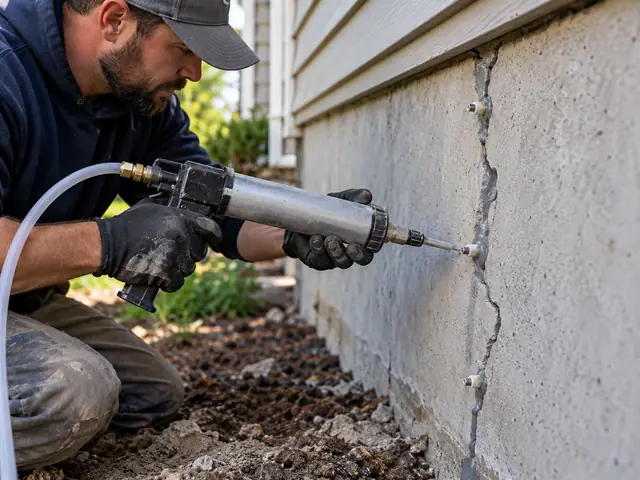
Technician inspecting cracks in a home foundation wall in Apopka, FL
Concrete Leveling · APOPKA, FL
⌖ Apopka, FloridaCall about this serviceReview the scope before approving work
Know the signs

Which pattern matches your concrete?

01 / Symptom

A lip between panels that catches your foot

A quarter-inch raised edge trips people — that's about the threshold in accessibility guidance. On a walkway it means one slab settled or another got pushed up. Our first move on every visit: figure out which panel is high and which is low. That one observation tells us whether we lift the low one or deal with whatever's pushing the high one.

02 / Symptom

Water pooling on the slab after rain

Standing water means the surface doesn't slope like it was poured. On driveways it funnels water toward the garage; on patios it sends water against the house wall. After the next rain, photograph where the water sits — the puddle is a map of exactly which panels moved, and we'll read it with you.

03 / Symptom

A hollow sound underfoot, or a panel that rocks

Tap the slab with something hard. A hollow ring instead of a dull thud means there's a void under it — soil washed out, air where support should be. A rocking panel is sitting on an edge with nothing under the middle. Don't jump on it, and keep heavy equipment off: a slab spanning a void can crack straight through under load. We've seen cars do it.

04 / Symptom

The pool deck sloping toward the pool

Pool decks in Central Florida settle toward the water more than you'd think — the soil around a pool stays wetter longer, and years of splash-out and deck drainage eat it away from below. The deck starts holding water in low spots and cracking along the coping. Check whether the waterline tile is still level all the way around: uneven tile often means the deck and the pool shell are moving differently, and that's a different conversation.

Understand the work

What a concrete leveling visit covers

Void and support assessment. We map which panels settled, how far, and whether there are voids underneath — hollow sounds, visible washout at the edges, how the slab takes load. All of it goes into our call with you.

Method selection: mudjacking vs. polyurethane foam. We'll lay it out straight: mudjacking pumps a cement-sand slurry through holes about 1½–2 inches wide. It's heavy, takes 1–3 days to cure, and on weak Florida soil the added weight can restart settling. Polyurethane foam goes in through penny-sized holes (about ⅝–1 inch), expands to fill the void, and cures in about 15 minutes — light enough that it doesn't load the soil it sits on. We tell every caller which one fits their soil and why.

Void filling. When there's an empty space under a slab that hasn't sunk yet, we can fill it with foam or slurry for support without a lift — prevention, not repair. We do this when the assessment says it's warranted.

Joint and crack sealing. After the lift, we seal the gaps between panels and the injection holes so water can't run back underneath and restart the washout. Unsealed joints are how most leveled slabs settle again — this is the step cheap quotes skip, and we never do.

Drainage review. Water causes most Florida settlement, so our visit finds where water is getting under the slab — downspout discharge, irrigation overspray, grading that slopes toward the concrete. The lift fixes the slab; the drainage review keeps it fixed. Skip the drainage review and the lift is temporary. We've re-lifted slabs that were done right the first time except for that.

That's the scope. Do one piece of prep before you call — it makes our whole visit faster:

What waiting does

What a settling slab does while you decide

Every storm, while you decide

The void keeps growing

Soil loss doesn't pause → every storm pushes more water under the slab and washes more support away → a slab bridging a small void can crack straight through under a car's weight. The repair that was a lift becomes a tear-out and replacement. We've watched that flip happen — it's the most expensive procrastination in this trade.

Joints left unsealed

The feedback loop runs

Water runs through the joint gap → carries soil out with it → the panel drops further → the gap widens → more water gets in. Florida's daily summer downpours run that cycle on fast-forward. We see the loop complete in a single wet season.

Every person who walks that path

The trip hazard doesn't negotiate

A raised lip stays raised → kids, older visitors, delivery drivers meet it at full stride. Document it with dated photos — if someone falls, those photos show how long the hazard was known. We've been asked for our dated photos in exactly that situation.

Three checks before leveling begins

  • Utilities run under your concrete

    Irrigation lines, electrical conduit, sometimes gas or water service lines cross beneath driveways and patios. Florida's Sunshine 811 requires notification before excavation — injection drilling counts. We verify what's below before the first hole is drilled. We don't drill blind, and you shouldn't hire anyone who does.

  • Keep people off the work zone

    Fresh injection holes, equipment hoses across walkways, a slab mid-lift — real trip and crush hazards. Kids, pets, and foot traffic stay off until our crew clears the area. We'll tell you when it's safe.

  • Don't drive on it early

    Mud slurry needs a day or more before vehicle weight; foam is usually drivable within hours. We give you the exact window for your method — driving on too early can re-settle a panel the lift just raised, and we've had to redo exactly that.

Apopka specifics

Why Central Florida slabs settle the way they do

Apopka sits on sandy, loosely compacted soil that doesn't hold together when water moves through it. The mechanism is washout, not weight: summer downpours and tropical systems push water under the slab's edge, and the water carries soil out with it. The slab above doesn't move right away — it bridges the growing void until the span gets too wide, then it cracks, sinks, or tilts. We read this pattern every week.

Irrigation and gutters pointed the wrong way

A downspout discharging beside the driveway, or a sprinkler head overshooting onto the patio every morning, feeds a steady stream under the slab edge. Florida contractors name misdirected water — not age — as the top cause of residential slab settlement. We agree, and it's the first thing we check on every visit.

The storm-season reveal

Voids can form quietly for years and show up all at once after a hurricane or a week of heavy rain. Peak storm season is when hidden settlement turns visible — the slab was unsupported before the storm; the storm just made it obvious. We get a wave of these calls every September.

Roots and drought cycles

Big oaks and palms in older Apopka neighborhoods drink hard in dry stretches, pulling moisture out of the soil and leaving it shrunken. The next storm's water pours into the gap and restarts erosion. Sandy soil amplifies every swing — we factor the trees into every assessment.

Pond-adjacent homes settle first

Homes near retention ponds and low lakes — Wekiva Village saw pond overflow during Milton, Clear Water Lake has a history of rising into yards — sit on ground that stays saturated longer. Their driveways and pool decks settle first and fastest. If that's your street, call us sooner.

How the job runs

What happens during a concrete leveling visit

  1. Assessment

    We walk every affected panel, measure the height differences, sound the slab for voids, and check drainage around the edges — downspouts, irrigation, grading. Panel count, void size, water source — those come before any method is named. That's our order, every time.

  2. Method and scope in writing

    Which panels, which method, how many injection points, whether joint sealing is included, and what happens if a panel cracks during the lift. You approve our scope before drilling starts — in writing, itemized.

  3. The lift

    Holes go in on a grid across each panel — penny-sized for foam, larger for slurry. We inject from the lowest point outward while watching the panel rise on gauges. We lift slow; rushing the injection is how panels crack, and we've fixed other crews' cracked panels.

  4. Seal and verify

    We patch the injection holes, seal the joints, and check the finished slope — water should run away from the house now, not toward it. You walk the finished panels with us before we leave. Then we test the slope with water. If it doesn't sheet off away from the house, say so before we pack up — we'll make it right on the spot.

Before you call

Call now, or can it wait? — and what to have ready

Call now

  • A panel that's actively sinking week to week
  • A void you can see daylight through at the slab edge
  • A pool deck directing water into the pool
  • A trip lip on a walkway guests use daily

Can wait for a scheduled visit

  • A single settled panel with no cracks
  • Mild pooling that drains within a day
  • A slab that's looked the same for a year — keep photographing it. A dated photo series is the best evidence of whether it's still moving, and we'll ask to see it.

Have ready when you call

  • Map it: which panels, how far off level (a ruler across the lip), how long it's looked that way
  • Note the water: where downspouts discharge, which sprinklers hit the concrete, where water pools after rain
  • Ask us: foam or slurry — and why for my soil?
  • Ask us: what happens if a panel cracks during the lift?
  • Ask us: is joint sealing included, and what's the plan if it settles again?

Call's made. Here's what the day of the work actually looks like with our crew:

During the visit

What to expect while the work is underway

  1. Setup — rig and hose layout

    Expect our rig in the driveway or street, hoses across the work area, and a drill running in short bursts. Injection work is rhythmic, not constant. Dust is minimal compared to tear-out — no jackhammer, no dumpster, no rebar. That's the beauty of lifting over replacing.

  2. The lift — watch panels rise in real time

    With foam you'll watch panels come up over a couple of hours; slurry jobs run longer and the site stays wet around the injection points. We keep one walking path clear if the work spans an entry — just ask.

  3. Pets — keep them inside

    Expanding foam is sticky before it cures, and curious paws find it fast. We'll warn you twice.

  4. Walkthrough — walk every panel with us before we leave

    Check the lips are flush, water-test the slope with a hose if you can, confirm the injection holes are patched and joints sealed. Ask the cure window for your method before you drive on it — we'll give you the exact number.

Helpful answers

What concrete leveling typically costs in Apopka

We price by what we find on site — mudjacking typically runs from $500 (from $3 per sq ft), and polyurethane foam lifting from $5 per sq ft. Typical starting prices, not fixed prices.

ServiceTypical starting price
Mudjacking / slab levelingfrom $500
Mudjacking, per sq ftfrom $3
Foam lifting, per sq ftfrom $5

Every problem's work and cost is different — the confirmed price comes only on the call or at inspection time. Starting prices below are typical, not fixed prices.

Concrete Leveling FAQs

Is concrete leveling the same as foundation repair?

No — different jobs on different concrete. We lift settled non-structural slabs: driveways, patios, sidewalks, pool decks. Foundation repair handles the load-bearing structure the house sits on — piers, underpinning. A sunken driveway with no wall cracks is almost certainly a leveling job; wall cracks plus a sunken slab need the foundation repair evaluation first. We'll tell you which you've got.

Should I choose mudjacking or polyurethane foam?

It comes down to your soil and your timeline. We inject foam through penny-sized holes — it expands to fill voids, cures in about 15 minutes, and it's light, so it doesn't add weight to weak Florida soil. Mudjacking uses a heavier cement slurry through bigger holes and needs a day or more to cure. On sandy, washout-prone ground like Apopka's, foam's weight advantage decides it for most of our jobs — and we'll explain why on your soil specifically.

How long will lifted concrete stay level in Florida?

The lift itself is durable — foam doesn't break down underground. What decides the lifespan is the water that caused the settlement. If downspouts, irrigation, or grading still feed water under the slab, new voids can form. That's why joint sealing and a drainage review are part of our complete job, not add-ons. Fix the water and the lift holds — we've got lifts from years ago still sitting level because the water got fixed too.

Will the crew have to tear out my driveway?

No — that's the whole point of leveling. Instead of demolishing and re-pouring, we drill small injection holes, pump material underneath, and raise the existing slab back into place. No jackhammer, no dumpster, no weeks of torn-up driveway. The exception: panels shattered or crumbled through their full depth usually do need replacement — and we'll tell you that up front rather than lift a slab that can't hold.

Does leveling fix the reason my concrete settled?

Leveling fixes the surface; the cause needs its own answer. If soil washed out because a downspout discharges beside the driveway, our lift restores the slab — but the water will carve a new void unless the drainage is corrected. We identify the water source as part of every visit. A lift without a drainage plan is a lift you'll repeat, and we'll say so.

My pool deck is sinking — is that a leveling job?

Usually, yes. Pool decks are non-structural slabs and prime candidates for our foam lifting — the method handles tight access around coping well, and sealed joints afterward keep pool water from feeding new voids. One check first: if the pool shell itself is moving (uneven waterline tile all the way around), that can mean a deeper issue we'd evaluate separately from the deck.

How soon can I drive on the slab after leveling?

It depends on the method. Our polyurethane foam typically cures in about 15 minutes, so most foam jobs are drivable the same day — sometimes within the hour. Mud slurry needs longer, usually a full day or more before vehicle weight. We'll give you the exact window for your job and method. Don't rush it: driving on too early can re-settle a panel the lift just raised.

When is a slab past leveling and needs replacement instead?

When the concrete itself is the problem, not its position. Panels broken into pieces, concrete crumbled or spalling through its full depth, slabs with steel exposed — injection material has nothing solid to push against. We'll tell you this upfront on the assessment. Anyone who proposes lifting a shattered slab is selling, not assessing — and that's not us.

What should I check before booking concrete leveling near me in Apopka?

Check that the team covers Apopka, handles your specific problem, and can confirm an appointment for your address. This page lists what concrete leveling involves and the number to call.

Further reading

Sources and technical references

View supporting references and safety sources
  • Florida's Sunshine 811 — required notification before excavation and drilling; buried utilities cross under many driveways and patios

    We call before we drill.

  • Accessibility guidance (ADA Standards) — the roughly quarter-inch threshold for vertical changes that create trip hazards on walking surfaces

    We measure against it.

  • Manufacturer guidance for two-part polyurethane foam — expansion, cure times, and injection methods for concrete lifting

    Our process follows it.

  • Florida foundation-industry practice — soil washout as the primary cause of residential slab settlement in the state's sandy soils; storm-season exposure of hidden voids

    Matches what we see weekly.

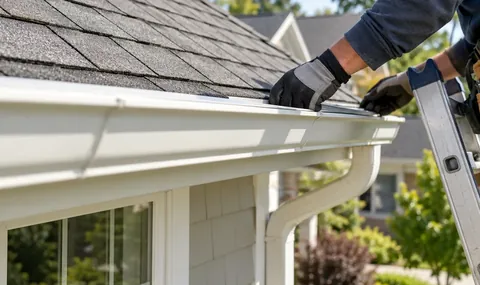
A lifted slab only stays lifted if the water that hollowed it out stops arriving. That usually means starting at the roofline with a thorough gutter cleaning that restores the downspout path, so discharge stops trenching the soil beside the panel that was just raised. For homes where debris refills the trough within weeks, installing gutter guards to keep the run clear between visits protects the leveling work through storm season. Level patios are also where outdoor projects land, and a panel corrected early makes building an outdoor kitchen on a stable, draining base far simpler than shimming cabinets later. Inside, the bathroom deserves the same check before a remodel, because a slab that has dropped at the tub end complicates converting that tub to a shower with a floor that must slope precisely to its drain.

Helpful next steps: compare the proposed assessment and repair scope, and decide when a professional evaluation is warranted. We'll help you read any quote — including a competitor's.

How to compare home service estimates ↗ When to call a home professional ↗

Need Concrete Leveling in Apopka, FL?

Before authorizing work, ask whether leveling or replacement is recommended and what's covered. Call to confirm coverage and availability. And get the method named in writing — foam or slurry — with the reason why. 'Leveling' alone isn't a scope, and we itemize ours.

Apopka, FLConcrete Leveling ☎ (407) 358-0493