
Cupping and raised board edges
Moisture imbalance can make hardwood edges rise above board centers. Do not sand the high edges while the wood is still wet; the shape can change again as moisture equilibrates.
Water can slip through hardwood seams long before the finish looks damaged. Boards may cup, swell, lift or separate while the subfloor stays wet underneath. Whether a floor can be dried in place depends on the water source, time wet, construction, wood condition and measured moisture—not just the surface appearance. Call about hardwood-floor water damage restoration in Apopka, FL.
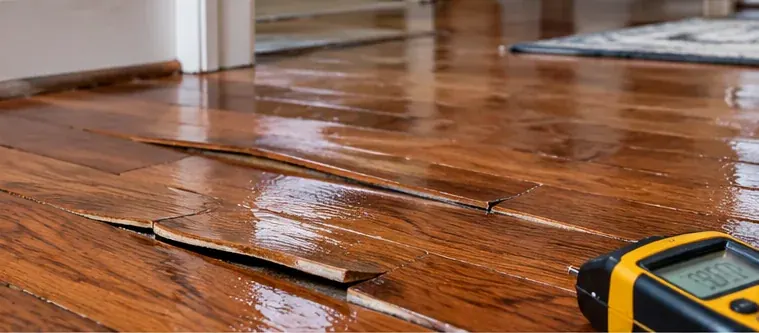
If water is pooling, still entering, or reaching outlets, treat the water intrusion as urgent. Avoid walking through water near electricity. Stop the source only when it is safe; do not turn on fans over sewage-contaminated materials. Immediate extraction and assessment may limit additional floor damage, but no one can promise every board can be saved.
☎ 24/7 emergency call · (407) 537-0765Emergency calls can be answered 24/7 for urgent water damage. On-site crew availability and arrival times must be confirmed when you call. Routine service is subject to appointment scheduling.The source, affected materials and time wet change the restoration plan.
Moisture imbalance can make hardwood edges rise above board centers. Do not sand the high edges while the wood is still wet; the shape can change again as moisture equilibrates.
Boards lifting away from a subfloor often signal more significant expansion. Affected areas may require removal to expose wet underlayment or subfloor.
Darkened gaps or swollen baseboards can mean water traveled underneath the floor. Surface dryness alone does not confirm the subfloor or adhesive is dry.
The right approach depends on material condition and where moisture traveled—not a one-size-fits-all treatment.
Clean supply water and outside floodwater require different material decisions. Confirm whether the water is still entering before evaluating floor repair.
Check multiple boards, edges, adjoining rooms and accessible subfloor. Compare readings with unaffected areas instead of relying only on a quick surface scan.
Controlled dehumidification and appropriate floor-drying systems may help some assemblies. Solid wood, engineered wood, adhesives and different subfloors do not respond identically.
Long wet periods, delamination, contamination, severe buckling or compromised subfloor can change the decision from drying to removal or replacement.
Sanding, re-coating and trim work belong after structural and floor moisture targets have been verified.
Source control, assessment and recovery should follow a safe, logical sequence.
Record water source, first exposure, affected square footage and photos before moving loose belongings.
Remove standing water; measure boards, underlayment and accessible structural layers.
Use material-appropriate drying or remove unsalvageable assemblies; monitor readings during the process.
Recheck wood moisture before acclimation, refinishing, installation or trim repair.
These distinctions keep you from paying for surface fixes while hidden water remains.
Layers and adhesives in engineered flooring may delaminate; finish species and subfloor type affect repairability.
Contamination can make retaining porous flooring unsafe regardless of appearance.
Cupping is not an automatic replacement decision; severe movement, structural damage or delamination may warrant removal.
During humid periods in Apopka, a wet wood floor and the subfloor below it can require controlled indoor drying. Measure the actual wood moisture and check for cupping, buckling or trapped water before deciding to dry, repair or replace planks; sunny weather alone does not confirm dryness.
Some cupping may lessen as moisture equalizes. Recovery depends on species, construction, water exposure and whether the subfloor is dry. Avoid sanding prematurely.
Not always, but swollen or delaminated engineered layers are harder to restore. Inspect the flooring and adhesive/subfloor condition first.
Fans may dry the surface while the subfloor remains damp. A moisture assessment determines whether controlled drying and under-floor access are needed.
Use appropriate moisture meters in multiple locations and compare readings with unaffected areas; visible appearance alone is insufficient.
Active flooding, hazardous water or electrical exposure needs urgent attention. Once the source is stopped, restoration decisions can follow measured conditions.
Only after moisture levels and structural condition have stabilized. Finishing while wood remains wet can lead to further movement and finish failure.
Hardwood boards lifting or darkening after a leak? Call about assessment, floor drying and repair options before refinishing or replacing the floor.
Service scope and on-site scheduling depend on availability. Emergency calls and actual dispatch are not the same.