Squishy or spongy underfoot
The carpet gives under your step days after the leak stopped. That sponginess is the pad holding water — the face fibers can feel nearly dry while the pad underneath stays saturated.
The top of the carpet feels almost dry. Underneath, the pad is still soaked — and that gap between what you feel and what’s actually wet is where most carpet damage happens. This page walks through the one decision that matters for wet carpet in an Apopka home: when the carpet can be saved, when the pad has to go, and how Central Florida humidity changes the timeline.
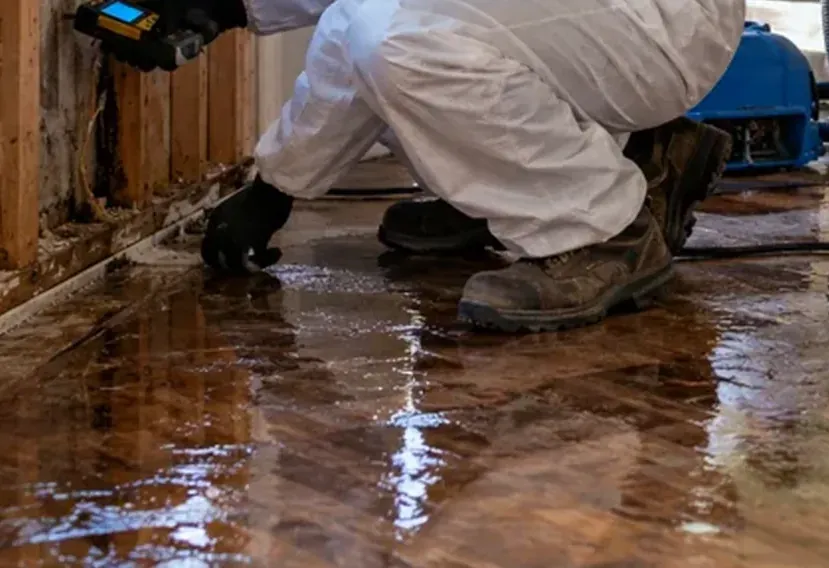
Carpet hides water better than almost any material in the house. These are the signs moisture is still trapped below the surface — check them without pulling anything up yourself.
The carpet gives under your step days after the leak stopped. That sponginess is the pad holding water — the face fibers can feel nearly dry while the pad underneath stays saturated.
Moisture creeps outward along the pad and wicks into baseboards and drywall. Damp edges near the wall or swelling baseboards mean the wet area is bigger than the square you’re standing on.
A wet or sour odor appearing two to four days after the incident is the classic sign of moisture trapped in the pad. The smell means biological activity has started — it doesn’t fade on its own.
Carpet that buckles while drying has stretched from absorbing water. Some ripples relax as it dries; ones that stay are a separate repair — restretching — done after drying is complete.
Carpet is really two things: the face fibers you walk on, and the pad underneath. They get judged separately. Here are the three questions that decide the outcome.
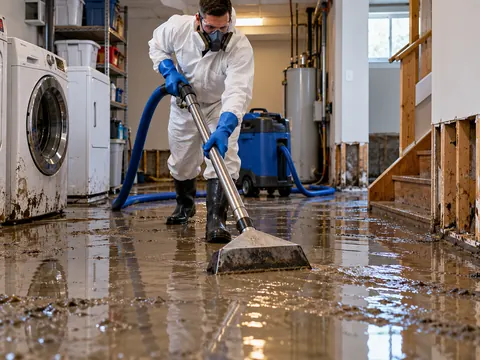
Clean supply-line water gives carpet its best chance; gray appliance water needs sanitizing first. Sewage or stormwater means removal, not drying — IICRC S500 treats contaminated carpet as non-restorable because contamination settles into backing layers cleaning can’t reach.
Under 24 hours with fast action is the save window. Past 48 hours, even clean water turns into a contamination problem as bacteria and mold take hold in the pad — the clock starts when the water arrived, not when you noticed it.
The pad is the hidden deal-breaker. Rebond pad — the crumbly recycled foam in most Apopka homes — acts like a sponge and can’t be adequately dried or sanitized once soaked. Even when the carpet survives, the pad is usually replaced. And if water reached the subfloor, that dries as its own surface — drying carpet over a wet subfloor re-wets everything from below.
Carpet is layers glued together — face fibers, backing, latex adhesive. Prolonged soaking breaks the adhesive down and the layers separate. Once carpet bubbles or the backing crumbles, it can’t be glued back into service.
This isn’t “put fans on it and wait.” A proper job separates the layers, deals with each one, and verifies with meters — because the surface lying to you is the whole problem.
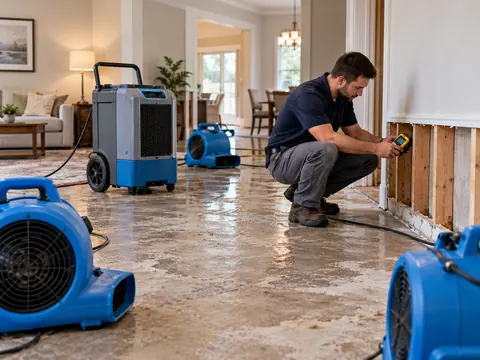
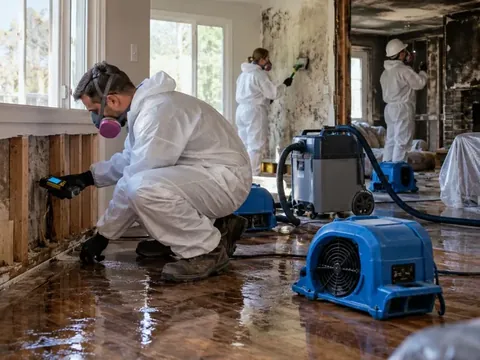
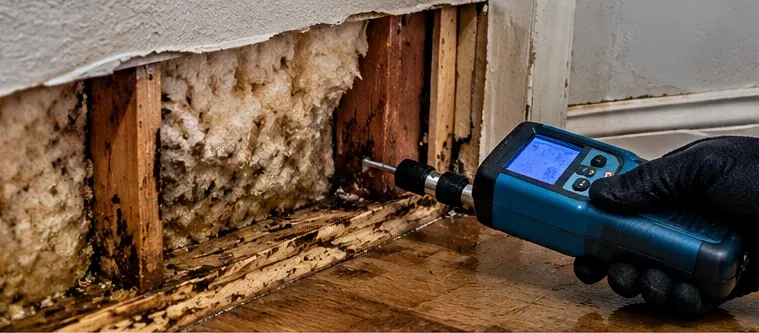
Meters and thermal imaging find how far water spread under the carpet — always wider than the damp spot you can feel. This sets the real scope before anything is lifted.
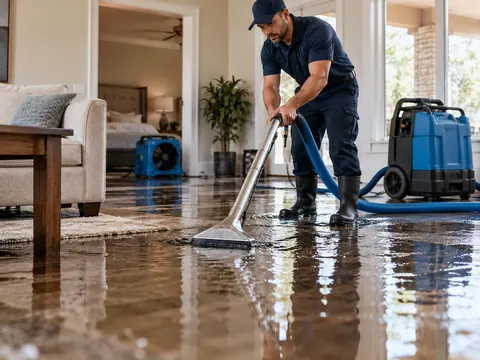
The carpet is pulled back from the tack strips (“floated”) so the pad is assessed alone. Soaked pad is cut out and removed in most jobs — cheap to replace, expensive to gamble on. The subfloor gets inspected and treated.
Carpet and subfloor dry independently with directed air movement and dehumidification. In Apopka, humid conditions can complicate evaporation, so equipment stays until meter readings confirm dry materials.
After drying, affected areas get an antimicrobial application for the bacteria and odor-causing organisms water leaves behind — drying alone doesn’t remove them. This keeps the musty smell from returning a month later.
Dried carpet is stretched back onto the tack strips with a power stretcher — this fixes the ripples from the symptoms section. New pad goes in first, then carpet is reinstalled and trimmed.
Plan made — here’s what the drying days actually look and sound like.
“Floated” carpet — pulled back from the tack strips so the pad dries alone — means rippled, uneven flooring you can’t walk on normally. It’s supposed to look like that mid-job.
Directed airflow plus dehumidification runs continuously; in humid conditions drying times depend on material readings and dehumidification. Don’t shut equipment off for quiet — you restart the drying clock.
The crew returns to check moisture through the layers until readings confirm dry pad, carpet, and subfloor. Only then comes antimicrobial treatment, new pad, and the power-stretcher relay.
Drying depends on the water source, padding condition and measured moisture—not a Florida-specific promise about how many days it will take.
A plumbing supply leak and stormwater entering from outdoors require different contamination assessments. Carpet and padding exposed to sewage or contaminated floodwater may need removal rather than routine drying.
During humid periods in Central Florida, air movement alone may not dry padding and subfloor effectively. Controlled dehumidification and moisture readings guide the work.
Condensate drain backups, washer leaks and dishwasher leaks are possible sources unrelated to rainfall. Confirm and correct the source so the carpet is not repeatedly wetted.
Usually not. Face fibers release moisture fast while the pad below holds it for days — which is why the "squishy underfoot" sign above matters more than surface feel. Only a meter reading through the layers confirms the pad is dry. Surface feel is the least reliable test in the whole job.
The leak was fixed; the moisture wasn't. A musty smell starting days later means water stayed trapped in the pad or subfloor long enough for biological activity to begin. It won't fade on its own — the moisture has to be found with meters, the pad usually replaced, and the area treated antimicrobially.
Rippling during drying is common — wet carpet stretches as it absorbs water, and some wrinkles relax as drying completes. Ripples that remain after the carpet is fully dry are a separate repair: restretching with a power stretcher, done after drying, never during. Restretching wet carpet just ripples again.
For a small clean-water spill caught within hours, fans plus a wet vacuum are a reasonable start — but fans can't dry a soaked pad or tell you if the subfloor is wet. If the carpet is still damp after a day of airflow, or there's any musty smell, the moisture is below where fans reach. That's when an assessment pays for itself.
Different materials, different fates. Rebond pad is open-cell foam — it absorbs water aggressively, can't be adequately dried or sanitized once soaked, and becomes a mold habitat within days. The carpet face, if the water was clean and caught fast, often survives. Saving the carpet while replacing the pad is the most common outcome, not a sales tactic.
The duration varies with the water source, carpet padding, subfloor and indoor conditions. Plan for monitored drying rather than assuming it will finish overnight, with equipment staying until meter readings confirm dry materials. Dehumidification matters as much as airflow here.
It depends on the water source. Sudden, accidental leaks (burst supply line, failed appliance hose) are typically covered, including necessary pad and carpet replacement. Slow leaks that ran for weeks are usually excluded as maintenance. Rising stormwater is classified as flood and needs a separate flood policy. Photograph everything before cleanup begins. (General information, not insurance advice.)
the industry standard: contaminated or long-wet carpet pad gets removed and replaced, not dried; moisture verification before relay.
pad replacement and restretching requirements after water exposure; warranty conditions on wet carpet.
mold guidance: trapped moisture in pad and subfloor must be found and removed, not masked; drying alone doesn’t remove biological activity.
Before authorizing work, ask whether extraction, lifting, drying or removal is appropriate. Call the service number to confirm service coverage and appointment availability.