Water came from outside
Pond, lake, or street water entered through doors, garage, or low vents. Unlike a plumbing leak, you can’t shut off the source — note where it entered and how far it traveled.
When water comes from outside the house — a pond rising toward the back door, lake water crossing the yard — it’s a different job than a burst pipe. Floodwater carries contamination, soaks whole rooms at once, and arrives on the storm’s schedule. This page explains how flood damage restoration works in Apopka: why floodwater is treated as contaminated, what it destroys that clean water doesn’t, how the weeks-long recovery runs, and how to document everything for a flood claim.
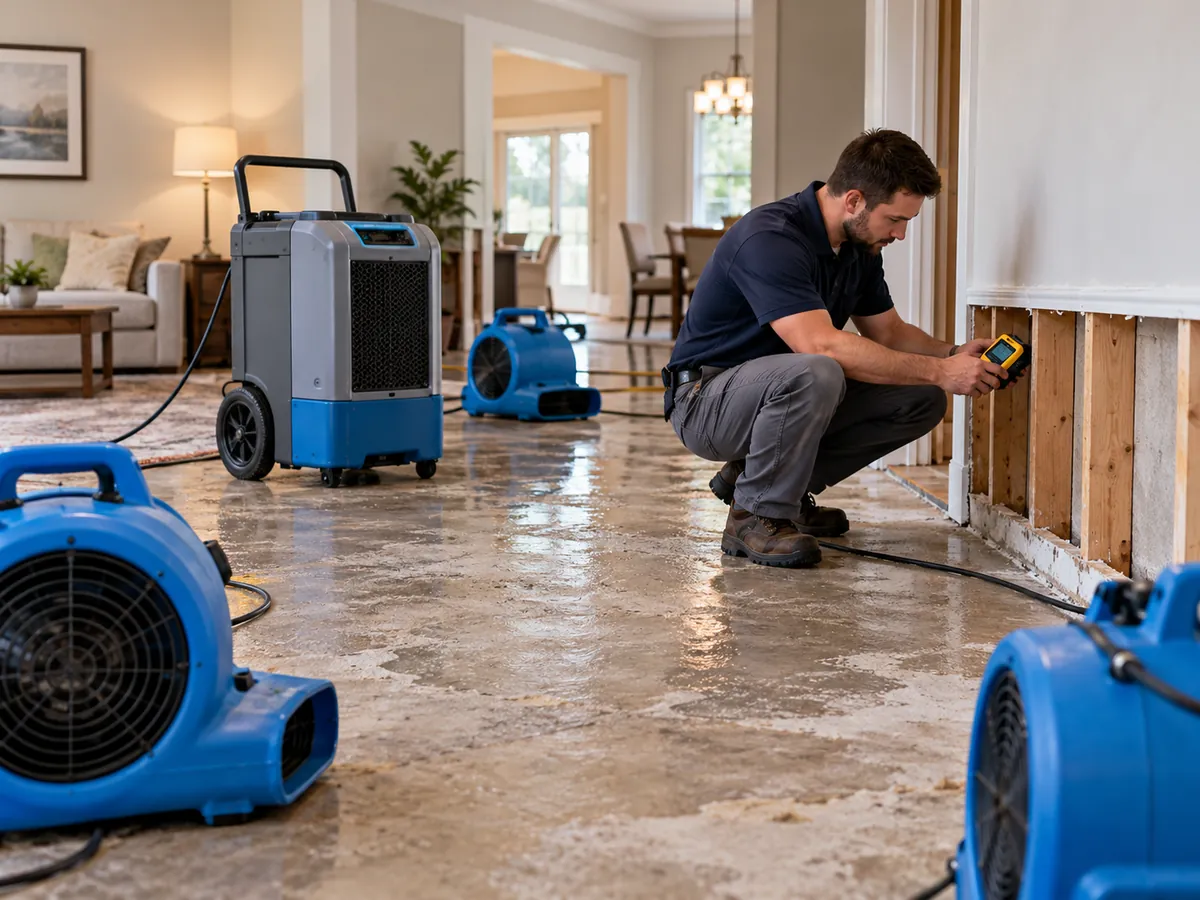
Floodwater doesn’t pick a room — it moves across floors, climbs walls, and finds every low path in the house. Before anything else: stay out of rooms where water is near outlets, appliances, or the breaker panel, and treat all floodwater as contaminated.
Pond, lake, or street water entered through doors, garage, or low vents. Unlike a plumbing leak, you can’t shut off the source — note where it entered and how far it traveled.
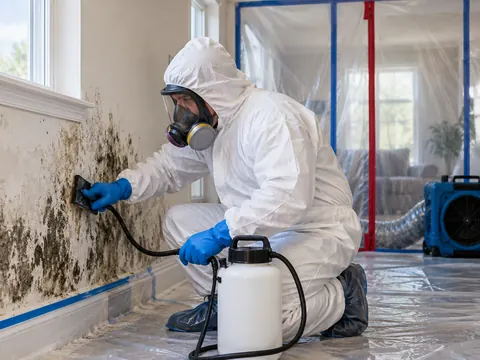
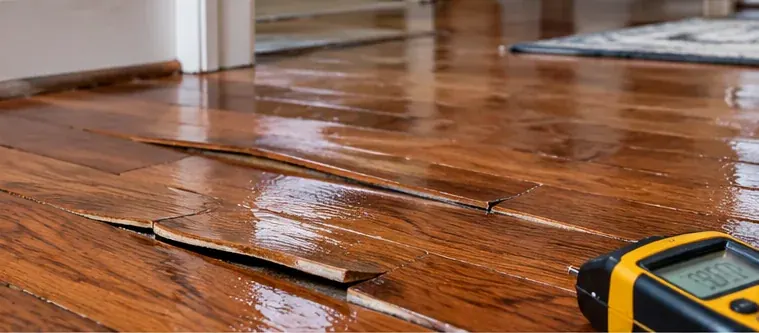
The dark line on drywall marks the high-water mark — measure and photograph it; adjusters use it. Carpet pad and anything particleboard that sat in floodwater generally can’t be saved.
Outlets or the air handler sat in water. During Hurricane Milton, underground electrical boxes flooded in parts of Apopka — don’t assume wiring is safe because the water receded.
A burst pipe is clean water with an off switch. Floodwater is neither. Three differences drive the whole scope:
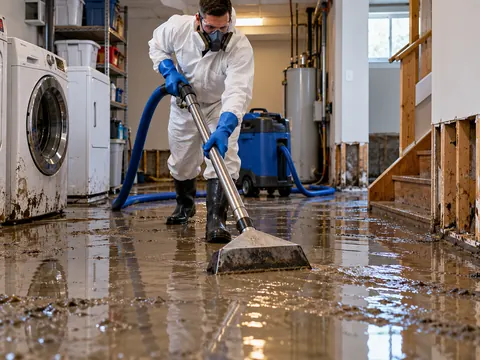
Water that crossed yards, streets, or pond banks picks up sewage, chemicals, fuel, and debris. Restoration standards classify rising outdoor water as Category 3 — grossly contaminated — which means protective equipment, disinfection, and disposal rules a clean-water job never needs. If the water smells foul or looks discolored, contamination protocols apply.
Drywall wicks water upward — the standard fix is a “flood cut,” removing the bottom 12–24 inches so framing and insulation behind it can dry or be replaced. Wet insulation doesn’t dry in place; it comes out. Subflooring saturates across whole rooms. Anything at or below the waterline in the electrical system gets evaluated, not just dried. Low HVAC returns and ductwork pull in contaminated water and can’t simply be aired out.
On a clean-water job, much dries in place. On a flood job, porous materials that soaked up contaminated water — carpet pad, particleboard cabinets, wet insulation — are removed first, then the structure dries. Anyone promising to “dry it all in place” after a flood is skipping the step that prevents the mold problem two months later.
If water is still coming in, don’t wait for business hours — call now. Emergency water damage restoration in Apopka.
Stay out of any room where water is near outlets, appliances, or the breaker panel. After a major storm, wait for the official all-clear — and have an electrician check the panel before restoring power, especially if underground service boxes flooded.
Water that crossed yards, streets, or pond banks carries sewage, chemicals, fuel, and debris. Don’t handle it barehanded — protective equipment and disinfection are part of the job, not extras.
Submerged electrical outlets, switches, and the air handler get evaluated, not just dried. If water reached structural elements or the foundation, don’t enter until it’s assessed.
Flood exposure varies from property to property; storm damage should never be assumed just from the address.
The City of Apopka identifies these as historical causes of local flooding, with substantial rainfall during the wetter months. Restoration begins with identifying whether water entered from outdoors or an indoor plumbing source.
Some low-lying properties near lakes and drainage features may face different exposure than higher sites. City flood-risk guidance and FEMA flood maps can help establish property-specific context.
Outside floodwater can carry contamination and hide electrical or structural hazards. Avoid entering flooded spaces until the area is safe; handling wet porous materials depends on exposure and condition.
Flood recovery runs in two phases — mitigation (making it safe and dry) and rebuild (putting it back). They take weeks, not days. The sequence, with the timeline honesty most pages skip:
Don’t enter rooms where water is near electrical; after a major storm, wait for the official all-clear and have an electrician check the panel before restoring power — especially if underground service boxes flooded. Then photograph and video everything before discarding a single item: wide shots of each room, waterlines with a tape measure in frame, damaged belongings, appliance serial plates. Keep material samples (carpet, flooring, drapes) and every receipt — flood claims live or die on documentation.
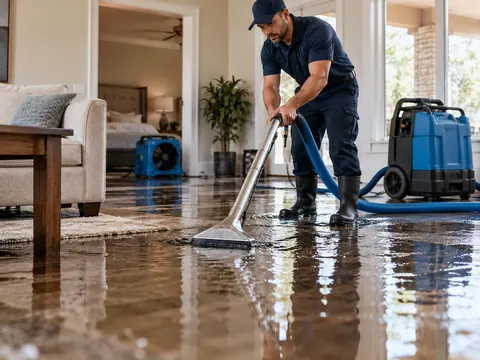
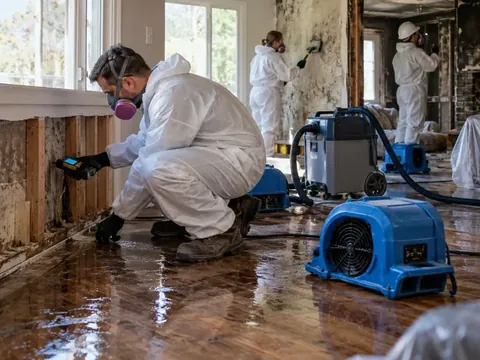
Carpet pad, wet insulation, particleboard, and porous contents that sat in floodwater come out under containment. This separates flood work from a mop-up: what looks “fine” after surface cleaning grows mold inside the wall in six weeks.
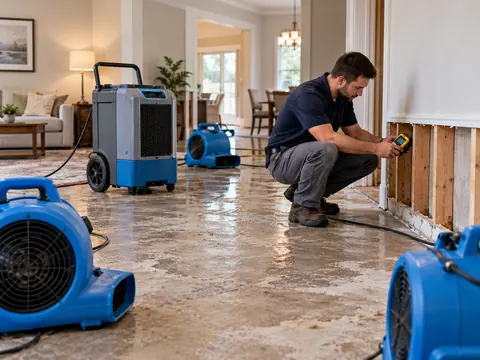
Air movers and commercial dehumidifiers run for days — major flooding needs 5–7+ days of monitored drying, longer in Central Florida humidity. Equipment stays until daily moisture-meter readings confirm dry materials, not on a fixed schedule.
Post-drying readings documented, then reconstruction: drywall, flooring, paint, fixtures. First call to finished rebuild commonly spans several weeks — two weeks after Milton, some Apopka neighborhoods were still waiting for water levels to drop.
The 24–48 hour mold clock. The EPA advises assuming mold growth if a property can’t be thoroughly dried within 24–48 hours of a flood — in Central Florida that clock runs faster, not slower. Speed matters less for comfort than for keeping a drying job from becoming a mold-remediation job.
Call 24/7 about flooding or urgent water intrusion. An appointment must be confirmed. Report flooding or storm intrusion by phone at any hour. Extraction, drying and reconstruction are separate stages; verify crew availability and the proposed first action. Provider coverage, dispatch and repair timing are subject to availability.
Flood claims live or die on documentation — your photos, waterline measurements, and material samples are what the adjuster and the crew work from. Don’t discard anything before it’s documented.
Air movers and commercial dehumidifiers stay on around the clock — major flooding needs 5–7+ days of monitored drying, longer in Central Florida humidity. Equipment stays until daily moisture-meter readings confirm dry materials, not on a fixed schedule.
Mitigation (removal + drying) and rebuild are separate phases with separate scopes — get each itemized before work starts, so you know what’s covered by whom.
Drywall, flooring, paint, and fixtures come after drying is verified complete — not before. First call to finished rebuild commonly spans several weeks.
For safety purposes, yes. Water that crossed yards, streets, or pond banks is classified as Category 3 (grossly contaminated) — sewage from overwhelmed systems, chemicals, fuel, debris. That means protective equipment, disinfection, and disposal of porous materials, not just drying. Don't handle it barehanded.
Framing, concrete, and tile usually dry in place. But carpet pad, wet insulation, and particleboard that sat in contaminated floodwater generally get removed — they can't be disinfected reliably. The standard fix is a "flood cut": removing the bottom 12–24 inches of drywall so the wall cavity can dry. Surface-drying soaked drywall traps moisture inside.
Not automatically. If water reached outlets, switches, the breaker panel, or underground service boxes, have an electrician verify before restoring full power — during Milton, flooded underground boxes in Apopka created fire and blown-fuse risks. With water and electricity, guessing is genuinely dangerous.
Plan in weeks, not days. Mitigation (removal + monitored drying) typically runs one to two weeks; reconstruction after that depends on scope and contractor availability — which tightens after every major storm. After Milton, some Apopka neighborhoods still had standing water two weeks later. Anyone promising full recovery in days is selling, not planning.
Before discarding anything: wide shots of every affected room, close-ups of waterlines with a tape measure in frame, damaged belongings, appliance make/model/serial numbers, and the insides of closets and cabinets. Keep material samples (carpet, flooring, drapes) and every receipt. FEMA's guidance: document first, discard second — and check with your adjuster before signing any remediation agreement.
Standard homeowners policies exclude rising water — that's flood-insurance territory (NFIP or private), which many Florida homeowners don't carry. After a declared disaster, look into assistance programs: Orange County's HUD-funded recovery program has covered Ian and Milton repairs for eligible homeowners. Document everything regardless — assistance programs need the same proof insurers do. (General information, not insurance advice.)
That's the costliest mistake in flood recovery. The EPA advises assuming mold if a home can't be thoroughly dried within 24–48 hours — in Central Florida the clock runs fast. Mopping handles visible water; it does nothing for wall cavities, subflooring, or insulation. What looks "fine" at day three is what smells at week six.
the 24–48 hour mold-growth guidance referenced throughout this page.
“document first, discard second”: the documentation rule for flood claims.
flood-insurance coverage for rising water, excluded from standard homeowners policies.
the restoration industry’s standard for water-damage drying and Category 3 contamination protocols.
Before authorizing work, discuss electrical safety, contamination, drying, removal and rebuild responsibilities. Call the service number to confirm service coverage and appointment availability.