APOPKA, FL · HOME REPAIR & RESTORATIONExplore Apopka service area
Home Services ApopkaCall (407) 537-0765 ↗
Specialist service · Apopka, FL

Water Extraction in Apopka, FL

There’s water on your floor right now — maybe an inch from a supply line, maybe a whole room after a storm pushed a pond over its banks. Here’s what matters most: every hour standing water sits, it stops being a “cleanup” and starts becoming a construction project. It wicks up drywall, seeps under baseboards, and in Central Florida heat, the clock toward mold starts within a day or two. This page covers the emergency phase only: what the equipment does, what to do in the first hour, and why extraction speed decides everything that follows.

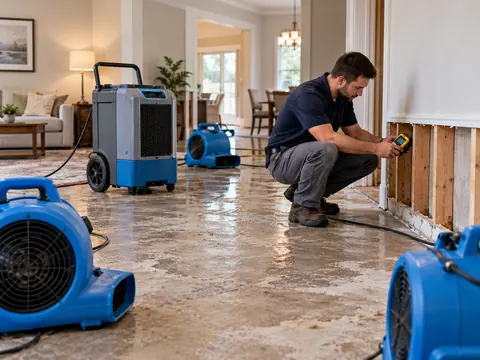
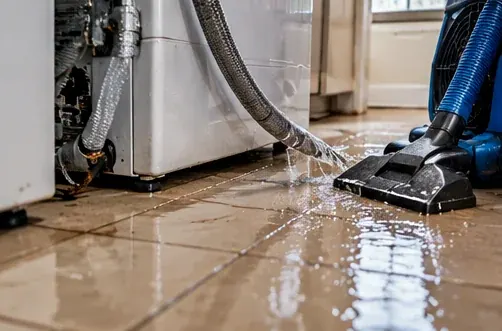
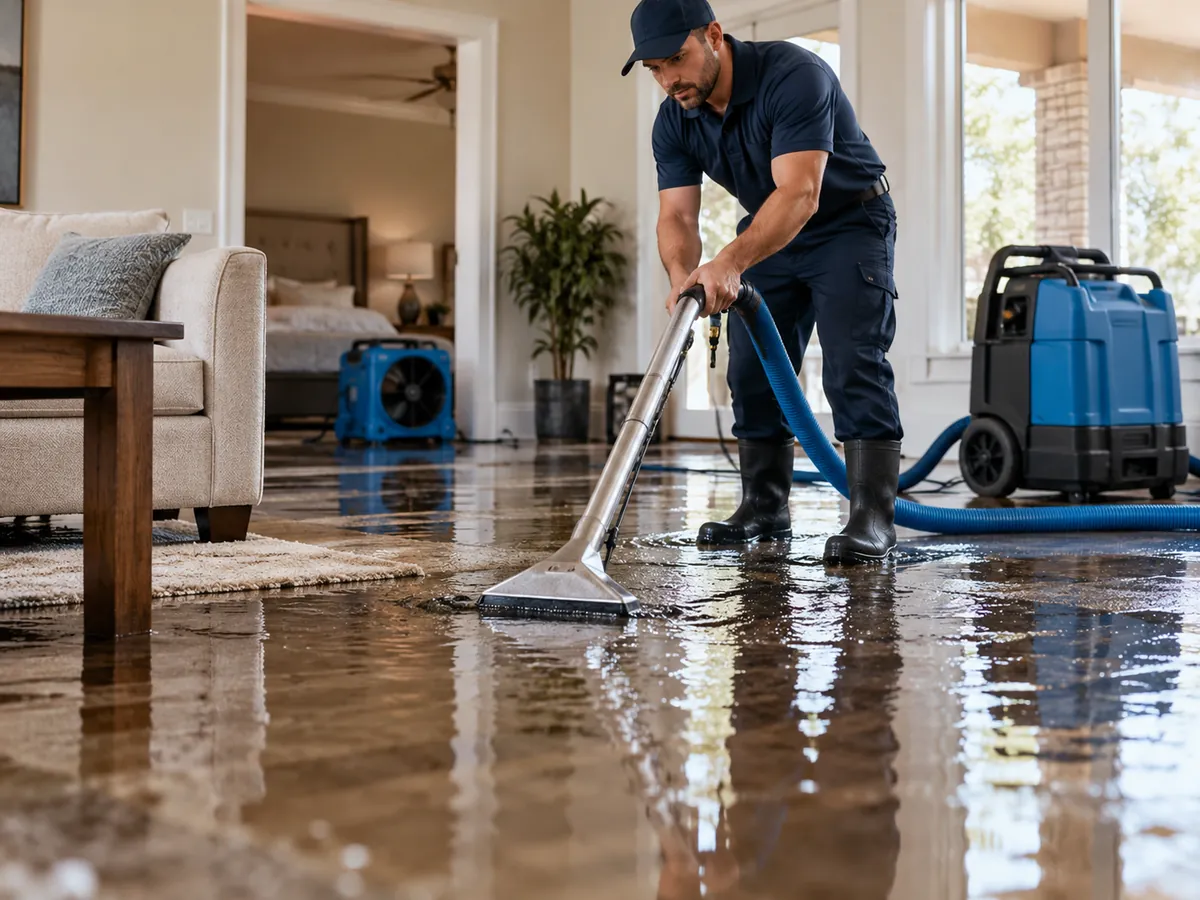
Illustrative image of a technician extracting standing water from a residential floor
Water Extraction · Apopka, FL
⌖ Apopka, FloridaCall about this serviceReview the scope before approving work
Recognize the problem

Is this an extraction job?

Extraction removes free-standing water — water pooling, sloshing, or soaking through. Three situations, three different urgencies:

01 / Symptom

Visible standing water

Pooled water on tile, wood, laminate, or concrete — from a burst supply line, a failed water heater, an overflowing washer, or stormwater that found a way in. This is the textbook extraction call: the faster it leaves, the smaller the job stays. Note the source and which rooms are affected, then get out of the water if it’s near outlets, appliances, or the breaker panel.

02 / Symptom

Water that keeps coming back

You mopped it up and it returned. That means the source is still active — a supply line still feeding, a drain still backing up, or water still entering from outside. Extraction without stopping the source is bailing a boat with a hole in it: mention this on the call, because the crew’s first move will be finding and stopping the feed, not the mop.

03 / Symptom

No puddle, but everything’s soaked

Carpet squelches underfoot, baseboards are swollen, the bottom of the drywall is soft — but there’s no standing water to see. The water already moved into the materials. This still starts with extraction (weighted extraction pulls water out of carpet and pad), but expect the crew to spend as much time finding where it traveled as removing what’s visible.

So the water needs to come out. Here’s what “extraction” actually involves — the equipment, the decisions the crew makes on arrival, and why one job gets a truck-mounted unit while another gets a portable.

The equipment

What extraction actually involves

Extraction isn’t one machine — it’s a ladder of equipment matched to water volume, flooring, and truck access. Understanding it helps you read the quote and the timeline.

Pumps for volume

Several inches of standing water — a flooded garage, a room under an inch or more — starts with a submersible or trash pump, not a vacuum. Pumps move volume fast; vacuums can’t. If a crew shows up and goes straight to a wand on two inches of water, they’re doing it backwards.

Truck-mounted extraction wands

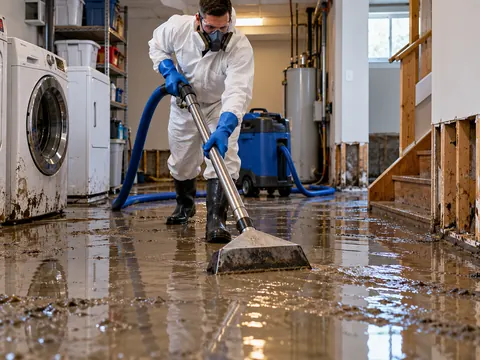
For carpeted areas and large hard-floor runs, the workhorse is a truck-mounted unit: the engine, vacuum, and waste tank stay in the vehicle, and only hoses come inside. Advantages: far stronger suction than anything plug-in, and no stopping to empty tanks. Limitation: hose reach — the truck has to park close, with a door or window open for the hoses.

Portable extractors for tight access

Upstairs rooms the hoses can’t reasonably reach, gated areas, or spots where running hoses through the house isn’t practical get portable units — self-contained machines carried inside. Less suction than a truck-mount, but they go where hoses can’t. A competent crew carries both and picks per the layout, not per habit.

Weighted extraction for carpet and pad

After surface water is gone, a weighted tool — the operator stands on it — compresses carpet and pad to squeeze out trapped water. This is the difference between carpet that dries and carpet that smells musty three days later. Ask whether weighted extraction is included; it’s not automatic everywhere.

Clean water vs. contaminated water changes everything

A supply-line break is clean water (Category 1): extract and move on. But water that sat for a day or two, or came from outside — pond overflow, stormwater intrusion, a drain backup — is handled as contaminated until proven otherwise: different protective equipment, different disposal, and porous materials like carpet pad usually get removed rather than dried. In Apopka this comes up constantly: afternoon deluges push pond or ditch water toward homes, and that water is never treated as clean. If you’re unsure what kind of water you have, say so on the call — guessing wrong is how jobs get redone.

Extraction is step one, not the whole job

Once free water is out, moisture remains inside materials — subfloor, wall cavities, the pad under “dry-looking” carpet. That’s the drying phase, with its own equipment and monitoring. Extraction decides how bad the drying job is; it doesn’t replace it.

Equipment is only half the story — order matters just as much. Here’s the sequence a competent job follows, and why extraction has to come before everything else.

The sequence

Before drying, before repair: extraction first

Water follows a strict order of operations, and skipping steps is how small jobs become big ones. First the source gets stopped — a supply line still feeding makes extraction pointless. Then standing water comes out (pumps, then wands, then weighted extraction for carpet). Only then does drying equipment go in. Drying a room that still has standing water is like blow-drying hair in the rain.

  1. Stop the source

    A supply line still feeding makes extraction pointless — the crew’s first move is finding and stopping the feed.

  2. Extract the standing water

    Pumps for volume, then truck-mounted or portable wands, then weighted extraction for carpet and pad.

  3. Dry what remains

    Only once free water is out does drying equipment go in — moisture stays trapped in subfloor, wall cavities, and padding until it’s dried and verified.

Clean water doesn’t stay clean, either. A supply-line leak sitting in Florida heat degrades toward gray water within a day or two. Fast extraction freezes the contamination category where it is — every hour of delay can push the job into a more expensive protocol.

Before the truck arrives

The first hour: before the truck arrives

Extraction crews in the Orlando area typically aim for fast emergency response, but even the best crew needs travel time. What you do — and don’t do — in that window genuinely affects the outcome.

Call 24/7 about urgent water extraction — emergency water damage restoration in Apopka. An appointment must be confirmed. Emergency water-extraction requests can be discussed by phone 24/7. Confirm that extraction equipment and a suitable crew are available for the water source and affected rooms. On-site response and extraction timing are subject to availability.

Call now

  • standing water in any room
  • water that’s spreading
  • anything near wiring
  • water that smells or looks discolored

Handle it yourself

  • a small, clean spill you caught immediately with no electrical risk — a wet-rated shop vac is fine (see Q1 below). Everything between those two is a call.

Do this while you wait

  1. Make it safe first

    Shut off water at the fixture valve or the main — in Florida homes it’s usually on an exterior wall near the meter. Kill power to wet areas at the breaker; never walk through standing water to reach a panel or touch wet switches. If water is near the breaker box itself, stay out entirely.

  2. Document before you touch anything

    Photograph and video the water: depth against baseboards, every affected room, the apparent source, serial plates on failed appliances. Note the time you found it. In Florida, whether damage reads as “sudden” or “gradual” decides insurance coverage — your timestamped photos are the evidence. Do this before moving anything.

  3. Move what matters, leave what doesn’t

    Move rugs, electronics, important papers, and anything particleboard out of the wet zone. Don’t drag heavy furniture across wet flooring, don’t pull up carpet yourself — improper lifting tears it — and don’t run household fans yet: on possibly contaminated water they aerosolize it. Let the crew make that call.

Those are the mechanics. Here’s what the crew’s visit actually looks like once the truck arrives.

During the visit

What to expect while extraction is underway

  1. Arrival

    It’s loud and fast.

    The truck-mounted unit’s engine runs outside while hoses come through doors or windows to the wet rooms — expect a working vacuum roar, not conversation-level noise. The extraction visit itself typically runs one to three hours depending on square footage, depth, and access.

  2. Safety

    Stay clear of the hose runs.

    Hoses are trip hazards and the crew moves fast between the truck and the rooms. Keep kids, pets, and vehicles out of the hose path; the crew will tell you which doors need to stay open.

  3. Source

    They’ll stop the source first.

    If water is still feeding, the first move is finding and stopping it — not the mop. Expect questions about when you found the water and whether it’s still rising.

Apopka property considerations

When water extraction is needed in Apopka

The same equipment is not appropriate for every type of water.

Indoor leaks can flood a room any day

Burst plumbing, appliance hoses and water heaters may leave standing water even without rainfall. Shut off the source if safe and evaluate wet flooring and nearby wall cavities after extraction.

Stormwater requires different precautions

City flood guidance documents flooding from hurricanes, tropical storms and heavy afternoon thunderstorms. Water that entered from outdoors may be contaminated and should not be treated like a clean indoor supply leak.

Humidity matters after puddles are gone

High outdoor humidity can complicate indoor drying. Extraction is followed by material moisture checks and, where needed, controlled drying and dehumidification—not just an open window.

Helpful answers

Water Extraction FAQs

Can I just use my shop vacuum instead of calling?

For a small, clean spill you caught immediately — a wet-rated shop vac is fine, provided there's no electrical risk and the water is clean. For anything beyond that — multiple rooms, water that's been sitting, any chance of contamination, or water near wiring — a shop vac can't match extraction suction, and its small tank means constant emptying while water keeps wicking into materials. The line is: if you're asking the question, it's probably a pro job.

Why did they run hoses from a truck instead of bringing a machine inside?

That's a truck-mounted extraction unit, and it's the stronger option: the engine and waste tank stay in the vehicle, so suction is far more powerful than a portable and there's no stopping to empty tanks — extracted water goes straight to the truck. Portables get used where hoses can't reasonably reach, like upper floors or gated areas. A crew that carries both and picks per your layout is doing it right.

How long does extraction itself take?

The extraction visit itself typically runs one to three hours depending on square footage, water depth, and access — that's separate from the drying phase that follows, which runs days with monitoring equipment. If a quote blends extraction and drying into one vague line item, ask for them separated: you want to know what the emergency visit costs versus the equipment-days that follow.

The water came back after I mopped it up. What does that mean?

The source is still active. A supply line still feeding, a drain still backing up, or water still entering from outside — extraction without stopping the source just repeats itself. Tell the crew this on the call: their first move will be finding and stopping the feed before any real extraction begins. And note how long it's been cycling, because standing time affects the contamination category.

Pond water reached my garage during a storm. Is that handled differently from a pipe leak?

Yes — completely differently. A supply-line break is clean water; pond, ditch, or stormwater intrusion is treated as contaminated until proven otherwise. That means protective equipment, different disposal, and porous materials like carpet pad usually get removed rather than dried. In Apopka this comes up constantly after heavy rain events push retention ponds toward homes. Don't let anyone treat pond water like a plumbing leak — the protocols (and the cost) are different.

Does fast extraction mean I can skip the drying phase?

No — and this is the most expensive misunderstanding in water damage. Extraction removes free water; moisture stays trapped in subfloors, wall cavities, padding, and framing. Skip drying and the signs show up within a week: musty odor a few days later, hardwood cupping or buckling, stains reappearing in treated spots, soft or spongy areas underfoot. Extraction decides how bad the drying job is. It never replaces it.

Further reading

Sources and technical references

View supporting references and safety sources
  1. IICRC S500

    the industry standard for water damage restoration: extraction as the emergency phase, water categories (1/2/3), and why extraction never replaces drying.

  2. EPA

    guidance on treating floodwater and stormwater as contaminated, and on when porous materials must be removed rather than dried.

  3. Truck-mount equipment manufacturer guidance

    suction capacity and hose-run limits that determine truck-mounted vs. portable deployment.

Need Water Extraction in Apopka, FL?

Before authorizing work, confirm how affected flooring, walls and subfloors will be assessed after extraction. Call the service number to confirm service coverage and appointment availability.

Apopka, FLWater Extraction☎ (407) 537-0765