
Water pooling around the tank base
The tank body or a nearby connection may be failing. Water on the floor does not by itself identify which part leaked.
A water heater may leak at a fitting, discharge pipe, drain valve or tank. Water can spread from a garage, closet or utility room beneath walls and flooring. Water heater leak cleanup removes water and evaluates affected materials—but it does not replace diagnosing or repairing the heater itself. Call about water damage from a water heater in Apopka, FL.
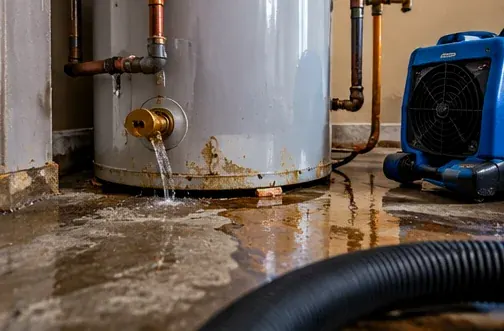
If the heater is actively releasing water, keep clear of standing water near electrical controls. Avoid touching wet gas or electrical components. A leaking relief discharge, hot water or scalding risk requires extra caution. Shut off supply or equipment only when you can do so safely; call for urgent water-damage assistance — emergency water damage restoration in Apopka — and appropriate water-heater service.
☎ 24/7 emergency call · (407) 537-0765Emergency calls can be answered 24/7 for urgent water damage. On-site crew availability and arrival times must be confirmed when you call. Routine service is subject to appointment scheduling.The source, affected materials and time wet change the restoration plan.
The tank body or a nearby connection may be failing. Water on the floor does not by itself identify which part leaked.
Water can track under baseboards into rooms and wall cavities, especially from an enclosed utility space.
A small recurring leak may cause hidden damage over time even when the floor looks dry on inspection day.
The right approach depends on material condition and where moisture traveled—not a one-size-fits-all treatment.
A technician evaluates supply connections, drain valve, temperature-pressure relief discharge, condensate on applicable models and tank condition.
Reduce flooding where safe and avoid electrical or scalding hazards. Tank repair/replacement and water mitigation need coordinated scopes.
Check nearby drywall, subfloor, cabinet bases, garage thresholds and adjacent interior finishes.
Suitable equipment and repeated checks guide whether finishes can remain, need drying access or must be removed.
Do not close a damp water heater closet or replace swollen flooring without verifying moisture.
Source control, assessment and recovery should follow a safe, logical sequence.
Avoid wet electrical controls and hot discharge; document the affected area.
Repair or replace the failing component or unit as needed.
Remove pooled water and check surrounding floor and walls.
Repair or replace affected finishes only after the area is appropriately dry.
These distinctions keep you from paying for surface fixes while hidden water remains.
A leaking fitting may be repairable; a corroded tank may require replacement. Cleanup depends on the resulting water damage.
Water crossing a threshold into drywall or interior floors expands the restoration scope.
A slow leak may have affected materials longer; both need source verification and moisture assessment.
A water heater can leak at a valve, fitting, supply connection or tank during any season. If water spreads into drywall or flooring, the restoration decision depends on the path and duration of the leak. In humid periods, hidden moisture should be tested rather than assumed dry once the puddle is gone.
It is a separate source-repair scope. Cleanup focuses on extraction, drying and interior material restoration.
If safe, use the manufacturer-approved shutdown procedure. Do not touch wet electrical components or attempt to manipulate a hot, actively discharging valve.
A rapidly growing puddle, active release or electrical/scalding hazard is urgent. A contained old stain can be assessed by appointment, but do not ignore recurring moisture.
Yes, depending on floor slope, thresholds and wall bases. Nearby interior materials may need checks.
Only when condition, contamination or inaccessible wet materials justify it; not every stain requires demolition.
No. Replacing the heater stops the failing source but does not dry floor assemblies or wet wall materials.
Water heater leaking onto floors or into walls? Call about water removal, moisture checks and cleanup after the source is made safe.
Service scope and on-site scheduling depend on availability. Emergency calls and actual dispatch are not the same.