
Ceiling stain below attic air handler
Wet drywall or insulation beneath attic equipment may be caused by pan overflow, a drain blockage or a separate roof leak. Diagnosis must distinguish them.
A clogged condensate drain or overflowing air-handler pan can wet ceilings, drywall, insulation and nearby flooring—sometimes without a dramatic puddle. Water-damage cleanup addresses the materials left wet after the HVAC fault is stopped. The drain, pan or equipment issue needs separate HVAC diagnosis; drying alone will not prevent another overflow. Call about AC condensate leak cleanup in Apopka, FL.
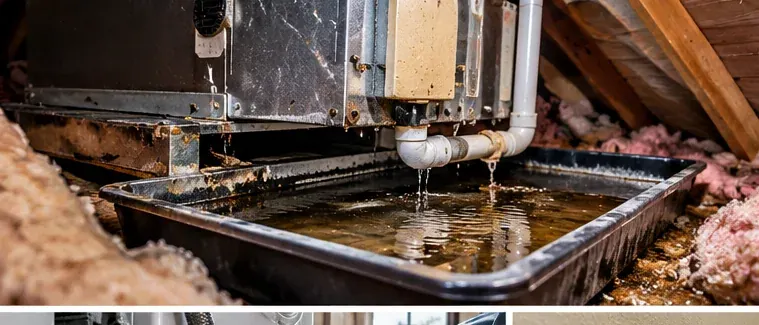
If the ceiling is sagging, water is reaching lights or outlets, or the air handler is actively overflowing, stop using the affected equipment only if safe and keep away from wet electrical fixtures. Call for urgent water-damage assessment — emergency water damage restoration in Apopka. A small contained drip with no spreading damage can be assessed by appointment, but moisture should not be ignored.
☎ 24/7 emergency call · (407) 537-0765Emergency calls can be answered 24/7 for urgent water damage. On-site crew availability and arrival times must be confirmed when you call. Routine service is subject to appointment scheduling.The source, affected materials and time wet change the restoration plan.
Wet drywall or insulation beneath attic equipment may be caused by pan overflow, a drain blockage or a separate roof leak. Diagnosis must distinguish them.
An indoor air handler can wet the closet baseboards, adjacent wall and flooring even if the primary drain eventually clears.
A recurring drip suggests the fault is not fully corrected. Cleanup and HVAC drain repair are related but different services.
The right approach depends on material condition and where moisture traveled—not a one-size-fits-all treatment.
Determine whether condensate, water supply, roof entry or another leak caused the moisture. Pan overflow and drain-line defects require source correction.
Moisture may travel along framing before a stain appears. Check affected ceiling materials, nearby cavities and attic-accessible components when safe.
Depending on water extent, clean standing water, dry recoverable assemblies and remove materials that cannot safely be retained.
An active drip around ceiling lights needs electrical caution. Water that sits in insulation or drywall may require removal or mold evaluation.
Confirm the HVAC water fault has been addressed and restoration drying has been verified before repainting or closing walls.
Source control, assessment and recovery should follow a safe, logical sequence.
Stay clear of sagging ceilings and wet electrical parts; document the leak and affected rooms.
Arrange HVAC diagnosis of the drain, pan, pump or air handler as needed.
Check adjacent ceiling, wall and floor materials for hidden moisture.
Repair or replace affected porous materials after source correction and documented drying.
These distinctions keep you from paying for surface fixes while hidden water remains.
Clearing a drain stops new water. Wet drywall, insulation and flooring still require a separate assessment.
Timing can point toward different sources, but neither pattern is proof without inspection.
Sagging, wet insulation or inaccessible trapped moisture may justify controlled access rather than painting over a stain.
Apopka’s warm, humid periods can keep air-conditioning equipment running and producing condensate. If a drain line blocks or a pan overflows, water can wet ceilings, walls or flooring even without rain. Confirm the AC source first; storm-related roof leaks and plumbing leaks can produce similar stains.
HVAC service addresses the condensate drain or air-handler fault. Water restoration addresses wet interior materials after the source is corrected.
Yes. Repeated dripping can wet ceilings and wall cavities. Whether drywall can remain depends on moisture, duration, insulation and condition.
Avoid using malfunctioning equipment until it is assessed; do not handle wet wiring or stand beneath a bulging ceiling.
Water can run along framing and ceiling channels before it appears on the room side.
Not necessarily. Water may contact dirty pans, insulation or other materials. Its condition and time wet affect cleanup decisions.
Paint may hide a stain, but trapped moisture, weakened drywall and source problems must be addressed first.
Water dripping from an air-handler area? Call about drying damaged walls, ceilings and floors after the AC leak source is addressed.
Service scope and on-site scheduling depend on availability. Emergency calls and actual dispatch are not the same.