
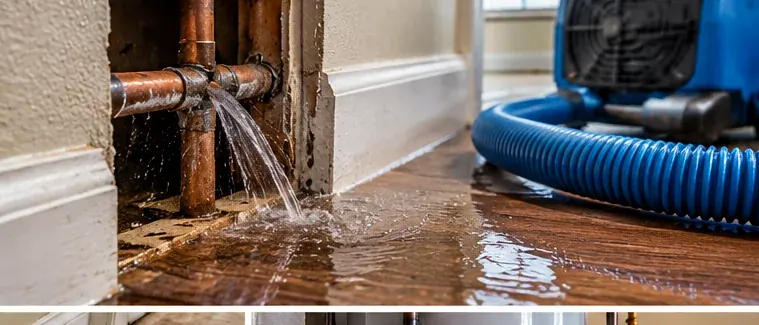
Water running across a room
Fast-moving supply water can saturate carpet, baseboards, cabinetry and door thresholds while spreading beyond the initial break.
A burst supply pipe can soak a room in minutes, with water traveling beneath flooring, into wall cavities and around electrical fixtures. Plumbing repair stops the break; water damage restoration addresses the wet structure left behind. Call for urgent cleanup assessment after a burst pipe in Apopka, FL, whether the visible puddle is large or water has already disappeared beneath the finishes.
Keep away from pooled water near electrical systems. If you can reach the main shutoff safely, turn off the water. Avoid entering rooms with sagging ceilings or wet outlets. emergency water damage restoration in Apopka can be answered 24/7; restoration crew availability, service scope and on-site timing must be confirmed by phone.
☎ 24/7 emergency call · (407) 537-0765Emergency calls can be answered 24/7 for urgent water damage. On-site crew availability and arrival times must be confirmed when you call. Routine service is subject to appointment scheduling.The source, affected materials and time wet change the restoration plan.
Fast-moving supply water can saturate carpet, baseboards, cabinetry and door thresholds while spreading beyond the initial break.
A broken concealed line can fill cavities and insulation before water reaches the floor. Surface cleanup does not remove trapped wall moisture.
Shutting off the supply prevents additional flow, but does not dry underlayment, subfloor or wall framing.
The right approach depends on material condition and where moisture traveled—not a one-size-fits-all treatment.
The restoration scope begins after or alongside safe source control. Plumbing inspection determines whether a local repair, valve replacement or repiping is needed.
Use extraction suited to the volume and affected floor types. A small visible pool can still mean widespread saturation.
Check the migration path through floors, baseboards, adjacent rooms, cabinets and drywall before deciding what to dry or remove.
Use appropriate equipment and repeat moisture readings until reasonable project-specific drying targets are reached.
Replace damaged drywall, insulation, flooring or trim as warranted by condition and contamination.
Source control, assessment and recovery should follow a safe, logical sequence.
Avoid electricity and document the affected area.
Stop the supply failure; restoration should not rely on a temporary bucket.
Remove pooled water and inspect hidden moisture beyond obvious stains.
Monitor walls and floors, then repair or replace materials that cannot be recovered.
These distinctions keep you from paying for surface fixes while hidden water remains.
A repaired line prevents another release but leaves soaked building materials to be assessed.
Water may pick up contaminants from materials and surrounding areas; no single contamination label should be assumed forever.
Targeted removal can be needed to reach wet insulation or trapped water, even if paint looks intact.
A burst pipe is not necessarily a weather event: failed connections, damaged hoses and supply-line breaks can flood a home year-round. Occasional cold snaps can affect exposed pipes, but any loss should be assessed according to the actual pipe failure, not an assumed weather cause. Restore the affected rooms after the water source is controlled.
Both roles can matter. A plumber stops the burst or repairs piping; restoration extracts water and evaluates the wet structure. Describe active flooding when you call.
Possibly. Moisture can remain under floors and behind baseboards. A moisture assessment determines what remains wet.
As soon as the area is safe and the source can be controlled. Drying wet materials promptly helps reduce further damage.
Do not run electrical equipment in unsafe wet areas. Stop the source first and assess contamination before selecting drying methods.
No. The decision depends on water source, duration, insulation and material condition. Some assemblies can be dried; others need targeted removal.
No. Emergency calls may be answered 24/7, but actual equipment, crew and arrival availability must be confirmed.
Pipe burst and rooms getting wet? Call now about urgent water extraction and structural drying. Plumber repair and restoration scope should be coordinated.
Service scope and on-site scheduling depend on availability. Emergency calls and actual dispatch are not the same.