
Musty smell after drying
Odor that returns when air conditioning cycles or humidity rises can indicate residual moisture in carpet pad, baseboards, drywall or insulation. A fresh coat of paint will not correct trapped moisture.
A musty smell that returns after a room has been dried is a reason to investigate—not simply spray fragrance. Moisture may remain in carpet backing, wall cavities, insulation or under flooring. Water damage odor removal starts with identifying the source, checking whether the structure is truly dry, and deciding what can be cleaned or must be removed. Call about odor assessment and restoration in Apopka, FL.
A sewage-like smell, sewage backup, standing water, visible mold growth or an active leak needs a safety and moisture assessment—not routine deodorizing. Keep people out of affected areas and call about urgent water-damage cleanup. A dry room with an old lingering odor can usually be evaluated by appointment.
☎ Call about odor assessment · (407) 537-0765Emergency calls can be answered 24/7 for urgent water damage. On-site crew availability and arrival times must be confirmed when you call. Routine service is subject to appointment scheduling.The source, affected materials and time wet change the restoration plan.
Odor that returns when air conditioning cycles or humidity rises can indicate residual moisture in carpet pad, baseboards, drywall or insulation. A fresh coat of paint will not correct trapped moisture.
Odors after a toilet overflow, drain backup or floodwater intrusion may indicate contaminated porous materials. Occupants should avoid handling wastewater or attempting to disguise the odor.
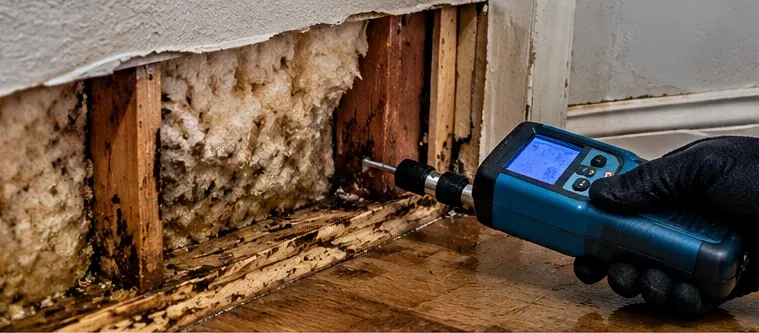
A wall cavity or floor assembly can be wet even when its surface looks normal. Moisture mapping and an assessment of adjacent materials are more useful than guessing from smell alone.
The right approach depends on material condition and where moisture traveled—not a one-size-fits-all treatment.
Before odor treatment, check recent leaks, AC drain overflow, stormwater entry and nearby plumbing. A recurring source will defeat deodorizing work.
Moisture readings help identify wet flooring, wall cavities and other porous assemblies; a normal surface reading does not automatically clear deeper layers.
A washable hard surface may be cleaned and dried. Saturated carpet padding, insulation or visibly moldy porous materials may need removal depending on contamination and condition.
Targeted cleaning and deodorization may be appropriate after source control, moisture correction and material decisions. Fragrance, ozone or fogging alone is not a substitute for remediation.
Source control, assessment and recovery should follow a safe, logical sequence.
Identify the original event, affected rooms, time wet and any history of sewage or mold.
Review readings, odor locations and whether wet porous materials can be retained.
Dry, clean or remove the problem materials following the condition found.
Recheck moisture and odor before sealing, repainting or reinstalling flooring.
These distinctions keep you from paying for surface fixes while hidden water remains.
An odor trapped beneath carpet may require lifting flooring and evaluating pad and subfloor, not cleaning only the visible carpet face.
Odor treatment is not mold remediation. Keep mold concerns in their own scope, with appropriate containment, cleaning and removal.
Recheck humidity and hidden moisture rather than repeatedly applying scent or sealers.
Warm, humid conditions can allow moisture to remain in concealed building materials after an indoor leak or stormwater incident. Odor treatment should begin with source identification and moisture checks, not fragrance alone. A musty smell does not, by itself, confirm mold or identify the water source.
Sometimes, if the source was limited and all materials are dry and cleanable. Persistent odor behind drywall or flooring may require targeted access to find affected material.
No. Products that mask or neutralize smell do not by themselves remove mold-contaminated porous material or correct moisture.
Airflow and humidity changes can make an existing odor more noticeable. Check the drain pan, nearby insulation and affected materials rather than assuming the air handler itself is the only source.
Treat an active sewage backup or exposed contaminated water as urgent. Keep children and pets away and avoid handling the wastewater.
Reuse depends on source water, duration and material condition. Padding exposed to contaminated water often needs replacement.
No. First control moisture and address damaged materials. Paint or sealers applied too soon can conceal rather than solve the underlying problem.
Musty odor after a leak? Call about identifying the moisture source and restoring affected materials. For active sewage or flooding, describe the urgent situation when you call.
Service scope and on-site scheduling depend on availability. Emergency calls and actual dispatch are not the same.