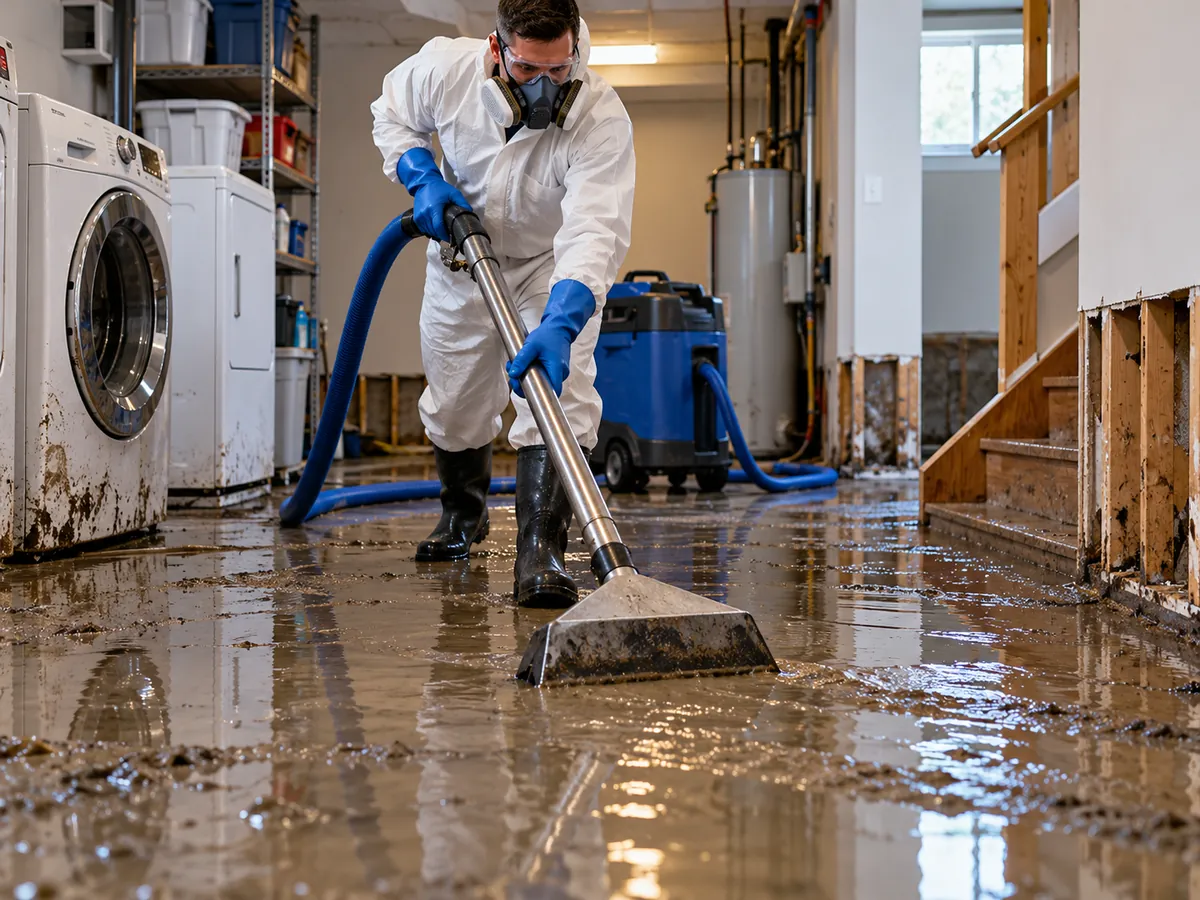
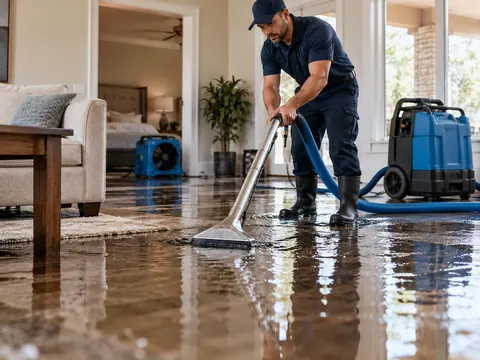
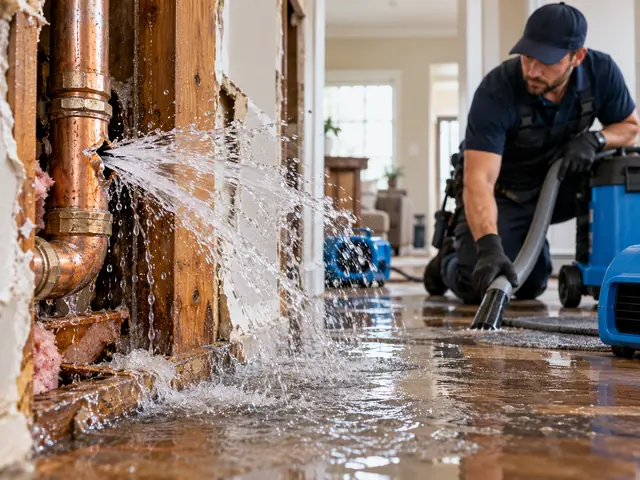
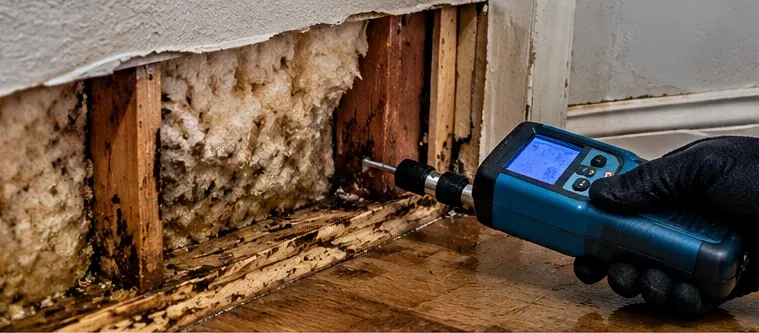
A burst supply line is clean water — we extract it, dry it, move on. Sewage is Category 3 “black water” under the restoration industry’s standard (IICRC S500): water carrying bacteria, viruses, and parasites. That single fact changes our equipment, our protective gear, what gets thrown away versus saved, and why doing it yourself is unsafe.
Containment first, not mopping
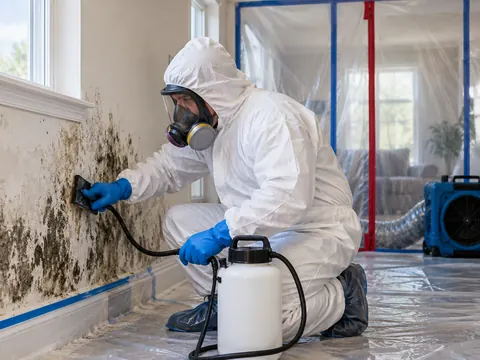
Before anything is removed, our crews seal off the affected area with physical barriers and run it under negative air pressure, so contaminants don’t travel through doorways or get pulled into ductwork. That’s also why we tell you not to run your HVAC while sewage is present — the air handler can spread contamination to rooms that were never affected.
What gets removed vs. what gets cleaned
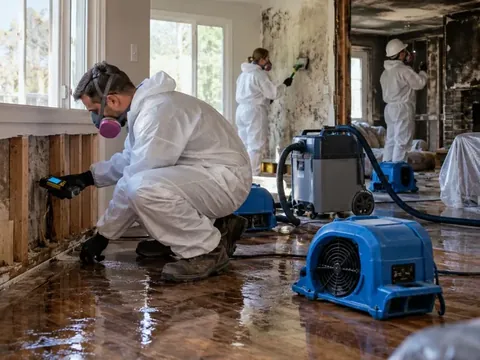
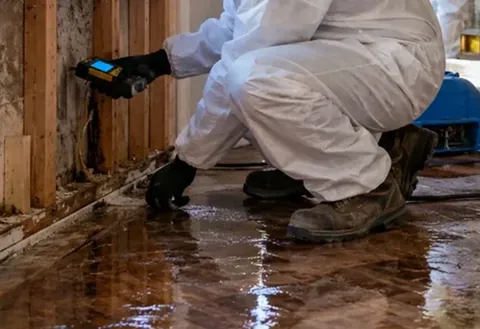
Anything porous that sewage soaked into — carpet pad, drywall, insulation — we remove and dispose of, not clean. The standard is explicit: there is no reliable way to disinfect a saturated carpet pad back to safe condition. Solid surfaces (tile, sealed concrete, metal) we clean and disinfect with EPA-registered agents after extraction. This isn’t upselling — it’s the protocol we follow on every job.
Why household cleanup isn’t enough
Bleach and rubber gloves can’t handle concentrated biological contamination. Without containment, extraction equipment, and proper disposal, DIY cleanup mostly moves contamination around — into the air, onto other surfaces, into the trash. Even a small backup needs our full protocol.