APOPKA, FL · HOME REPAIR & RESTORATIONExplore Apopka service area
Home Services ApopkaCall (407) 469-7577 ↗
Appliance Repair · Apopka, FL

Refrigerator Repair in Apopka, FL

A refrigerator doesn't fail politely. It fails on a Saturday with a full grocery run inside — we know, we get those calls. The difference between a cheap fix and a dead compressor is usually just how fast someone reads the first symptom. We read fridges for a living: the sound, the temperature, the ice tell us what's wrong before we open anything. Match your symptom below — we'll tell you what's urgent, what can wait, and exactly how we diagnose it before quoting anything. For refrigerator repair near me in Apopka, the right next step depends on the symptoms — this page explains what to check and what to ask about.

We connect you with licensed and insured appliance repair contractors in Apopka, FL.

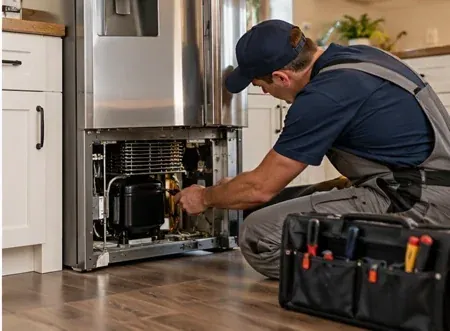
Technician diagnosing a refrigerator that stopped cooling in an Apopka, FL kitchen
Refrigerator Repair · Apopka, FL
⌖ Apopka, FloridaCall about this serviceReview the scope before approving work
The moment it's worth calling

Which pattern matches your refrigerator?

01 / Symptom

Fridge is warm, and the compressor either never stops or never starts

When you call us about a warm fridge, the first thing we ask is the real temperature — thermometer in a glass of water, middle shelf, one hour. That's the truth, not the display's guess. Above 40°F, the food-safety clock is running. Compressor running nonstop without cooling? We look at dirty condenser coils or a sealed-system leak first. Silent with the lights on after a storm? Start relay or control board — Florida lightning eats them. Move perishables to a cooler, keep the door shut, and tell us whether the compressor hums, clicks, or is silent — that one detail steers our whole diagnosis.

02 / Symptom

Freezer is fine, but the fridge section is warm

Freezer cold but fridge warm — we see this weekly, and it's a defrost failure, not a dying compressor. Frost builds up on the evaporator coils behind the freezer's back wall, choking airflow to the fridge compartment. Usually it's the defrost heater, the defrost thermostat, or the control running the cycle. Listen at the freezer for the evaporator fan — silence plus frost means the fan's iced in. And don't chip at the ice with anything sharp; one punctured coil turns our defrost repair into a sealed-system problem.

03 / Symptom

Ice maker quit, or water is pooling under the fridge

No ice with a humming fill valve — we trace the water path, and it's usually starved: a scaled-shut saddle valve on the supply line, a failed inlet valve, or a frozen fill tube. Water on the floor is a different trail — usually a clogged defrost drain (the tube behind the freezer wall ices up and meltwater has nowhere to go), a cracked drain pan, or a leaking inlet valve. Find the small water shutoff behind the fridge and close it if water's spreading. And watch your cubes: small, hollow cubes are the early warning of a scaling valve, months before it quits.

04 / Symptom

Clicking, buzzing, or rattling every few minutes

A click every 2–5 minutes with no cooling — we hear that recording and know it's the start relay trying and failing to kick the compressor over. Loud buzz on a unit with an ice maker? Inlet valve solenoid straining against low water pressure. Rattling that stops when you press on the fridge? Loose drain pan or fan shroud. Note the rhythm — constant, cyclic, or only when the ice maker fills. A phone recording genuinely helps us.

Understand the work

What refrigerator service covers — and what it doesn't

  • Temperature diagnostics. Thermometer-verified readings in both compartments, condenser-coil inspection, airflow checks, and amp-draw testing on the compressor. The numbers come before any part gets ordered.
  • Defrost system repair. Heater, thermostat, and timer/control diagnosis and replacement — the fix for the freezer-cold/fridge-warm split.
  • Ice maker and water dispenser service. Inlet valve testing, fill-tube clearing, saddle-valve replacement with a proper compression fitting, ice-maker module replacement, and water-filter guidance.
  • Door seals and gaskets. Seal testing (the dollar-bill test: close the door on a bill — if it slides out easily, the seal is leaking warm air), gasket replacement, and hinge/leveling correction.
  • Control boards, thermistors, and fans. Electronic diagnosis for erratic temperatures and post-storm failures; evaporator and condenser fan motor replacement.
  • Sealed-system diagnosis. Leak detection and compressor evaluation — with one honest boundary: sealed-system work legally requires EPA Section 608-certified handling of refrigerant, and on a refrigerator past about 12 years the economics rarely work. Our appliance repair hub covers the repair-or-replace math for that call.

That's the scope. The question underneath it is timing — and with a refrigerator, timing is measured in food, not just parts.

Cost of waiting

What waiting does to a refrigerator — the mechanisms, not the fear

The food clock

The food clock Two clocks run on a warm fridge, and we explain both on every call. Above 40°F, bacteria don't pause — the FDA's line is 4 hours in a closed fridge before perishables go, and past that, food that looks fine can carry toxins heat won't kill. The machine can wait; your groceries can't.

The machine's own clock

The machine's own clock A compressor running nonstop against dirty coils or low refrigerant overheats a little more every day — and compressors that die from chronic overwork don't get repaired, they get replaced. A defrost problem left alone ices the evaporator solid, then the fan motor burns out trying to spin through ice — one cheap part becomes two. A slow leak from a defrost drain wicks into the subfloor, where Florida humidity turns it into a mold conversation within days.

None of this is panic. It just means a warm fridge is a same-day decision, not a next-week one — we tell every caller that.

Three checks before the work starts

  • Water plus electricity

    A fridge leaking near outlets is a shock risk — we treat it that way on every call. If water reached the outlet, don't unplug it with wet hands; kill the breaker from a dry spot. 2. Don't puncture anything. Never chip ice off the freezer's back wall — the evaporator coils sit right behind it, and one puncture releases refrigerant, turning our defrost job into a sealed-system repair. 3. Capacitors hold a charge. The start capacitor near the compressor can hold voltage after unplugging. We leave the back panel to people with the tools — this isn't a look-inside appliance.

Apopka specifics

Why Apopka is hard on refrigerators

The garage fridge problem

We get the garage-fridge call every August. Half of Central Florida keeps a second fridge out there, and most manuals rate operation between about 55°F and 110°F — warning against hot garages "such as in Florida." Your Apopka garage sits above that for hours a day. The compressor runs continuously, energy climbs, lifespan shortens. Newer high-efficiency models are more heat-sensitive than the old tank that ran twenty years. If your garage unit can't hold 40°F in summer, it's not broken — it's misplaced, and we'll tell you that before selling you a repair.

Hard water vs. ice makers

Apopka's mineral-heavy water — worse in dry season — lays scale inside the ice maker's inlet valve with every fill. Twelve to twenty-four months of buildup chokes it until the valve fails; small, hollow cubes are the 12-to-18-month warning. We see valves swapped without addressing the scale fail again on the same schedule — so we tell you about the water, not just the valve.

Storms and surges

Florida leads the nation in lightning, and a fridge control board is exactly what a surge kills — lights on, compressor never starting, right after a storm. We replace more of these after storms than any other part. After Hurricane Milton's multi-day outages, the other lesson was food triage: a full freezer holds about 48 hours with the door shut (24 if half-full), and anything that touched floodwater gets discarded, no exceptions.

How the job runs

What happens during a refrigerator service visit

  1. Verify the symptom with instruments

    We confirm your thermometer readings, check the condenser coils for dust loading, listen to the compressor, and measure amp draw. A compressor pulling locked-rotor current with a clicking relay is a very different answer than one running normally with warm air — our instruments decide, not guesses.

  2. Isolate the system

    Defrost, airflow, water supply, electrical, or sealed system — we narrow to one system before naming any part. That's what separates our diagnosis from parts-swapping: we identify the failed part, we don't assume it.

  3. Scope in writing

    Then we lay it out: the failed part, whether it's on our truck or ordered, and what changes the scope — a sealed-system finding changes the conversation to the repair-or-replace math on our appliance repair hub. You approve before anything comes apart.

  4. Repair and verify

    Part replaced, coils cleaned, seals checked — then we run the fridge and verify pull-down: both compartments hitting target temperature before we leave, not just "it sounds better."

Before you call

Call now, or can it wait? — and what to have ready

Call now

  • the fridge is above 40°F (the food clock from the FDA section is running)
  • water actively spreading across the floor
  • a burning smell or repeated breaker trips at the fridge outlet

Can wait for a scheduled visit

  • ice maker quit but temperatures are fine
  • a new noise with steady temperatures
  • door seal leaking slightly
  • cubes shrinking (that’s the scale warning — schedule it before the valve dies completely)

What to have ready

  1. The machine. Brand, model number (inside the fridge door or on the back label), and approximate age. Age feeds the repair-or-replace decision on the hub page.
  2. The numbers. Thermometer readings from both compartments, when it started, and whether it followed a storm or outage. “Fridge at 52°F since yesterday’s storm, freezer fine” is a diagnosis head start.
  3. The sound. If it clicks, buzzes, or rattles — a short phone recording. Technicians genuinely use these.

Call made. Here's what the visit itself looks like, so there are no surprises.

During the visit

What to expect while the repair is underway

  1. Diagnosis first, then repair

    We pull the fridge away from the wall — clear a path and move anything stacked on top. Most of the first visit is diagnosis: coil inspection, electrical testing, water-path checks. Part on the truck? We fix it same visit. Control boards and sealed-system parts we usually order — ask us upfront which one you're in for. Keep the doors shut while it's warm; every opening restarts the climb. Before we leave: ask what we replaced, what the verified temperatures were, and what to watch for in the next 48 hours. We put it in writing — parts and labor itemized.

Related problems tend to show up together in Apopka homes, so it helps to know which service covers which symptom. A leaking unit can damage the floor beneath it, so dishwasher help for leaks and poor cleaning is worth booking before the next load. If the door latch has gone, repairing a built-in microwave covers the switches that keep the unit from starting.

Some calls start in one room and end in another, which is why these related services are worth knowing about. If baking results have gone unpredictable, range repair for burners and igniters checks the elements and thermostat behind it.

Helpful answers

What refrigerator repair typically costs in Apopka

Our diagnostic visit runs from $70. Most refrigerator jobs start from $150, and most appliance repairs overall from $100 — here's the breakdown.

ServiceTypical starting price
Diagnostic visitfrom $70
Refrigerator repair (typical)from $150
Most completed repairsfrom $100

Every problem's work and cost is different — the confirmed price comes only on the call or at inspection time. Starting prices below are typical, not fixed prices.

Refrigerator Repair FAQs

My fridge is running but not cooling. What should I check first?

We start every warm-fridge call the same way: thermometer in a glass of water, middle shelf, one hour — that's the real temperature. Then the two free fixes: vacuum the dust-caked condenser coils (fridge unplugged), and pull food away from the back wall so air can move. If temperatures stay above 40°F after that, the problem is internal — defrost system, fans, or sealed system — and needs diagnosis.

My freezer is cold but the fridge section is warm. Why?

We see this weekly — it's a defrost failure, not a dying compressor. Frost builds on the evaporator coils behind the freezer's back wall and chokes airflow to the fridge. Usually the defrost heater, thermostat, or the control. Don't chip at the ice — one punctured coil turns our defrost job into a sealed-system problem.d-system repair.

How long can my food stay safe if the refrigerator stops cooling?

The FDA's rule: a closed refrigerator keeps food safe about 4 hours; discard perishables held above 40°F longer than that. At room temperature the limit is 2 hours — 1 hour if it's above 90°F outside. A full freezer holds roughly 48 hours with the door shut (24 if half-full). When in doubt, throw it out — some bacterial toxins survive cooking.

My ice maker quit. Is it the ice maker or the water supply?

Start with the supply — most no-ice calls are water-path problems, not dead ice makers. Check the shutoff behind the fridge, then the saddle valve on the supply line: those puncture-type fittings corrode and scale shut over the years in hard water. The inlet valve itself needs adequate pressure to open. If cubes shrank for weeks before it quit, scale was choking the valve — and the scale needs addressing or the replacement fails on the same schedule.

My fridge clicks every few minutes but never cools. What's that?

That's the start relay trying and failing to kick the compressor over — the click is the relay engaging, then the overload cutting it back out. It's one of the more encouraging sounds in refrigerator repair: a relay is a small electrical part, far simpler than a compressor replacement. But don't let it click for days — repeated failed starts stress the compressor itself.

Can I keep a refrigerator in my Florida garage?

Only with eyes open — we say this every August. Most manuals rate 55°F to 110°F and warn against hot garages "such as in Florida" — your Apopka garage exceeds that for hours daily. The compressor runs continuously, efficiency drops, and lifespan shortens. Newer high-efficiency models are more heat-sensitive than old ones. If the garage unit can't hold 40°F in summer, consider it misplaced rather than broken.

Water is pooling under my refrigerator. What should I do?

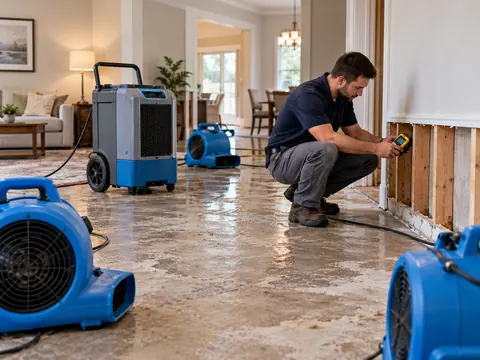
First, close the water shutoff behind the fridge if water is spreading. The most common cause is a clogged defrost drain — the tube behind the freezer wall ices or clogs and meltwater has nowhere to go but the floor. A cracked drain pan or leaking inlet valve are the other usual suspects. If water reached the subfloor or cabinets, drying matters too — see our water damage restoration page.

The technician says it's the sealed system or compressor. Is that worth fixing?

Usually not on an older unit — this is exactly the 50% math on our appliance repair hub. Sealed-system work legally needs EPA 608-certified refrigerant handling, which narrows who can do it, and past about 12 years the economics rarely work. We'll tell you straight if it's new-fridge time.

Do you offer refrigerator repair near me in Apopka?

Yes — we serve homes across Apopka, and the number on this page connects you with the team that handles refrigerator repair for your address. Confirm availability and timing when you call.

Further reading

Sources and technical references

View supporting references and safety sources
  1. kicker:

    Authority

  2. H2:

    Where this guidance comes from

  3. U.S. Food and Drug Administration (FDA)

    food-safety time and temperature rules during power outages and cooling failures (the 40°F / 4-hour / 2-hour thresholds).

  4. U.S. Department of Agriculture (USDA)

    emergency food-safety guidance: freezer hold times, dry-ice quantities, floodwater discard rules.

  5. U.S. Environmental Protection Agency (EPA), Section 608

    certification requirements for anyone servicing refrigerant circuits in small appliances.

  6. Manufacturer use-and-care manuals

    ambient operating ranges (including the 55–110°F garage guidance) and model-specific diagnostics. ---

Before a warm fridge gets written off as a compressor failure, it is worth looking behind and underneath it. The drip pan, the warm motor compartment, and the water line make the space behind a refrigerator the most common indoor pest harborage we hear about, and a machine that keeps tripping or smelling faintly of ammonia-sweet decay may need rodent removal from behind the fridge as much as it needs parts. When roaches are pouring out every time the compressor kicks on, that is an emergency pest problem sharing the appliance, not a quirk of the fridge. The laundry pair tells a similar story from the other side of the house: a washer leaving clothes soaking wet and a fridge losing temperature in the same week often share a cause — a surge event or a failing circuit — rather than two machines dying by coincidence.

Before scheduling the repair: Review the estimate details and consider whether the problem needs professional attention now.

When to call a home professional ↗ How to compare home service estimates ↗

When to call a home professional — the call-now vs. wait decision framework, generalized across every trade.

How to compare home service estimates — what a real appliance quote contains, and the red flags that matter on sealed-system jobs.

Need Refrigerator Repair in Apopka, FL?

Before authorizing work, ask about diagnosis fees, likely parts availability and whether repair is practical. Call the service number to confirm service coverage and appointment availability.

Apopka, FLRefrigerator Repair ☎ (407) 469-7577