APOPKA, FL · HOME REPAIR & RESTORATIONExplore Apopka service area
Home Services ApopkaCall (407) 783-0923 ↗
HVAC & AC Repair · Apopka, FL

AC Installation & Replacement in Apopka, FL

Your air conditioner doesn’t get to rest in Apopka. Nine, ten months a year it runs — and when it starts losing the fight, the question becomes “what goes in next, and who sizes it right?” We walk you through that decision the way we walk our own customers through it: how we size systems for humid Florida, what the ratings mean for your electric bill, what our installation day looks like hour by hour, and the timing mistake that turns a planned replacement into an August emergency. If you searched for AC installation near me in Apopka, this page explains the work involved so you can describe the problem clearly when you call.

We connect you with licensed and insured AC installation contractors in Apopka, FL.

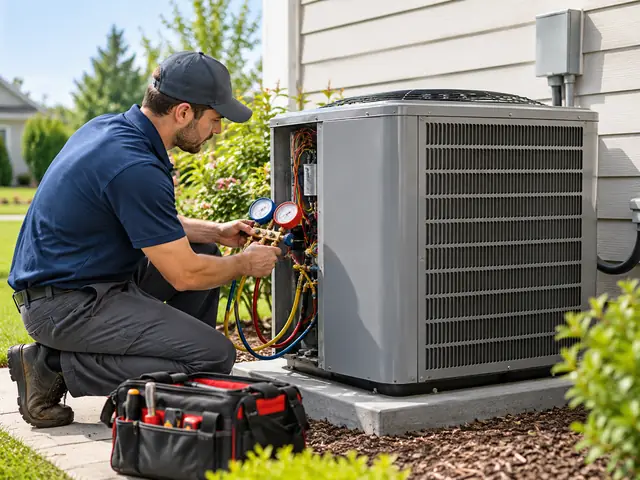
New outdoor AC condenser unit being installed at an Apopka, FL home
AC Installation & Replacement · Apopka, FL
⌖ Apopka, FloridaCall about this serviceReview the scope before approving work
The moment it's worth calling

Three moments that mean "start planning a replacement"

Not every weak AC needs replacing — but these three patterns are how our replacement conversations actually start in Apopka. Each comes with what we ask you to do right now.

01 / Symptom

Your electric bill climbs while comfort drops

The system still runs, but by late afternoon the house feels heavy, some rooms lag the thermostat by 3–5 degrees, and the Duke Energy bill tops the same month last year. We call that efficiency fade — a dirty coil, a slow refrigerant leak, or a compressor losing ground over weeks. In a 9–10-month cooling season it compounds: every month of delay is another month of paying full price for partial cooling.

Do now: note the thermostat setting versus the actual temperature in the worst room, and pull last year’s bill for the same month. Bring both numbers to us — they go straight into the replacement conversation.

02 / Symptom

Repairs are stacking up on an aging unit

One capacitor in spring, a contactor in July, and now our tech is talking compressor. Our rule of thumb: when a single repair approaches half the cost of a new system — or you’ve had two-plus repairs in one cooling season — we price the replacement alongside the repair, not another short-term fix.

Do now: get the repair quote and a replacement proposal from us in writing on the same visit — side by side is the only honest comparison.

03 / Symptom

The system uses phased-out refrigerant

If your unit runs on R-22, we find every leak repair gets harder — production ended years ago, so refrigerant comes from shrinking reclaimed stock. A leak on a 12+ year-old R-22 system is often the moment we call replacement the rational choice.

Do now: check the outdoor nameplate for refrigerant type and manufacture date. If it says R-22, start the sizing conversation with us before it fails in August.

Once you've matched your moment, the next question is the one that decides everything about comfort: what size system your house actually needs.

What the job includes

What an AC installation proposal should actually explain

A straight proposal covers five things. If any are missing or vague, the quote is incomplete — not cheap.

That covers the equipment. Not sure replacement is even the answer? Start with the HVAC & AC Repair hub — our diagnostics and repair-vs-replace framework live there; this page picks up where that decision ends.

Now, what waiting does to you — mechanism by mechanism.

What waiting costs

What waiting costs — the mechanisms, not the scare tactics

The fade tax.

An aging system doesn’t hold steady and then quit — we watch it lose ground every month of the cooling season, while you pay the same Duke Energy rate for air that’s progressively less cool and less dry.

The August trap.

We see systems fail most in August, when the load is highest. An August failure means choosing from what’s in stock, accepting whoever can come soonest, and making the decade’s biggest HVAC decision under time pressure. A spring replacement with us means full availability and time to compare proposals properly.

The humidity debt.

A system that can’t dehumidify isn’t just uncomfortable — sustained indoor humidity feeds mold, musty odors, and warped wood. We tell homeowners every clammy month is a month of moisture going somewhere in the house.

The refrigerant clock.

On R-22 equipment, each year shrinks the reclaimed supply further. We’ve watched a leak next summer cost more to address than the same leak today — and at some point the repair stops being offered at all.

None of that means rushing. It means deciding on your schedule instead of the weather’s. For the replacement math itself: a full system replacement in Apopka typically runs from $5,500, and most Apopka homeowners we talk to see a typical 3-ton replacement start from $6,500. Those are typical market starting prices, not fixed prices — the exact number comes from your contractor’s proposal, with scope confirmed in writing before anything is scheduled.

Safety first

Three safety checks before installation day

  • Electrical lockout is the installer's job, not yours.

    Our crew disconnects and locks out power at the breaker and the outdoor disconnect before touching wiring. Don’t “help” by flipping breakers back on mid-job.

  • Refrigerant stays in certified hands.

    Recovering the old charge requires EPA Section 608 certification — it’s federal law, not a suggestion. Venting refrigerant to the atmosphere is illegal, and our crew arrives with recovery equipment as a matter of routine.

  • Attics in a Florida summer are hostile.

    Your air handler may live in an attic that hits 140°F by afternoon — we plan morning starts around that. Keep kids and pets clear of the work zones (attic access, electrical panel, condenser pad) for the day.

Why Apopka changes the math

Why Apopka changes the replacement math

Storm season punishes electrical parts.

Daily summer thunderstorms and their power flickers wear out capacitors and control boards faster here than inland. If your unit struggles to start or short-cycles after storm season, we suspect those parts first — and we raise surge protection in the proposal conversation.

Flood exposure can decide it for you.

After Hurricane Milton, we’ve seen low-lying Apopka neighborhoods learn this the hard way: floodwater on a split system makes refrigerant leaks likely, duct insulation touched by floodwater gets replaced (it can’t be decontaminated), and gas controls can be invisibly damaged. If water reached your equipment, we often find replacement is the answer even on a younger system.

HOA rules apply to the outdoor unit.

Moving the condenser, raising it on a platform, or changing its location can require HOA approval in many Apopka communities — we ask you to check before the proposal is finalized, not after our crew arrives.

Hurricane anchoring is code, not an upgrade.

We confirm wind-load anchoring per Florida Building Code is in the scope, in writing.

Installation day

What installation day looks like

Most straightforward replacements we do take one day; ductwork changes or electrical upgrades can stretch it to two or three. Either way, the sequence is the same.

  1. Arrival, walkthrough, and protection

    Our crew confirms the equipment matches the proposal — model numbers, not just tonnage — walks the work path with you, and protects floors along it. We confirm what’s included now: line set, disconnect, thermostat, condensate routing, haul-away. Anything vague gets clarified before tools come out.

  2. Removal and rough-in

    Power locked out, old refrigerant recovered (never vented), old units out. We set the new pad or platform and hurricane-anchor it, run the line set, connect electrical, route condensate. Duct modifications happen now — before the new equipment goes in, not after.

  3. Commissioning and your walkthrough

    The step cheap quotes skip: we verify refrigerant charge by measurement, check airflow, and run a full cooling cycle while watching pressures and temperatures. Then the walkthrough — thermostat operation, filter type and interval, manufacturer versus installer warranty, who to call for what. We get the permit inspection scheduled before the crew leaves: Orange County inspects mechanical permits, and the contractor who pulled it handles scheduling.

Comparing proposals? We tell homeowners the meaningful comparison isn’t the bottom line — it’s scope completeness: model numbers, labor, permits, duct changes, commissioning, and warranty terms separated line by line. A quote that omits commissioning, permits, or the disconnect upgrade isn’t cheaper; it’s unfinished.

Commissioning done and walkthrough finished — but the call that starts all of this goes better when you’re prepared, and we’ll tell you exactly what to have ready.

Before you call

Before you call: what's urgent, what can wait, and what to have ready

Call now

  • The system is dead in August heat with elderly family, infants, or anyone heat-sensitive at home
  • Burning smell or visible sparking at the equipment — kill power at the breaker first, then call
  • Water pouring from the air handler onto finished space — that's active damage, not a scheduling question

Can wait for a scheduled visit

  • Gradual efficiency fade
  • One room lagging
  • An R-22 system that's still running — these deserve the full proposal process: load calculation, comparable quotes, spring scheduling, not an emergency slot

If the “call now” column describes your house tonight, start with 24/7 emergency HVAC help in Apopka — we’ll get the home safe first, then you can come back to compare replacement systems.

Have ready when you call

  • Nameplate info (brand, model, approximate age, refrigerant type)
  • Thermostat-vs-actual readings
  • Two seasons of repair history
  • Whether the Duke Energy bill changed year over year
  • Photos of the nameplate plus the equipment location (attic, garage, closet)
  • HOA contact handy if the condenser might move — approval questions stall more installs than equipment lead times

Crew scheduled and date set? Here's what the first weeks with the new system feel like.

After the crew leaves

What to expect in the first weeks with a new system

  1. First days

    It will sound different.

    Variable-speed and two-stage equipment runs longer at lower output — a steady hum, not the old on-off roar. We tell new owners that’s the dehumidification working, not a problem.

  2. First week

    Watch the humidity, not just the temperature.

    After a week of normal operation, check: does 76°F feel comfortable in a way it didn’t before? That’s the latent-load improvement — the whole point of the correct sizing we did for your Florida home.

  3. Day 30

    Your first filter change comes sooner than you think.

    Install dust loads the filter fast. We ask you to check it at 30 days regardless of the printed interval.

  4. Ongoing

    Keep the outdoor unit clear.

    Keep two feet of clearance on all sides, vegetation trimmed, never a pressure washer on the coil fins — we recommend a gentle rinse a few times a year.

  5. Paperwork

    Register the warranty.

    Manufacturer parts warranties often require owner registration within a set window. Ask us whether the crew handled it or it’s on you — get the answer in writing.

If your situation turns out to sit slightly outside this page's scope, the services below are the ones Apopka homeowners usually need next. Coils, drains and refrigerant checks are all part of booking a seasonal HVAC tune-up, and they are easier to do before a fault appears. Warm air from the vents in the middle of summer is the most common reason people land on AC repair in Apopka.

Helpful answers

What AC installation typically costs in Apopka

We price by what we actually find on site — here is what jobs like yours typically run.

ServiceTypical starting price
Full system replacementfrom $5,500
3-ton system (common Apopka size)from $6,500

Every problem's work and cost is different — the confirmed price comes only on the call or at inspection time. Starting prices below are typical, not fixed prices.

AC Installation & Replacement FAQs

How do I know what size AC my house actually needs?

Only a Manual J load calculation answers that — a room-by-room assessment of square footage, insulation, windows and orientation, air leakage, and duct location. Square-footage rules of thumb and "match the old unit" are how oversized systems happen; your old unit was never verified as correctly sized either. Ask for the calculation by name before you accept any tonnage.

Is a bigger air conditioner better for Florida heat?

No — in humid Florida, bigger is actively worse. An oversized unit satisfies the thermostat in minutes and shuts off before the coil stays cold long enough to remove moisture. You get the classic complaint: cold but clammy, damp skin at 74°F, and the sustained humidity feeds mold risk. Longer, steadier run times are what dry a house out.

What SEER2 rating should I look for in Apopka?

Florida is in the federal Southeast region, where most new split systems under 45,000 BTU/h must meet at least 14.3 SEER2. For most Apopka homes the value sweet spot is 16–18 SEER2 — and because our cooling season runs 9–10 months, higher efficiency pays back faster here than in cooler climates. Above 20 SEER2, weigh the premium against how long you'll own the home.

Can I just replace the outdoor unit and keep the old indoor coil?

Usually not, for two reasons. First, the AHRI matched-system rule: if the old equipment is below 13 SEER, both halves should be replaced with matched equipment — mismatched halves cost more to run and fail early. Second, new equipment uses A2L refrigerants like R-454B under the EPA's phasedown, and pairing a new condenser with an old coil is increasingly a non-starter. Plan on both halves.

What does installation day actually involve, and how long does it take?

A straightforward replacement takes one day; ductwork changes or electrical upgrades can stretch it to two or three. The sequence: equipment verification against the proposal, old refrigerant recovery and removal, new pad/platform with hurricane anchoring, line set and electrical, condensate routing, then commissioning — charge verification, airflow checks, and a full test cycle — followed by your walkthrough on the thermostat, filter, and warranties.

Do I need a permit to replace my AC in Apopka?

Yes — a mechanical permit, and sometimes an electrical one, through Orange County. A licensed contractor pulls the permit and schedules the inspection; that's part of what you're paying for. Treat any contractor who suggests skipping permits as a disqualification — permits are what guarantee the installation gets inspected against code.

Should I replace my AC now or wait until it dies?

Decide on your schedule, not the weather's. Spring — before the cooling season peaks — means full equipment availability, time to compare complete proposals, and no emergency premium. An August failure reverses all of that: limited stock, whoever can come soonest, and the biggest HVAC decision of the decade made under time pressure.

Why do quotes for the "same" system vary so much?

Because they're rarely the same scope. Compare line by line: exact model numbers, labor, permits, duct changes, line set and electrical work, commissioning and startup testing, and warranty terms — equipment versus labor separated. A quote that omits commissioning, permits, or the disconnect upgrade isn't cheaper; it's unfinished.

Do you serve my address for AC installation near me in Apopka?

We cover Apopka and the surrounding neighborhoods, and the number on this page is the one to call about AC installation. Confirm your address and the work needed when you call.

Further reading

Sources and technical references

View supporting references and safety sources

Nothing on this page is house opinion — it's traceable:

  1. ACCA Manual J / S / D

    The industry standards for residential load calculation, equipment selection, and duct design.

  2. AHRI matched-system guidance

    The <13 SEER both-halves rule for split-system replacements.

  3. U.S. DOE regional standards

    The 14.3 SEER2 Southeast minimum for split systems under 45,000 BTU/h.

  4. EPA HFC phasedown & Section 608

    The R-454B transition; only certified technicians handle refrigerant.

  5. Florida Building Code

    Mechanical permits and hurricane anchoring for outdoor equipment.

Before a replacement is treated as settled, it is worth confirming the old system is really the problem and not a symptom of something cheaper. Working through what to check when the AC is not cooling — airflow, thermostat behavior, drain issues — tells you whether the failure pattern points at the equipment or at the house around it. Homes adding a garage apartment, a sunroom, or a converted attic often cool that space better with ductless mini-split service and support than by stretching the new central system further. And because most Apopka replacements are matched heating-and-cooling systems, the same decision usually covers the winter side too, whether that means keeping a heat pump running through both seasons or knowing when furnace repairs stop making sense on an aging unit.

Before you sign anything: Get every proposal in writing with model numbers, scope line items, permit responsibility, and warranty terms separated — then compare them line by line with us, not by the bottom number.

Read the related homeowner guide ↗

Ready to talk sizing — not just tonnage?

Call us with your unit’s age and refrigerant type from the nameplate, the temperature gap in your worst room, and whether repairs are stacking up. Ask for the Manual J by name, and we’ll confirm who pulls the Orange County permit before anything is scheduled.

Apopka, FLAC Installation & Replacement ☎ (407) 783-0923