APOPKA, FL · HOME REPAIR & RESTORATIONExplore Apopka service area
Home Services ApopkaCall (407) 783-0923 ↗
HVAC & AC Repair · Apopka, FL

Heat Pump Repair in Apopka, FL

We fix the one machine that does two jobs — cooling your home through August, heating it in January — by reversing refrigerant flow through a single valve. When that valve sticks, our technicians see the same confusing symptoms: lukewarm heat, "AUX HEAT" glowing on a mild evening, a January bill that doubles overnight. Below we lay out the three moments that mean "call," what waiting does to the machine, the safety rules we want you to know first, and what our diagnosis checks — so you can describe the problem precisely and judge the answer we give you. For heat pump repair near me in Apopka, the right next step depends on the symptoms — this page explains what to check and what to ask about.

We connect you with licensed and insured heat pump contractors in Apopka, FL.

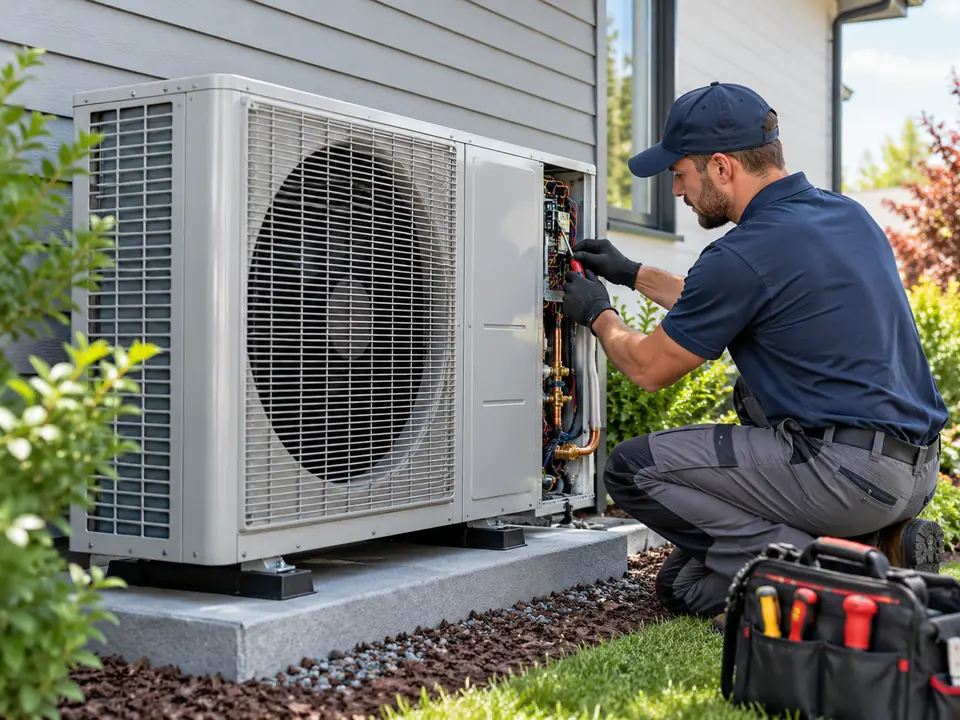
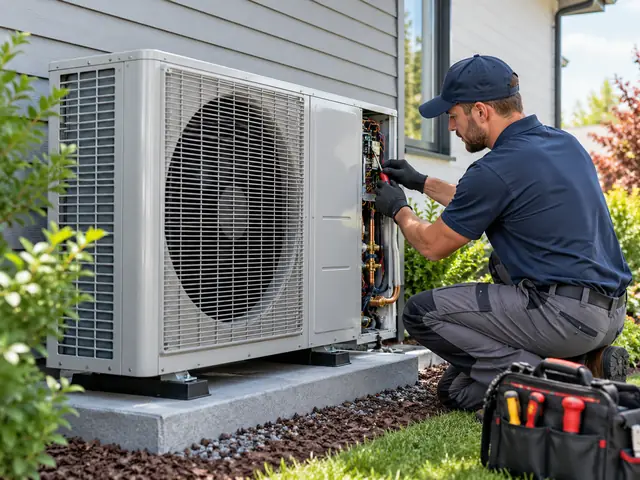
Illustrative scene of an HVAC technician inspecting the controls of an outdoor heat pump
Heat Pump Repair · Apopka, FL
⌖ Apopka, FloridaCall about this serviceReview the scope before approving work
The moment worth calling about

Three moments that mean your heat pump needs attention

Symptom → mechanism → what our techs do next. The right first move differs for each.

01 / Symptom

Heat blows lukewarm and never catches up

Mechanism: the reversing valve is stuck, or its small solenoid coil failed and can't shift it. The mimic: a slow refrigerant leak or dirty outdoor coil starving the system of heat to move. What we ask you to try: flip the thermostat to cooling for two minutes. If cooling works but heating doesn't, you've isolated the reversing circuit for us — that contrast cuts our diagnosis time significantly.
02 / Symptom

"AUX HEAT" glows on a mild evening, or January's bill doubles

Mechanism: auxiliary heat is electric resistance strips — backup heat at roughly triple the pump's operating cost. Brief aux in a real cold snap is normal. Aux on a 55-degree evening means the pump isn't contributing: stuck valve, low charge, failed outdoor fan, or a thermostat knocked into emergency heat. What we tell callers: if the thermostat reads EM HEAT, switch it back to HEAT. Florida utilities put heavy aux use from roughly $15 a day — a January spike with no cold snap behind it is a fault, not weather, and it's the first thing we verify when we arrive.

03 / Symptom

Steam and a stopped fan on a cold morning — or ice that never clears

Mechanism: the whoosh-and-steam is a normal defrost cycle melting frost off the coil — about 10 minutes, then back to heating. What we tell callers: watch the clock. Steam that clears is fine. Ice that stays encased, defrost past ~15 minutes, or any burning smell means a failed defrost board, dead sensor, or a valve that can't complete defrost — our advice is don't chip the ice, pour hot water, or cover the unit, because all three damage the coil and turn a board swap into sealed-system surgery.

What's covered

What a heat-pump repair visit covers — and what it doesn't

In scope: our technicians run thermostat and control diagnosis, reversing-valve and solenoid-coil testing, defrost board and sensor checks, refrigerant measurement and recharge, and outdoor-coil and fan inspection. Our sequence: settings first, coil before valve body, defrost controls, refrigerant and airflow, valve body only if 1–4 clear. (We measure coil resistance and watch the valve shift during a mode change before condemning the valve body — that's what keeps a quick part swap from becoming half a day of sealed-system surgery.)

Out of scope: we don't do ductwork redesign or cleaning → air-duct-cleaning; full system replacement → AC installation; wall-mounted heads with no ducts → mini-split repair. Unsure which you have? The HVAC hub routes you.

Scope set. Here's the cost of not calling — the mechanisms, not scare tactics.

What waiting costs

What waiting costs — mechanisms, not scare tactics

An iced coil kills the compressor

An iced coil kills the compressor We see blocked airflow force the compressor against rising head pressure until the windings fail — turning a defrost-board repair into a compressor replacement. For reference, most Apopka homeowners see a diagnostic typically from $75, a defrost control board commonly from $250, a reversing valve replacement from $600, and a compressor replacement typically from $1,500.

Aux strips bill daily

Aux strips bill daily We measure roughly from $15 a day of unnecessary aux (Florida utility guidance). Two weeks of a stuck valve in January can add hundreds to the bill — more than the coil that would have fixed it.

A stuck valve leaves you heatless on the coldest night

A stuck valve leaves you heatless on the coldest night Central Florida's cold snaps are short and sharp; a valve stuck in cooling mode in October becomes an emergency-heat situation in January when you call us — and emergency calls cost more than scheduled ones.

Defrost failure breaks the fan

Defrost failure breaks the fan We find undrained meltwater refrozen into a block at the unit's base; the blade hits ice, and now it's a motor plus a board.

Safety before you touch anything

  • Electricity: 240 volts at the outdoor unit

    We tell every caller: don't open access panels or hose down electrical compartments. Sparking or burning smell: shut off at the thermostat and the breaker, then call us.

  • Ice: hands off

    We ask you to leave the ice alone — no chipping (punctures the coil), no hot water (thermal shock), no covers (trap moisture, cook electrics). We've watched well-meaning DIY attempts become sealed-system repairs.

  • Emergency heat is a setting, not a solution

    If someone in the house switched to EM HEAT "to help," we have you switch it back — strips-only for days masks the real fault while the meter spins.

Why Apopka is different

Why Apopka heat pumps fail differently

Short, sharp cold snaps — not long winters

A few January nights in the 30s is all it takes. In our experience, aux-heat discipline, not equipment size, is what decides January bills here in Apopka — the Florida two-degree thermostat rule exists for exactly these weeks.

Storm-season flickers kill the exact parts behind fall failures

We see defrost boards and solenoid coils die in summer lightning; "stuck in one mode" complaints surface in October. If yours started after storm season, tell us — it directs our diagnosis.

The pump IS the heating system here

Most Apopka homes have no furnace and no gas line, so there's no fallback when the valve sticks — just the strips. That's why January surprises homeowners here who've never thought about "heating" before.

How the job runs

How a heat-pump repair visit runs

  1. Interview

    Our tech asks what you captured: failing mode, thermostat display, outdoor-unit behavior, when it started. Your heat-to-cool flip test answers most of it for us.

  2. Diagnosis with measurements

    We measure coil resistance, refrigerant pressures, run a forced-defrost observation, and check airflow. We give our findings in plain language — what failed, what it affects, what your options are.

  3. Written scope before authorization

    We put in writing what's being replaced, what it requires (especially sealed-system work: recovery, brazing, evacuation, recharge), and confirm our tech has done this repair on your equipment type.

  4. The repair

    Coil, board, or sensor: 1–2 hours in our hands. Valve body: most of a day — torch, nitrogen, vacuum pump.

  5. Verification

    We trigger a forced defrost manually, test both modes, and confirm the thermostat is out of EM HEAT. If a tech ever skips the test run, ask for it.

Prepare for the call

Before you call: when now, when scheduled, and what to have ready

Call us 24/7 about emergency heat-pump heating or cooling problems — emergency HVAC repair in Apopka. An appointment must be confirmed. Urgent heating or cooling failures can be reported by phone any time. We confirm technician availability for your particular heat-pump system before assuming a night or weekend visit. On-site response and repair timing are subject to availability.

Call now

  • unit fully iced and not clearing
  • burning smell
  • no heat with temperatures dropping
  • aux running constantly in mild weather

Can wait for a scheduled visit

  • mild aux during a genuine cold snap
  • normal defrost steam
  • lukewarm heat on the coldest night

Have ready when you call

  • heat-to-cool flip sequence: mode, display, outdoor-unit behavior
  • system age from the nameplate
  • whether the problem started after a storm or cold snap
  • ask what the diagnostic covers
  • if the verdict is a valve body, ask whether the solenoid coil was tested first
  • on 10–12+ year equipment: get repair and replacement priced side by side; ask about the matched-system rule

Prepped? Here's what the workday feels like when our crew is on site.

While the work happens

What to expect while the repair is underway

  1. No heating or cooling for the duration

    We give you the arrival window upfront; plan the house accordingly — January means blankets and a closed-up house.

  2. Loud and bright outside

    Expect torch work, nitrogen hissing, and the vacuum pump droning 30+ minutes during evacuation. Pets and naps do better indoors with windows closed.

  3. Refrigerant handling is regulated — that's the "extra" time

    We recover refrigerant to code — certified recovery, no venting — and pull a deep vacuum before recharging. The evacuation and decay test is what keeps the new valve alive.

We see these issues side by side across Apopka, from the older streets near the center to the newer subdivisions out by the 429. If your system has not been looked at in over a year, a maintenance visit for your AC system is the sensible starting point. No airflow, no cooling and a house that keeps warming up are exactly the calls urgent HVAC help when the system stops exists for.

Knowing which related service handles the follow-on problem saves a second round of phone calls later. A furnace that starts and stops in short bursts needs fixing a furnace that will not ignite to check the sensor and safety switches.

Helpful answers

What heat pump repair typically costs in Apopka

We price by what we actually find on site — here is what jobs like yours typically run.

ServiceTypical starting price
Diagnostic visitfrom $75
Defrost control boardfrom $250
Reversing valve replacementfrom $600
Compressor replacementfrom $1,500

Every problem's work and cost is different — the confirmed price comes only on the call or at inspection time. Starting prices below are typical, not fixed prices.

Heat Pump Repair FAQs

My heat pump blows cool air in heat mode. Is the reversing valve stuck?

Often, yes — a stuck valve or failed solenoid coil is the most common cause. Low refrigerant or a dirty coil can mimic it, so we verify the valve before replacing it. When you call, tell us whether cooling still works; that contrast narrows our diagnosis fast.

My outdoor unit looks like it's smoking on cold mornings. Is that normal?

Usually — that's steam from the defrost cycle, not smoke. The fan stops, the system briefly reverses to melt frost, and you see vapor and dripping water for about 10 minutes. NOT normal: ice stays encased, defrost runs past ~15 minutes, or a burning smell. Never chip the ice or cover the unit.

My thermostat shows AUX HEAT on a mild evening. What's wrong?

Aux heat in mild weather usually means the pump isn't contributing — stuck valve, low charge, failed outdoor fan, or the thermostat set to emergency heat. We check the mode first. If aux runs constantly in mild weather, have us diagnose it: Florida utilities put heavy aux use from roughly $15 a day.

Why did my January electric bill spike?

A January spike with no extreme cold behind it usually means auxiliary heat ran far more than it should — often covering for a fault on this page. Raise the thermostat no more than two degrees at a time to avoid triggering aux. Compare against the same month last year and mention it when you call us.

Ice is building up on my outdoor unit and not clearing. What should I do?

Don't touch the ice — chipping punctures the coil, hot water thermal-shocks it, covers trap moisture. Persistent ice means a failed defrost board, bad sensor, low refrigerant, or a valve that can't complete defrost. Set a moderate temperature and call us promptly; running fully iced strains the fan motor and compressor.

My system heats but won't switch to cooling (or vice versa). What's happening?

The reversing valve isn't shifting — failed solenoid coil, stuck valve body, or the thermostat not signaling the changeover. Listen at the outdoor unit when you switch modes: clicking or hissing that goes nowhere supports a valve problem. Report the exact sequence to our tech.

My heat pump is over 12 years old and needs a major repair. Fix it or replace it?

We price both quotes side by side. On 10–12+ year old equipment, a sealed-system repair can approach replacement value — especially with low efficiency or repeat breakdowns. Ask our tech about the matched-system rule: below-13-SEER equipment should be replaced as a matched set, not half at a time.

Is a ducted heat pump different from a mini-split for repairs?

Yes — different equipment entirely. This page covers ducted whole-home heat pumps (outdoor unit plus attic ducts). Mini-splits are ductless wall heads with their own failures (line sets, condensate pumps, zoning boards). No ducts? See our mini-split repair page instead.

Do you serve my address for heat pump repair near me in Apopka?

We cover Apopka and the surrounding neighborhoods, and the number on this page is the one to call about heat pump repair. Confirm your address and the work needed when you call.

Further reading

Sources and technical references

View supporting references and safety sources
  1. AHRI

    the matched-system rule (below-13-SEER equipment replaced as a matched set) and equipment application guidance.

  2. Florida Power & Light

    the two-degree thermostat rule and ~from $15/day heavy aux-heat cost.

  3. U.S. Department of Energy

    heat-pump operation and defrost behavior in mild-winter climates.

  4. EPA Section 608

    federal refrigerant rules: certified recovery, no venting, deep evacuation before recharge. No credentials claimed; public sources behind the advice above.

A heat pump that runs without keeping up blurs the line between a heating fault and a cooling fault, so start by pinning down what the system is actually doing in the mode that fails. The symptom walk-through in our guide to AC systems that are not cooling applies just as well in cooling mode — short cycles, warm supply air, and ice on the lines all narrow the fault before anyone opens the cabinet. More background reading sits in the home service guides section, including how to judge whether a problem can wait for a scheduled visit. Electrical behavior matters here too: a heat pump that trips its breaker on startup or dims the lights when the compressor engages may need a panel upgrade for added electrical capacity behind it, and breakers that trip again immediately after a reset are a reason to bring in an emergency electrician instead of forcing the system back on.

Before you call, we ask you to run the heat-to-cool flip test once and write down the sequence — mode, display, outdoor-unit behavior. Bring it to the call; it's worth more than the model number to our techs. Comparing quotes? Read how to compare home service estimates ↗

Comparing quotes? Read how to compare home service estimates ↗

Get your heat pump diagnosed properly — valve, defrost, or backup heat

When you call us, have the failing mode, the thermostat display, and what the outdoor unit is doing ready. We tell every caller: ask what was measured before anything gets replaced — and on older equipment, we price repair and replacement side by side for you.

Apopka, FLHeat Pump Repair ☎ (407) 783-0923