APOPKA, FL · HOME REPAIR & RESTORATIONExplore Apopka service area
Home Services ApopkaCall (407) 598-8705 ↗
Lawn Care & Outdoor Services · Apopka, FL

Lawn Mowing in Apopka, FL

In July, an Apopka lawn can grow visibly between weekends. St. Augustine — the grass covering most yards here — surges on afternoon rain and heat, and a lawn that looked fine ten days ago can be a foot tall by the time you get the mower out. We mow in this reality every day: how high to cut for each turf type, how often Central Florida actually demands mowing, what a proper visit includes and excludes, and the moment when the problem in front of you isn't really a mowing problem at all. When you need lawn mowing near me in Apopka, it helps to know what the job actually involves first — the sections below lay it out in plain language.

We connect you with licensed and insured lawn care contractors in Apopka, FL.

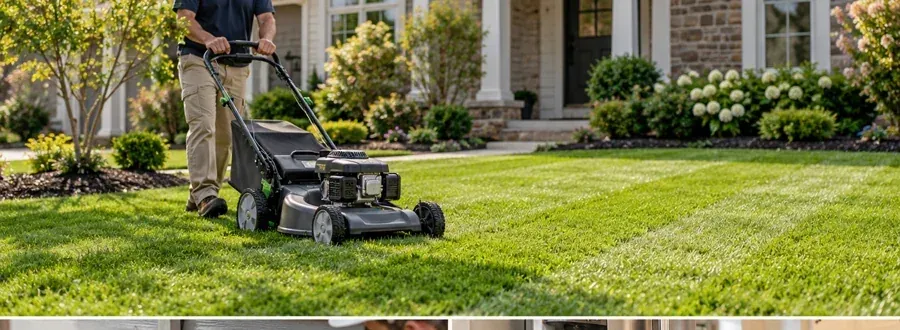
Illustrative scene of a lawn-care worker mowing a residential yard
Lawn Mowing · APOPKA, FL
⌖ Apopka, FloridaCall about this serviceReview the scope before approving work
Know the signs

Which of these sounds like your lawn?

Each pattern below points somewhere specific. Match yours first — the fix follows the pattern.

01 / Symptom

The grass is outrunning your schedule

It was fine last weekend; now it's shaggy and laying over. We see this all rainy season (roughly May through October): St. Augustine grows fast enough that a 10-day gap turns into a 14-day look.

Don't try to fix it in one aggressive pass — cutting more than a third of the blade at once shocks the grass. This is the signal your cadence needs to change, not your mower height.

02 / Symptom

Yellow-to-brown patches spreading in the sunny spots

The shady areas look fine; the sunny patches are yellowing and expanding week by week. We know that signature by heart: southern chinch bugs, the most damaging insect pest of St. Augustinegrass, per UF/IFAS. They strike drought-stressed, sun-baked turf first.

Check the border between brown and green grass for tiny black-and-white adults, or try the coffee-can test (an open can sunk 2 inches into the turf, filled with water — chinch bugs float up). We'll say it straight: mowing won't fix this; it needs a pest specialty, not a mower.

03 / Symptom

Thin, brown, scalped-looking spots after a cut

Someone set the blade too low — or the yard has high spots the mower deck caught. We see scalped yards invite weeds and chinch bugs, which prefer stressed grass.

Raise the deck. For standard St. Augustine cultivars, UF/IFAS guidance puts the right height at 3.5 to 4 inches — we tell every caller: most "short and tidy" cuts in Florida are actually cuts that are too short.

04 / Symptom

Ragged brown tips across the whole lawn a day after mowing

Every blade looks frayed at the top instead of cleanly sliced? That's a dull mower blade tearing the grass. Torn tips brown out and give disease an opening — we sharpen our blades constantly in summer, and sharpening fixes it, not fertilizer.

If you mow yourself, sharpen or replace the blade — during summer's heavy growth, blades need attention about every two weeks.

Understand the work

What a mowing visit actually includes

A complete mowing visit is four jobs, not one:

The cut, at the right height for your turf. St. Augustine: 3.5–4 inches for standard cultivars like Floratam. Zoysia: 1.5–2.5 inches. Bahiagrass: 3–4 inches. The one-third rule governs every visit we do — never more than a third of the blade removed in a single pass. That's why an overgrown first visit is a staged cut, not a scalp.

String trimming — around trees, fences, beds, mailboxes, and anywhere the mower deck can't reach.

Edging along hard surfaces — driveways, sidewalks, curbs, patios. That crisp line is what makes a mowed lawn look finished instead of half-done.

Blow-off — clippings cleared from the driveway, walkways, patio, and street. Fine clippings stay on the lawn itself, mulch-mowed back in per UF/IFAS guidance — unless they land in heavy clumps, which we break up or remove.

What's not in a mowing visit: sprinkler diagnosis and repair (that's the sprinkler repair specialty), sod installation or bare-spot repair (the sod installation specialty), tree and palm work (the lawn care hub covers those inquiries), and fertilization or pest treatment — separate specialties, and in Orange County the summer fertilizer rules make that distinction a legal one.

That's the scope. Now the question underneath every schedule decision: what does waiting actually do to the lawn?

What waiting costs

What waiting costs the lawn — the mechanisms, not the fear

Three skipped weeks in July

The one-third trap

Skip three weeks in July and the grass is a foot tall. Cutting it back to 4 inches in one pass removes far more than a third of the blade — the turf goes into shock, turns yellow, and thins. We fix it with a staged cut over two or three visits. Every skipped week in the rainy season is really two visits later.

Tall, then scalped, then stressed

Chinch bugs colonize stressed grass

Tall, then scalped, then stressed — that's the exact sequence chinch bugs exploit. They hit drought-stressed turf in sunny spots first, and by the time the brown patches are obvious, the population has been building for weeks. Regular, correct-height mowing is genuinely part of pest resistance.

Thinned turf, left bare

Weeds move into the gaps

Thinned turf from scalping or stress leaves bare soil, and Central Florida weeds don't wait for an invitation. A lawn that gets mowed correctly and consistently crowds most of them out on its own.

A missed season for snowbirds and rental owners

The HOA letter

Many Apopka neighborhoods — Errol Estate, Rock Springs Ridge, and the HOA communities around Wekiva Village — carry appearance standards, and Florida municipalities treat severely overgrown grass as a code matter (neighboring Ocala's published rule caps weeds and undergrowth at 12 inches). For snowbirds and rental owners we serve, a missed season can mean returning to a violation notice, not just a tall lawn.

Three checks before the crew arrives

  • Clear the yard.

    Toys, hoses, garden tools, fallen branches, rocks — and dog waste. A mower throws debris at serious speed; a hidden rock becomes a projectile and a forgotten hose becomes a wrapped-up mess. We ask everyone: walk the yard the morning of the visit.

  • Pets inside, gates unlocked.

    Dogs and running mowers don't mix. Keep pets indoors for the visit, and make sure side gates are unlocked and latches work — we can't mow a backyard we can't reach.

  • Mark what's fragile.

    Sprinkler heads near the surface, low landscape lighting, invisible fence wire, new plantings — flag anything a mower or trimmer could catch. Ten seconds of marking beats a broken sprinkler head (and that repair is our sprinkler specialty).

Why Apopka changes the math

Why Apopka lawns grow — and get kept — the way they do

The grass

Most Apopka yards are St. Augustine — usually Floratam — because it handles heat, humidity, and Central Florida's sandy soil. It grows aggressively in the rainy season and goes semi-dormant in the cool months, which is why we tell people "weekly year-round" is wrong and "weekly in summer, every other week in winter" is right for most yards.

The water rules

Apopka sits inside the St. Johns River Water Management District — mandatory watering days: during daylight saving time, two days a week by address (odd-numbered Wednesday and Saturday, even Thursday and Sunday); in standard time, one day a week. Never between 10 a.m. and 4 p.m., never more than an hour per zone. A mowing visit doesn't include irrigation — but we notice brown patches that are really a watering problem and say so.

The fertilizer blackout

Orange County bans nitrogen and phosphorus fertilizer from June 1 through September 30 — right through the peak growing season — So the summer lawn that looks hungry can't legally be fed nitrogen until October. What it can get is correct mowing: taller grass, mulched clippings returning nutrients, no scalping. We remind callers: mowing is the summer lawn-care tool the county never restricted.

The storms

Daily summer downpours mean growth surges and soggy ground — we shift a visit a day after a soaking rain rather than rut a wet lawn. Dry season flips it: less rain, slower growth, and the district's tighter watering schedule.

How the job runs

What a mowing visit looks like, step by step

  1. Walkthrough

    We size up the yard: turf type, current height, problem spots, obstacles, gate access. On a first visit with an overgrown lawn, this is where we set the staged-cut plan — how much comes off today, what waits for the next visit.

  2. The cut

    Mower at the correct deck height for the turf — 3.5 to 4 inches for standard St. Augustine — following the one-third rule. We alternate the mowing pattern visit to visit so the grass doesn't lean one direction and develop ruts.

  3. Trim and edge

    String trimmer around everything the deck missed, then a clean edge along driveways, walks, and curbs — we don't leave the trimming for "next time."

  4. Blow-off and check

    Clippings cleared from every hard surface. Gates closed and latched on the way out. We judge our own visits by this: if clippings are all over the driveway, the visit isn't done.

Before you call

Call now, or can it wait? — and what to have ready

Call now

  • An HOA or code notice with a deadline on it.
  • A lawn that's a foot tall after weeks away — it needs a staged cleanup plan, not a routine slot.
  • Brown patches spreading in the sun (see the chinch-bug pattern above) — that needs diagnosis sooner, because the treatment window matters.

Can wait for a scheduled visit

  • Routine recurring service, pre-vacation scheduling, a rental turnover with no deadline pressure. Winter slowdown is the easiest season to start — crews have room and the lawn is forgiving.

Have ready when you call

  • Approximate lot or lawn size
  • Turf type if you know it (St. Augustine is the safe guess here)
  • Whether it's a routine cut or an overgrown cleanup
  • Gate codes and access notes
  • How often you want the visits — weekly through the rainy season, every other week in the cool months is the standard starting point

Crew scheduled and date set? Here's what the visit itself feels like from inside the house.

While the crew is there

What to expect while the crew is there

  1. The visit

    It's quick and loud

    A typical residential visit runs 30 to 60 minutes — mowers and trimmers, then the blower. A crew of one or two, in and out. Keep windows closed if you're on calls; it's brief.

  2. Your schedule

    You don't need to be home

    Most recurring visits happen with nobody there — that's the point of the gate code and the standing schedule. First visits go better if you're around for the walkthrough.

  3. The clippings

    The lawn keeps its clippings

    Unless you've arranged bagging, fine clippings get mulched back into the turf — that's free, slow-release nutrition and UF/IFAS's standing guidance, not a shortcut.

  4. Wet days

    Wet days shift

    After a soaking rain, a good crew moves the visit rather than carving ruts into soft ground. That's professionalism, not flakiness.

Mowing and trimming is how most Apopka homeowners find nests in the first place — under a hedge, in a ground hole, or hanging over the fence line the mower passes every week. Stop a safe distance away and arrange safe wasp nest removal first; going back over a disturbed nest is how stings happen.

Helpful answers

What lawn mowing typically costs in Apopka

We price by the yard, not by the hour — a typical mow runs from $44 per visit for most Apopka lawns, with smaller yards from $35 and one-time overgrown cuts from $120. Typical starting prices, not fixed prices.

ServiceTypical starting price
Typical mow (per visit)from $44
Small yardfrom $35
One-time overgrown cutfrom $120

Every problem's work and cost is different — the confirmed price comes only on the call or at inspection time. Starting prices below are typical, not fixed prices.

Lawn Mowing FAQs — Apopka, FL

How often should my lawn be mowed in Apopka?

Weekly through the rainy season, roughly May to October, when St. Augustine grows fastest. Every other week in the cool months when growth slows. The real rule is the grass, not the calendar: if it's growing past the point where one cut removes more than a third of the blade, the cadence is too slow.

How short should St. Augustine be cut?

Three and a half to 4 inches for standard cultivars like Floratam, per UF/IFAS guidance. We warn every new caller: shorter looks tidier for a day and weakens the lawn for a month — scalped turf thins, invites weeds, and draws chinch bugs, which prefer stressed grass. Taller grass grows deeper roots and handles drought and pests better.

My grass is a foot tall. Can it be cut back in one visit?

Not well. Cutting a foot of grass down to 4 inches in one pass removes far more than the one-third rule allows — the lawn shocks, yellows, and thins. We do overgrown first visits as a staged cut: a high pass first, then the real height on the next visit a few days later. Say it's overgrown when you call so the crew plans for it.

Are grass clippings bagged or left on the lawn?

Left on the lawn, in most cases — we mulch-mow fine clippings back into the turf per UF/IFAS guidance; they break down into free nutrition. The exception is heavy clumps that smother the grass underneath; those get broken up or removed. Bagging every visit is an option, but it removes nutrients the lawn would otherwise keep.

Brown patches are spreading in the sunny spots. Is mowing enough?

Probably not — we see this weekly. Yellow-to-brown patches starting in full sun and spreading outward is the classic sign of southern chinch bugs, the most damaging insect pest of St. Augustinegrass per UF/IFAS. Mowing height and schedule won't stop them. Confirm with the coffee-can test at the brown/green border, then call a pest specialty — this page's territory ends where the insects begin.

Does a mowing visit include edging and blowing off the driveway?

A proper one does. The visit is four jobs: the cut at the right height, string trimming around obstacles, edging along driveways and walks, and blowing clippings off every hard surface. If a service mows and leaves the driveway covered in clippings, that's an incomplete visit, not a cheaper one.

Should I water before the crew comes?

Don't water the morning of the visit — wet grass clumps, cuts unevenly, and soft ground ruts under mower wheels. We ask everyone to water on their assigned SJRWMD watering day instead (in daylight saving time, that's two days a week by address; never between 10 a.m. and 4 p.m.). A good crew will tell you if brown spots look like a watering problem rather than a mowing one.

My HOA sent a letter about the lawn. What should I do?

Treat the deadline as real — Florida HOAs and municipalities enforce overgrowth, and violations can escalate. We tell people: call for an overgrown cleanup (a staged cut, not a routine slot), then set a recurring schedule so it doesn't happen again: weekly through the rainy season is what keeps most Apopka lawns inside HOA appearance standards. Mention the letter's deadline when you call.

Do you serve my address for lawn mowing near me in Apopka?

We cover Apopka and the surrounding neighborhoods, and the number on this page is the one to call about lawn mowing. Confirm your address and the work needed when you call.

Further reading

Sources and technical references

None of this is house opinion — it's traceable to the people who study Florida turf for a living:

View supporting references and safety sources
  1. UF/IFAS Extension

    mowing heights by turf type (St. Augustine 2–4 inches by cultivar; Floratam 3.5–4), the one-third rule, mulch-mowing clippings back in, blade-sharpening cadence, and chinch-bug identification and biology.

  2. UF/IFAS Florida-Friendly Landscaping Program

    southern chinch bug as the major St. Augustine pest: yellow-to-brown patches starting in drought-stressed, full-sun grass; confirmation at the brown/green border.

  3. St. Johns River Water Management District

    mandatory watering days and hours for the Apopka area, including the one-hour-per-zone limit.

  4. Orange County Environmental Protection Division

    the Fertilizer Management Ordinance: zero nitrogen/phosphorus June 1–September 30, 25-foot buffers from water bodies, annual nitrogen caps.

Mowing is often how bigger problems get spotted first, because the crew is the one walking every corner of the yard. Hitting a ground nest with the mower is the classic example — a swarm boiling up around the machine is no longer a lawn issue but a stinging-insect emergency, and the right move is to clear the area, not finish the pass. Tall, neglected grass hides more than nests: it shelters the rats that move along fence lines and gives them cover all the way to the soffits. Chinch bugs and armyworms get found the same way, and the dead patches they leave behind, along with the wood debris and old mulch they feed near, are worth a look for termites working the yard perimeter. After storms, mowing has to wait on the bigger hazard — a limb through the roofline or shingles scattered across the turf means the roof emergency gets handled before any crew starts cutting around the debris.

Before the rainy season hits: summer storms are what turn a maintained lawn into an overgrown one in two weeks. Florida's rainy-season home checklist covers the yard prep that keeps the mowing schedule from falling behind — drainage, debris, and what to clear before the growth surge.

Read the related homeowner guide ↗

Ready to get the lawn on a schedule?

Call with the approximate lawn size, whether it's a routine cut or an overgrown cleanup, and how often you want visits. Weekly through the rainy season, every other week when it cools — that's the cadence that keeps an Apopka lawn inside the lines.

Apopka, FLLawn Mowing ☎ (407) 598-8705