APOPKA, FL · HOME REPAIR & RESTORATIONExplore Apopka service area
Home Services ApopkaCall (407) 557-4771 ↗
Roofing · Apopka, FL

Roof Repair in Apopka, FL

A brown stain spreading on the ceiling. A shingle in the yard after last night's storm. A drip you can hear but can't see. We chase these every week in Apopka, and each one has a specific cause — almost never directly above the stain. This page is our repair playbook: how we trace leaks to their real source, what a proper repair actually fixes (and what a tube of sealant doesn't), and the honest line where we tell you a repair stops making sense. For roof repair near me in Apopka, the right next step depends on the symptoms — this page explains what to check and what to ask about.

Start with the moment you're living — each one below comes with what to do right now, and what we'll do when you call.

We connect you with licensed and insured roofing contractors in Apopka, FL.

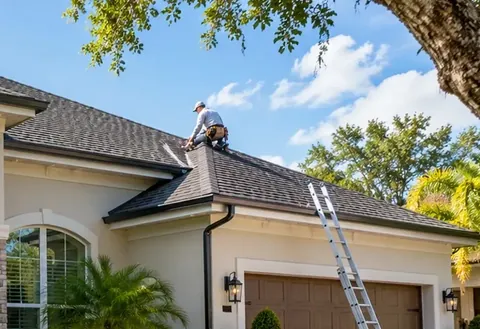
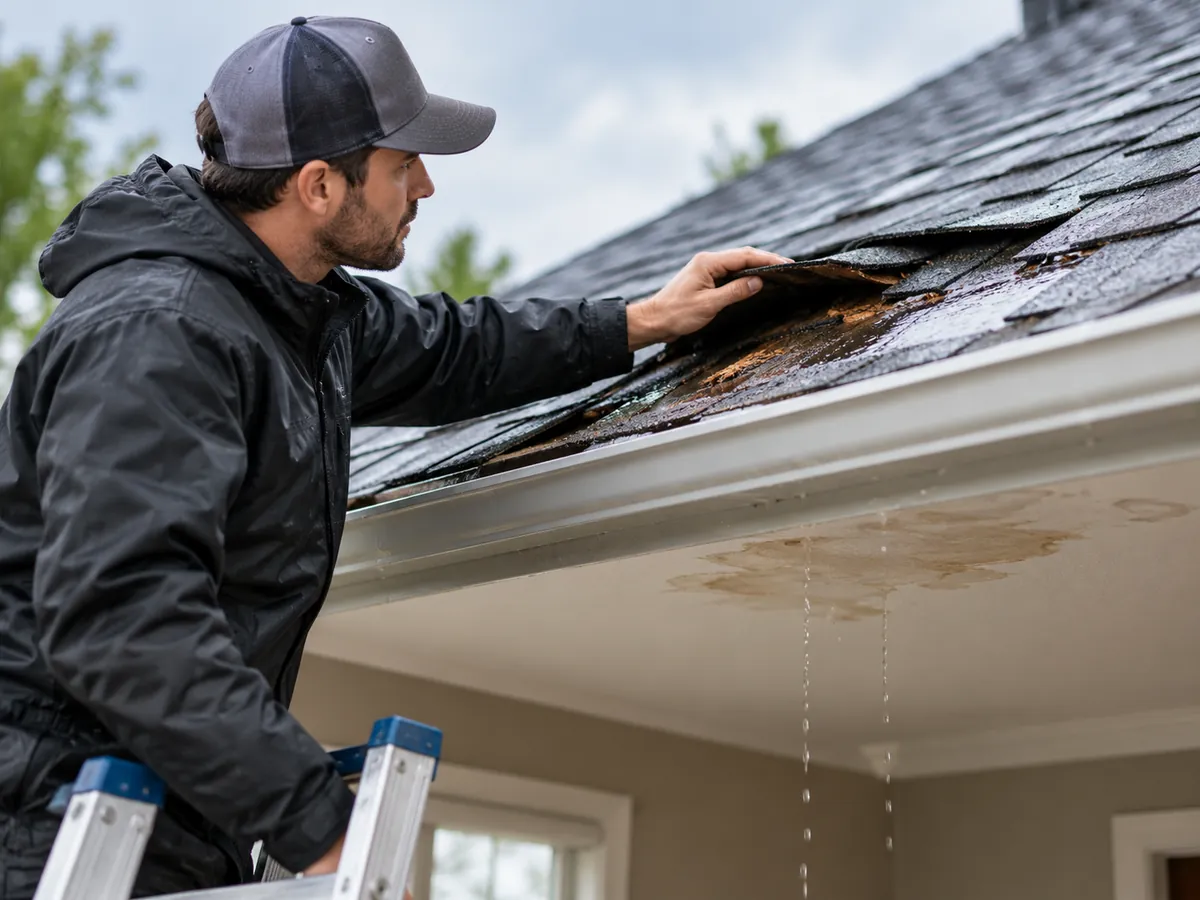
Illustrative image of a professional inspecting a leaking residential shingle roof
Roof Repair · APOPKA, FL
⌖ Apopka, FloridaCall about this serviceReview the scope before approving work
The moment it's worth calling

Four moments that mean "get this traced, not guessed at"

Most of our roof repair calls come down to a short list. Each one below has a mechanism — and something to do right now, from the ground, plus what we do when you call.

01 / Symptom

Water is coming in, or was during the last rain

A drip you can hear, a wet spot spreading on drywall, damp insulation when you peek into the attic. We tell every caller: the entry point is usually not above the stain — water runs along decking and framing before it drops. And it doesn't take a hurricane: a failed pipe boot or a lifted flashing tab leaks in an ordinary afternoon downpour. A leak repair in Apopka typically runs from $300 — we confirm the price on the call or at inspection.

Do now: photograph the stain with today's date, put a bucket under any active drip, and note whether it leaks only in wind-driven rain or in any rain at all. That distinction tells our tracer a lot.

02 / Symptom

The storm passed, and something looks wrong from the yard

Shingles on the lawn, a tile that shifted, a ridge cap sitting crooked, flashing bent back at a vent. Wind-lifted shingles are the quiet one — we see it every week: the tab lifts, the sealant strip breaks, and water gets under a covering that looks almost fine from the street. Damage often shows no interior symptoms for days or weeks; by the time a stain appears, moisture has been inside the roof system.

Do now: walk the yard, not the roof. Photograph everything from the ground with dates. If rain is still in the forecast, the priority is a tarp — ask us about it on the call.

03 / Symptom

A stain appeared, but the roof looks fine

The classic Central Florida puzzle: a ceiling stain with no missing shingles, no obvious damage. That dark streak isn't always a roof failure — we check the flashing and penetrations first. The usual suspects: the rubber boot around a plumbing vent cracked by years of UV, step flashing where a wall meets the roof, a valley carrying concentrated runoff. These are the leaks a ground-level glance misses and our attic-side look finds.

Do now: check the attic in daylight — look for daylight through the deck, damp sheathing, or drip trails on the underside. Note the stain's position relative to vents, valleys, and walls; we'll use every detail.

04 / Symptom

A previous repair didn't hold

Sealed last year, leaking again this storm season. This is the most informative symptom on the page: a repair that fails in the same spot usually means the symptom was patched, not the cause — sealant over a cracked boot instead of a new boot, caulk over flashing that needs rebuilding. Most 'roof leaks' we get called back for started at a vent boot or flashing someone smeared caulk over. Repeat failure at one location is data, not bad luck.

Read this page, describe the symptoms when you call us, and we'll confirm the scope before you approve any work.

What the job includes

What a roof repair covers — and where it stops

Leak tracing to the source. Not the stain — the entry point. We start with an attic-side look (damp sheathing, drip trails, daylight), then a roof-surface inspection of the suspect area, and, for intermittent leaks, a controlled hose test section by section. Our diagnosis names the mechanism: failed boot, lifted flashing, valley failure, nail pops — never just "the roof leaks."

Flashing rebuilt, not just resealed. We replace pipe boots as full assemblies when the rubber has cracked — another bead of caulk over a dead boot is a stopgap, and we say so. Step flashing at walls gets rebuilt in the proper overlapping sequence with each shingle course. Valley flashing with corroded metal or bad cuts gets corrected, and we clear the debris trapping water there. A flashing repair in Apopka typically runs from $250 — confirmed on the call or at inspection.

Covering repaired component by component. We replace lifted or missing shingles and nail them in the manufacturer's nailing area, with the courses above unsealed and re-nailed correctly — smearing sealant over a cracked tab hides the defect instead of fixing it. Cracked or slipped tiles get extracted and replaced (the courses above lift and prop while the new tile slides in). Loose ridge and hip material gets re-secured. A shingle repair in Apopka typically runs from $150 — confirmed on the call or at inspection.

Nail pops and small penetrations. Nails backing out create entry points — Florida's thermal expansion and contraction work them loose every summer; we see it constantly. Old fastener holes from removed mounts get proper flashing patches, not dabs of cement.

Soft or rotted decking, in the affected area. When our inspection finds compromised sheathing under the failure, we cut it out and replace it before the covering goes back — patching over rot just schedules the next leak.

Emergency tarping. When rain is coming before we can schedule the repair, a proper tarp buys time. It's mitigation, not a fix — and it's the right call while the permanent repair waits.

Where repair stops: when the problem isn't localized anymore. If the same failure is happening on every slope, the shingles are too brittle to re-nail, or the underlayment has given up across wide areas, you're past what targeted work can hold — we say so straight. That's the repair-vs-replace line — and roof replacement is the page that owns the other side of it. The roofing hub keeps the full triage if you're still deciding which path fits.

That's our scope. The question underneath it: what does waiting do to a problem like this?

What waiting costs

What waiting does to a repairable roof problem

A repairable leak, left through the next storm

Water doesn't stay where it entered

Every rain that gets past the covering soaks more sheathing — we watch this happen every storm season. Plywood delaminates, fasteners lose their grip, and rot spreads sideways along the deck long before anything shows inside. What would have been our flashing rebuild becomes a decking repair too.

Wet insulation, left to sit

Wet insulation stops insulating and starts growing

Damp attic insulation loses its thermal performance and becomes a mold substrate — the IICRC's 24-to-48-hour drying window applies here the same as anywhere. We tell every caller: the leak you can see is rarely the only thing that's wet.

A lifted tab through storm season

Lifted shingles invite the next storm in

We tell every caller: a tab with a broken sealant strip is a tab the next gust finishes lifting. Each storm season works on the weak points the last one created — wind damage compounds, and we watch it compound.

Exposed roofing in Florida sun

UV finishes what wind started

Exposed underlayment, cracked boots, and lifted tabs all degrade faster in direct sun — we see it weekly. Florida's ten-plus months of UV don't pause while you decide.

Waiting past the repairable stage

The repair window closes

Brittle shingles can't be re-nailed — our repair material needs something sound to grip. Wait long enough and the roof crosses from "repairable" to "our patches won't hold" — we hate having that conversation, and it's the expensive one.

Three checks before anyone goes up

  • Stay off the roof yourself.

    Heat-softened, storm-damaged, or brittle surfaces injure homeowners every year — and walking a failing roof breaks more of it. We document every detail a repair assessment needs from the ground, a ladder at the eave, or a drone. This is our work zone, not yours — stay down.

  • Water and electricity share the attic.

    A leak that reaches wiring, a junction box, or a recessed light is an electrical hazard, not just a roofing one. If water is near any of those, keep the attic closed up and say so when you call us — our order of operations changes.

  • Don't tarp alone in bad conditions.

    A tarp in wind is a sail — we won't let a homeowner learn that the hard way. If rain or wind is still active, wait for a break or let our crew handle it. An emergency tarp is a two-person job with the right fastening, and a poorly fastened tarp does its own damage flapping against the covering.

Why Apopka changes the triage

Why Apopka changes the repair math

Hurricane season is repair season — June through October

Central Florida's heaviest roof punishment comes as tropical moisture, daily afternoon storms, and named systems tracking the I-4 corridor. After Hurricane Milton (October 2024), tarping demand spiked across Orange County — and the lesson stuck: the repair backlog after a named storm is real. We tell every caller: early-season inspections beat post-storm queues.

The daily downpour is the real leak test

You don't need a hurricane to find a failed boot — we prove it every summer. Apopka's pattern of intense, wind-driven afternoon rain exposes flashing and penetration weaknesses that a gentle rain never would. We tell every caller: if it only leaks in the hard stuff, the mechanism is almost always at a penetration or a valley.

Tile roofs are common here — and the tile is rarely the problem

Concrete and clay tile cover many Apopka homes, and the tiles themselves can last decades. When a tile roof leaks, we find the failure is usually the underlayment or flashing beneath — cracked or slipped tiles are the visible part, but the waterproofing layer is the story. A repair that only swaps tiles without checking what's under them is the repeat-failure pattern from the symptom section — we've redone those jobs for other roofers' customers.

Repairs usually skip the HOA gauntlet

Unlike a full replacement with new materials and colors, a like-for-like repair typically doesn't trigger architectural review — but we say "typically" isn't "never." If your HOA is strict, a quick check of the rules before we start costs nothing. (The Whispering Oaks pool case taught this town the expensive way on bigger projects: check first.)

Storm-chaser season follows storm season

After every major storm, out-of-area roofers flood Central Florida knocking on doors. Our vetting playbook — license, insurance, written scope, staged payments, no signed-over checks — lives in full on the roofing hub; use it before anyone touches your roof, including us.

How the job runs

How a roof repair visit runs

  1. Ground documentation and attic look

    Our tech starts where you did: your photos and the stain's location. Then the attic — daylight through the deck, damp sheathing, drip trails on framing, the position of vents and valleys relative to the stain. We tell every caller: half of leak tracing happens inside the house.

  2. Roof-surface inspection of the suspect area

    We check covering, flashing, penetrations, and the courses around them up close — not from the street. For intermittent leaks, a controlled hose test isolates the entry point section by section while one of us watches from the attic.

  3. The diagnosis, stated plainly

    We name the mechanism: cracked boot, failed valley flashing, lifted tabs with broken sealant, nail pops, localized deck rot. If our finding is "the problem is bigger than a repair," we say it now — with the replacement page as the next read, not a surprise on the invoice later.

  4. The fix

    We rebuild flashing in proper sequence, replace boots as assemblies, swap shingles or tiles component by component with correct nailing, and patch decking where it's compromised. Sealant is a gasket in the assembly, not the assembly itself — we say that on every job.

  5. Verification

    We water-test the repair where possible, re-check the surrounding area, and hand you photos of the before and after. A repair without verification is a guess with a receipt — we don't leave guesses behind.

Before you call

Call now, or can it wait? — and what to have ready

Call us 24/7 about an active roof leak or storm damage — emergency roof repair in Apopka. An appointment must be confirmed. For planning: a typical repair in Apopka typically runs from $395 — your confirmed price comes only on the call or at inspection. Call at any hour about an active leak or storm damage, but do not climb a roof. Tarping, temporary protection, and repair visits must be individually confirmed. On-site response and repair timing are subject to availability.

Call now

  • Water actively coming in with more rain in the forecast — our emergency tarping can't wait for a proposal process.
  • A visibly sagging section or a partially collapsed area.
  • A leak reaching wiring or electrical fixtures.

Can wait for a scheduled visit

  • Schedule soon: a stain with no active drip, shingles or tile displaced after a storm, a flashing detail that looks wrong. We call these days-not-weeks problems — the next storm is the deadline.
  • Can wait for a planned visit: a single lifted shingle on a young roof with no interior signs, an aging boot you want us to assess before storm season. Worth doing, not worth an emergency slot.

Have ready when you call

  • Where the stain or damage is — plus your dated photos from the ground
  • Whether it leaks in any rain or only wind-driven rain
  • Your roof's age and material — permit records help us
  • What was repaired before, when, and where — the repeat-failure history tells us a lot
  • Whether there's attic access for our tracer

Call made and date set — here's what our repair day feels like.

During the work

What to expect while the repair is underway

  1. The repair day

    It's a small crew and a short day

    Most of our repairs run half a day to a day — no dumpster in the driveway, no multi-day staging. Expect nail guns and compressors for a few hours, some debris in the work zone, and a crew that cleans as it goes.

  2. The attic

    The attic is part of the job site

    Our tracer goes in and out during diagnosis and verification. Clear a path to the attic access and expect some foot traffic — it's normal.

  3. The water test

    You'll hear the water test

    A hose on the roof while one of us watches from the attic sounds odd and looks odder. It's the difference between our verified repair and a hopeful one.

  4. The final sweep

    Magnet sweep at the end

    Nails and fasteners scatter — we run a magnet over the driveway and work zone before leaving. Walk it yourself anyway; it takes two minutes.

Related problems tend to show up together in Apopka homes, so it helps to know which service covers which symptom. If wind has exposed decking, a roof emergency call when water is coming in secures it before a fuller repair is planned. Stains that grow after every rain often end with ceiling damage repairs after a leak above after the entry point is fixed.

Helpful answers

What roof repair typically costs in Apopka

We diagnose the mechanism first, then quote it — here is what repair jobs typically run.

ServiceTypical starting price
Shingle repairfrom $150
Flashing repairfrom $250
Leak repairfrom $300
Typical repairfrom $395

Every problem's work and cost is different — the confirmed price comes only on the call or at inspection time. Starting prices below are typical, not fixed prices.

Roof Repair FAQs

The stain on my ceiling isn't under the leak — how do you actually find it?

Water travels along decking and framing before it drops, so we start at your stain and work backward: an attic-side look for damp sheathing, drip trails, and daylight, then a roof-surface inspection of the vents, valleys, and flashing uphill from the stain. For leaks that only show in heavy rain, our controlled hose test isolates the entry point section by section while one of us watches from inside.

Can you repair just a few shingles, or does the whole slope need work?

A few shingles, done right — we do this weekly. Asphalt roofs are repairable component by component: the damaged shingles come out, replacements go in nailed to the manufacturer's nailing area, and the courses above get unsealed and re-nailed correctly. What doesn't work is smearing sealant over a cracked tab — that hides the defect instead of fixing it, and it fails at the next storm.

My tile roof looks fine, so why does it leak?

Because the tile isn't the waterproofing — the underlayment and flashing beneath it are. Tile sheds most water, but wind-driven rain gets under it by design, and the membrane below does the real work. Cracked or slipped tiles are the visible part; the failure is usually aged underlayment or flashing at a valley or penetration. We say it plainly: a repair that only swaps tiles without checking underneath is why some tile leaks get "fixed" three times.

A roofer said my flashing just needs resealing — is that enough?

Sometimes, briefly — but we tell every caller that sealant is a gasket, not a structure. If the flashing metal is sound and just the sealant aged out, resealing buys time. If the flashing is corroded, lifted, or was never layered correctly, another bead of caulk is the stopgap that fails in the next hard rain. The lasting fix is rebuilding the flashing in the proper overlapping sequence. Ask any roofer which one they're selling you.

Storm knocked shingles off — should I tarp now or wait for the adjuster?

Tarp now, photograph first — we say this on every storm call. Mitigating further damage is your responsibility under most policies, and insurers generally reimburse reasonable temporary repairs — keep the receipts. Document everything with dates before the tarp goes on: the damage, the interior stains, the yard debris. Then call the adjuster with the documentation in hand.

How long does a roof repair actually last?

As long as we fixed the cause, not just the symptom. A properly rebuilt flashing detail or a correctly replaced boot lasts with the roof around it. A sealant patch over a cracked boot lasts until the next hard rain. We give you the honest predictor: if our tracer named a mechanism and fixed it, you're good; if the "repair" was caulk and hope, plan on seeing it again.

How do I know the leak is really fixed and not just quiet?

Verification, not optimism — that's our rule. We water-test a proper repair where possible — hose on the repaired area while one of us watches from the attic — and re-check the surrounding covering. You also get before-and-after photos of the actual failure point. A repair without verification is a guess with a receipt.

When does a repair stop making sense and become a replacement conversation?

Three signals we watch for: the same failure keeps returning in the same spot despite proper repairs; the covering is too brittle to re-nail, so patches can't grip; or the failure is systemic — every slope showing the same wear — rather than localized. At that point targeted work can't hold, and the economics flip. That's the roof replacement conversation, and it's better had deliberately than after the next storm forces it.

Can I find roof repair near me in Apopka?

Start here: this page explains the work, the common causes, and the questions worth asking. Then call the number listed for roof repair and confirm coverage for your address.
Further reading

Sources and technical references

View supporting references and safety sources
  1. ARMA (Asphalt Roofing Manufacturers Association)

    what we practice: asphalt roofs are repairable component by component, but repairs should be handled by qualified roofers; sealant over damage hides defects rather than correcting them.

  2. 2024 IRC, sections R904.1 and R905.2.8

    what our repairs must meet: roof assemblies and flashing follow the code and the manufacturer's instructions, with sidewall flashing discharging onto the roof or into a gutter.

  3. Florida Building Code

    the flashing, underlayment, and fastening requirements our lasting repairs must meet.

  4. IICRC S500

    the 24-to-48-hour drying standard behind our mold warning for wet insulation and decking.

A surprising share of roof repairs in Apopka start with an animal rather than a storm. Roof rats chew through soffits, vent screens, and soft flashing to reach the attic, and simply patching the hole without rodent control that removes the animals first means the repair gets chewed open again within the season. Wasps create the mirror-image problem: colonies established inside soffit cavities and behind lifted shingles have to be cleared before a crew can safely open the area, so removing wasp nests from the roofline is often step one of the repair itself. When a homeowner finds wasps pouring from a ceiling gap or rodents suddenly visible indoors after a section of roof fails, the sequencing flips to emergency pest help first, with the permanent repair scheduled right behind it. The ground tells part of the story too — shingle granules and debris scattered by a failing roof land on the lawn, and mowing over roofing debris is how nails end up in tires, while chronic drip-line puddling that no gutter adjustment fixes sometimes traces to a sprinkler zone soaking the same corner.

Before our work starts: we get the scope itemized in writing — what's being repaired, how, and what's excluded. How to compare home service estimates walks through the line items. And Florida's rainy-season home checklist covers what to check on the roof between now and the next storm.

Read the related homeowner guide ↗

Matched one of the four moments? Get it traced, not guessed at.

Describe the stain or damage from the ground, whether it leaks in any rain or only the hard stuff, and what was repaired before. Our diagnosis names the mechanism — ask for it by name on the call.

Apopka, FLRoof Repair ☎ (407) 557-4771