WATER QUALITY AND LOCAL CONDITIONS
Why Apopka changes a water heater install
We identify your actual water supplier or private-well setup before drawing conclusions about water quality — because the myth is that “Apopka water” is one thing. The City's annual water-quality reports apply to its supply only; they do not diagnose a household plumbing fault or prove every Apopka home needs treatment. What we do see, across city supply and well homes alike, is mineral-heavy water laying scale inside tanks and shortening anode-rod life — which is why we check the anode and the sediment on every replacement, and only recommend treatment when water testing, the manufacturer's instructions, or our diagnostic findings support it.
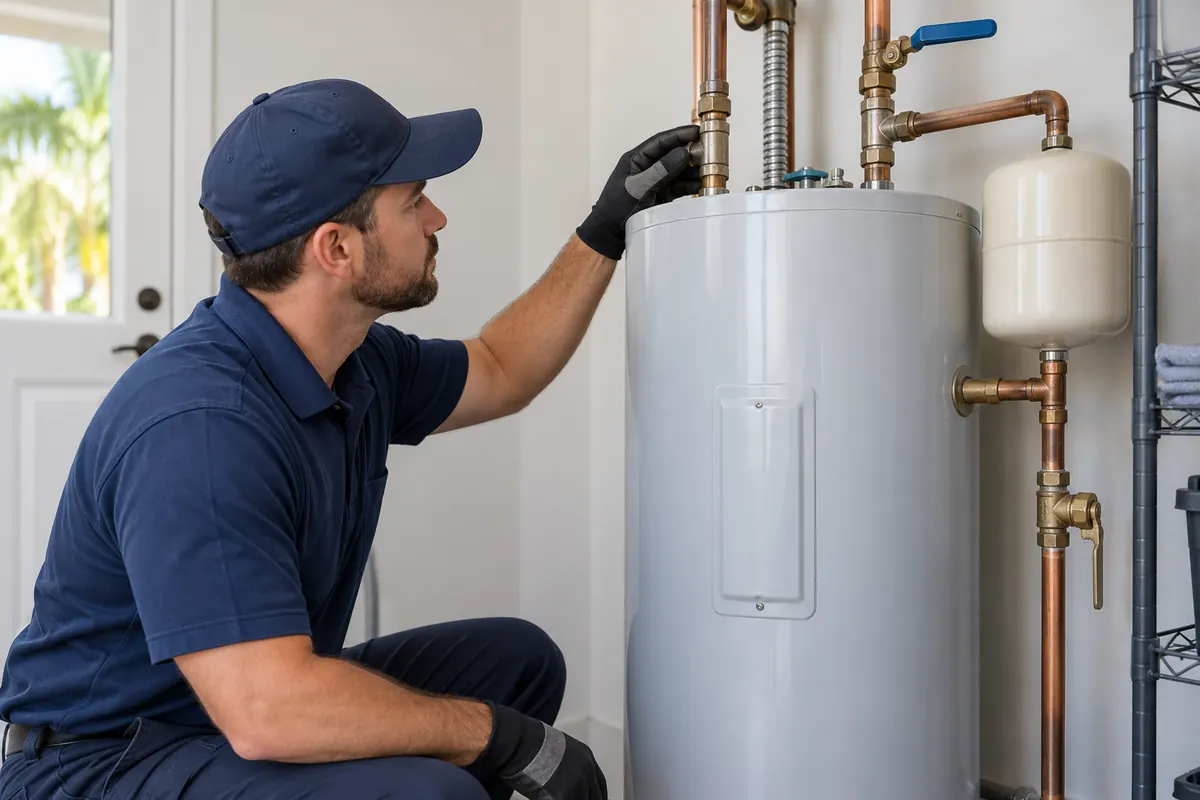
Then there is the Florida install itself. Most Apopka homes are slab-on-grade, so the heater usually sits in the garage — where summer heat is brutal on a tank's controls and where a leak runs across the slab toward stored boxes, not a floor drain. Attic installs, where they exist, face the same heat plus tighter access and a longer vent run. Older homes near downtown Apopka and Park Avenue often still have galvanized supply lines that need attention before a new unit goes in, while newer builds off SR-429 and around Rock Springs Ridge and Errol Estates usually have the access and panel capacity a tankless conversion wants. And the permit question is local too: for an Apopka address, confirm the authority having jurisdiction before work starts — the City of Apopka permitting portal is the starting point for city permits, and an Apopka mailing address alone doesn't establish jurisdiction.