APOPKA, FL · PLUMBING SERVICE INFORMATIONExplore Apopka service area
Home Services ApopkaCall (407) 798-8765 ↗
RESIDENTIAL PLUMBING · APOPKA, FL

Water Heater Repair in Apopka, FL

No hot water, unusually short showers, temperature swings, or a water heater that keeps shutting down? We diagnose the actual fault — and we diagnose by type, because an electric tank, a gas tank, and a tankless unit fail in completely different ways. Then we tell you honestly whether it's a repair or a replacement, and whether the tank or components are still safe to use. If you're searching for water heater repair near me in Apopka, this page is a good place to start — it explains the work, the warning signs, and what to ask before anyone begins.

We connect you with licensed and insured plumbing contractors in Apopka, FL.

We answer emergency calls 24/7; routine service appointments depend on confirmed availability.

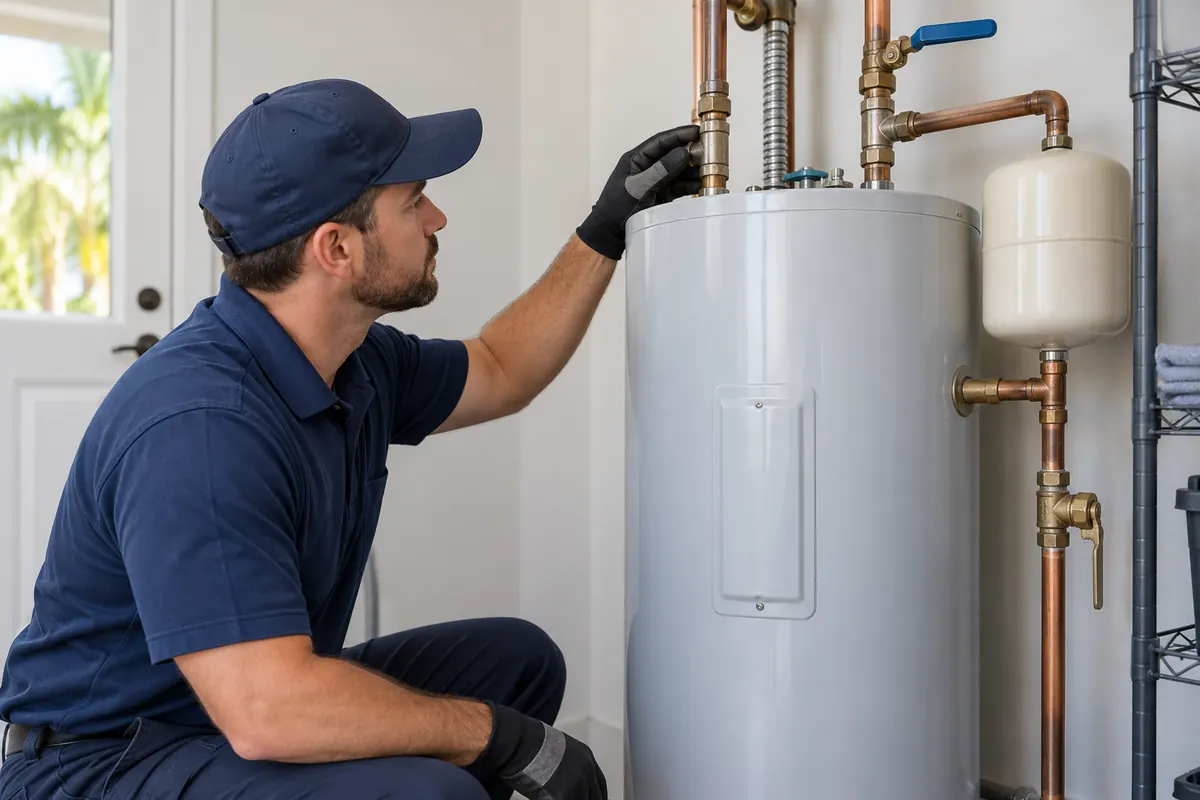
Illustrative plumbing professional inspecting external connections on a residential tank water heater
Illustrative residential service scene
DESCRIBE THE HOT-WATER CHANGE

What has stopped working?

No hot water anywhere

No hot water can mean the supply, the controls, a dead heating element, or failed ignition — and which one depends on your model. We handle the diagnosis. Don't remove covers or work on gas or electrical components yourself — a water heater combines 240 volts or gas with water, and that's not a DIY combination.

Hot water runs out too soon

Short showers can be household demand, recovery time, a setting, or a real fault. We ask how the pattern compares with your normal use and whether every fixture is affected — one cold showerhead is a mixing valve, every fixture cold is the heater. That distinction saves you a heater diagnosis for a shower problem.

Temperature changes or an error code

Write down the error code and model details — and don't reset it five times first, because repeated resets can mask the fault code we need. Never bypass a safety device to "get it working." If one fixture behaves differently from the rest, we check its mixing control too.

A leak or unusual noise

Tell us where the water first appears, whether it's spreading, and any rumbling or popping you hear. A puddle under the heater isn't always a failed tank — fittings, valves, and the relief line leak too. We confirm the source before we talk repair or replacement.

SYSTEM-SPECIFIC ASSESSMENT

Tank, tankless, electric or gas?

Details that change a repair assessment
System or concernWhat the assessment may involve
Electric tankSupply, thermostats, heating elements and controls, following the model’s diagnostic procedure.
Gas tankIgnition, gas controls, combustion and venting where applicable. Gas or combustion safety takes priority.
TanklessError history, flow demand, sensors, controls and scale or maintenance history. Required capacity and fuel supply are model-specific.
Connection leak versus tank leakA joint, valve or connection may be serviceable. Confirmed failure of the tank body generally leads to replacement assessment.
Sediment or scaleMaintenance history and actual water conditions matter. Follow the manufacturer’s procedure; descaling does not repair every heater fault.

Before scheduling, we confirm that your specific heater type and brand is one we service — because model-specific parts and procedures matter on water heaters. This page focuses on repair; a replacement or a switch to tankless is a separate installation scope with its own capacity and site requirements.

SAFETY DEVICES MATTER

Do not cap a relief pipe or investigate a gas odor

The temperature-and-pressure relief valve is the last safety device between you and a tank failure — never plug its outlet or cap the discharge. And here's the myth we bust most: a dripping relief valve isn't always a bad valve. Thermal expansion, high pressure, or a failed expansion tank can all make a good valve drip. Swapping the valve alone cures none of those. We find the cause — and keep clear of hot discharge water.

For a suspected gas leak or a carbon-monoxide alarm, leave the area and contact emergency services or the utility from a safe location. Don't keep troubleshooting — no diagnosis is worth the risk. Keep water away from energized equipment — don't open an electrical panel or work switches while standing in water.

COLD-MORNING HOT-WATER PROBLEMS

Less hot water during a cold snap does not always mean the heater has failed

We tell every caller during a cold snap: colder incoming water plus simultaneous showers can shrink your hot water without anything being broken — the heater has to lift the water through a bigger temperature difference. That's physics, not failure. But those conditions don't rule out a real fault either, which is why we still diagnose instead of assuming.

Hot water runs out faster than usual

We ask what was running and whether the problem hits the whole home. Demand, storage capacity, and recovery rate get weighed alongside elements, thermostats, and controls — we never recommend replacement on a demand problem that a bigger schedule, not a bigger tank, would fix.

Tankless water turns lukewarm at high flow

A tankless unit's output is its rated capacity divided by the temperature rise it has to achieve — colder incoming water cuts the flow at your set temperature, and that's normal, not a fault. Error codes, ignition problems, and restricted flow are different stories and need model-specific diagnosis. See Tankless Water Heater Repair.

No hot water, an active leak, or a safety alarm

A complete loss of hot water gets troubleshooting — not an automatic emergency dispatch, because no hot water alone isn't dangerous. An active leak near electrical components is a different call and gets urgent attention. For gas odor or a carbon-monoxide alarm, leave the building and contact emergency services or the gas utility from safety; don't keep troubleshooting.

When you call, have the heater type, brand and model, any error code, the affected fixtures, and the timing ready — five details that let us bring the right parts on the first visit. Most no-hot-water repairs we handle run from $150, and routine appointments depend on availability — we reserve emergency call handling for genuine leaks and safety hazards. If a pipe or valve near the heater froze, we inspect for leakage after thawing rather than assuming the heater itself failed.

REPAIR VERSUS REPLACEMENT

Compare the confirmed fault and the complete cost

We weigh the unit's condition, the diagnosed part, parts availability, warranty, and the installed cost of an appropriate replacement before recommending anything. Age helps frame the discussion — but the myth is that every tank dies at ten years. We've replaced eight-year tanks and repaired fifteen-year ones; condition decides, not the calendar. One hard rule: tank-body leakage always means replacement, while leakage at an external connection may just need a fitting. When replacement is on the table, full tank installs typically run from $700, and a standard 50-gallon tank install usually starts from $1,200.

If we propose replacement, we'll talk through household demand, energy use, available space, gas or electrical capacity, venting, condensate where applicable, removal, and required approvals. For an Apopka address, confirm the authority having jurisdiction before work starts — the City of Apopka permitting portal is the starting point for city permits, and an Apopka mailing address alone doesn't establish jurisdiction. That's a field rule we don't skip: we confirm which approvals and inspections apply before we start the work.

WATER QUALITY AND MAINTENANCE

Use the model instructions and the actual water supply

We identify your actual water supplier or private-well setup before drawing conclusions about water quality — because the myth is that "Apopka water" is one thing. The City's annual water-quality reports apply to its supply only; they don't diagnose a household plumbing fault or prove every Apopka home needs treatment.

Sediment and scale affect performance — we see it in every tank we open — but we don't assume a treatment system is required. Our rule: we only recommend treatment when water testing, the manufacturer's instructions, or our diagnostic findings support it. Maintenance intervals and descaling follow your specific model, not a sales script.

BEFORE SCHEDULING

Have the heater details ready

  1. Identify the equipment

    Have the model, serial number, tank or tankless type, fuel type, and any visible error code ready — from a safe position. The data plate has all of this; a photo of it on your phone saves a callback.

  2. Explain the symptom

    Note the affected fixtures, water temperature changes, leak location, and any recent installation, service, or change in demand — "it started after the remodel" is the clue that solves half our calls.

  3. Clarify the proposal

    Ask us about diagnostic charges, parts, labor, warranty, water interruptions, and what happens if replacement is recommended instead. Our rule: you should know the diagnostic cost before we touch a wrench.

WHAT MATTERS BEFORE REPAIR

Avoid replacing a water heater before identifying the fault

The same symptom has a different cause in an electric tank, a gas tank, or a tankless unit — no hot water on electric means elements or thermostats; on gas it means ignition or the thermocouple; on tankless it means flow, scale, or ignition. We diagnose by type, because type-first diagnosis is the difference between one visit and three.

No hot water at any faucet

We first verify whether the issue is limited to one fixture — one cold tap is a mixing valve, not a heater. Then we check the heater's power or fuel supply and error indications. Internal electrical and gas testing is work for qualified personnel — that's us, and that's a hard line we don't cross for DIY.

Hot water runs out too soon

Usage, tank size, mixing valves, sediment, and heating components can all shrink available hot water. The myth we hear most: "we just need a bigger tank." A bigger tank on a sediment problem or a bad mixing valve is money spent on the wrong fix — we prove the cause first.

Leak or safety-device discharge

Water at a fitting may be repairable; water weeping through a corroded tank shell always means replacement — a tank shell can't be patched, and we won't pretend it can. We never cap or plug a temperature-and-pressure relief discharge, no matter who asks.

What water heater repair typically costs in Apopka

We've repaired and replaced water heaters across Apopka — most repairs we see run from $150, tank installs typically start from $700, and a standard 50-gallon tank install usually starts from $1,200.

ServiceTypical starting price
Water heater repairfrom $150
Tank installfrom $700
50-gal tank installfrom $1,200

Every problem's work and cost is different — the confirmed price comes only on the call or at inspection time. Starting prices below are typical, not fixed prices.

Homeowners often ask how these jobs connect, because one problem in an Apopka home rarely travels alone. Sizing the new unit to the household is part of new water heater installation and haul-away, whether you stay with a tank or go tankless. Once the heater is shut off and repaired, cleaning up after a leaking water heater extracts the standing water and dries the surrounding structure.

Related problems tend to show up together in Apopka homes, so it helps to know which service covers which symptom. Tankless units that shut down mid-shower usually need tankless water heater repair, often for scale build-up in the exchanger.

QUESTIONS ABOUT THIS SERVICE

Water Heater Repair FAQs

Does water around the heater mean the tank has failed?

Not necessarily — and this is the myth that costs callers money. Water around the heater can come from connections, valves, nearby piping, or the relief discharge — not just the tank. We confirm the source before deciding, because a tank quote for a fitting leak is the most expensive misdiagnosis in water heaters.

Can an electric element or thermostat cause no hot water?

Yes — on an electric tank, a dead element or a failed thermostat is our most common no-hot-water call. But supply problems and control faults produce the same symptom, so we test rather than guess. Guessing means replacing both elements when the thermostat was the fault.

Why does a tankless heater alternate hot and cold?

Cold-water sandwich or alternating temperatures usually mean flow demand is outrunning capacity, scale is restricting flow, or a control is hunting. We record the pattern and error codes and confirm whether repair is available for your specific model — tankless diagnosis is model-specific or it's guessing.

Should I reset the heater repeatedly?

Don't. Repeated resetting hides the fault code we need and can override a safety trip that's protecting you. Our rule: a heater that needs resetting more than once has a problem that resetting won't fix. Follow the manufacturer's safety instructions and let us assess it.

Can a relief-valve leak be ignored?

No — and never cap or plug the relief discharge to stop it. A dripping relief valve is a symptom, usually of pressure or expansion issues, and capping it turns a warning into a hazard. Keep clear of hot discharge and call us.

What changes the repair quote?

The confirmed fault, your model, access, parts, warranty, diagnostic work, and any required safety or installation corrections shape the scope. We tell every caller: the diagnostic charge is quoted before we start, and no part gets fitted without your approval.

Why is there less hot water on cold mornings?

Colder incoming water and heavier simultaneous use can reduce available hot water, especially with tankless units — that's physics, not failure. But if the change is sudden, or comes with errors, loss of heating, or a leak, the heater needs diagnosis. Our rule: gradual change with the weather is demand; sudden change is a fault.

How do I find water heater repair near me in Apopka?

Look for a team that serves Apopka specifically, explains the work in plain language, and confirms availability for your address before booking. The number on this page connects you with our water heater repair team.

A heater repair visit often settles questions that have nothing to do with the tank itself. Water found under the unit may be the repair, or it may be a fitting that belongs to water heater leak repair once the component fault is fixed. Weak flow at the taps that led to the call can be a fixture issue, handled with a fix for the tap or fixture, and a bill that stays high after the heater is back to normal suggests water is escaping elsewhere, which leak detection is designed to find. In an older home, sediment and rust from deteriorating supply lines shorten a heater's life, so galvanized pipe repiping is worth discussing alongside the repair, and a multi-unit property with the same pattern in several heaters is better surveyed through a building-wide leak check.

Technical and local references
DISCUSS THE NEXT STEP

Call About Water Heater Repair

Explain the symptoms, have your model and error code ready, and check availability before arranging an appointment — the more you tell us on the call, the fewer trips it takes.

(407) 798-8765
Apopka, FLWater Heater Repair ☎ (407) 798-8765